A Joke of the Day: "Darling, you smell very expensive!" "That’s diesel!"
Side Effect of a "Distant" War
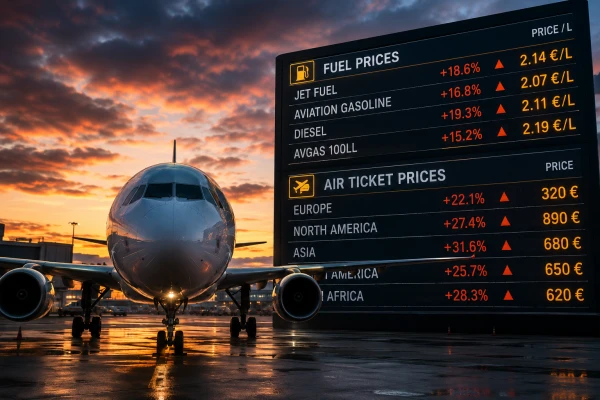
The side effect of the crisis in the Persian Gulf is a sharp rise in fuel prices. How little it takes for the world to approach an economic crisis! Just block one gulf (in this case, the Hormuz) and the whole world waits in horror for the next day to find out how much gasoline, diesel, and even gas have increased in price.
The reality is that fuel prices have been rising for the third week now, and these prices have already "caught up" with fuel prices in the spring of 2022, that is, after the start of the full-scale war in Ukraine. Moreover, diesel fuel has "overtaken" gasoline and reached 2 euros per liter!
Each of the EU countries is trying to respond in its own way to the sharp jump in fuel prices. This includes prohibiting gas station owners from changing prices more than once a day, reducing excise duties and VAT, and "releasing" reserve fuel onto the market... Although it is obvious to everyone that the last step is more symbolic or, if you will, psychological, since there is no fuel shortage in any EU country, and reserves are created and used in case of a sharp shortage of fuel. By "releasing" reserves, the government tries to calm the market and thus curb prices.
"It’s Not Greed or Avarice"
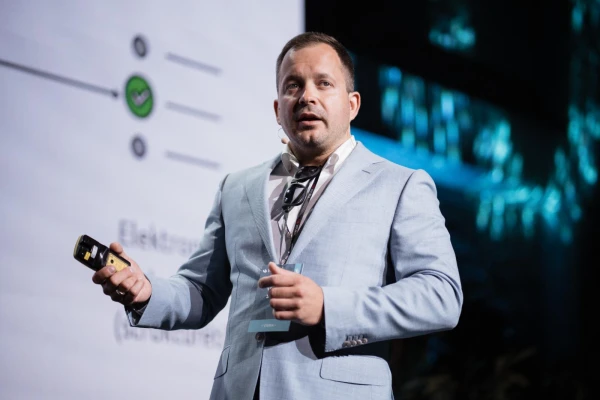
By the way, how is the price of fuel formed at all, and why did the cost of fuel jump, including in Latvia, just 48 hours after the blockade of the Orhus Strait began? Here’s what fuel retail and procurement expert Alexey Shvedov told us:
The purchase price in retail fuel trading is determined by a pricing formula, and this pricing formula is based on the quotes from S&P Global (Platts quote), and these quotes determine pricing both in the Latvian market and in neighboring countries - Lithuania and Estonia.
If we compare it to the quote from February 27, before the acute phase of the conflict, we get the following value: diesel fuel on the world market has risen by $424, or 56 percent more; for gasoline, the increase is almost half as much, plus $227 (31 percent).
But let’s move directly to the Latvian market. If we convert the increase to euros per liter, then theoretically this increase should amount to 40 cents per liter for diesel and about 20 cents for gasoline.
The fuel business is about risk management. It’s not about greed, it’s not about avarice. On the contrary: a fuel trader is interested in keeping the price at the pump as low as possible. After all, the lower the price, the less money needs to be invested: the fuel seller, on one hand, sells fuel, and on the other, he also purchases it. Before the war, a thousand tons of diesel fuel cost $750,000; the same amount a week later cost more than a million dollars, and a couple of days later, one million three hundred thousand. This undermines the liquidity of any trader.
And money in the financial market is not free either: as soon as such price spikes occur in energy carriers, all markets (not just fuel) start to think about the danger of rising inflation. How do central banks combat inflation? They raise financing rates, and thus for the trader, the money needed to purchase fuel becomes more expensive.
Continuing to answer your question about fuel reserves, I emphasize: reserves at gas stations have an uncertain price, since the price, as I mentioned above, is formed on a monthly average. Moreover, even if we assume that we created some reserves at gas stations, they are, for objective reasons, very insignificant.
Now a few words about how the cost price of fuel is formed.
The cost price of motor fuel in the Latvian market consists of three components:
-
Taxes on labor.
-
Excise duty - over 20 years, excise duties on motor fuel in Latvia have almost doubled.
-
VAT (PVN) has increased from 18% to 21%.
That’s why fuel at the gas station today costs more than in 2008, when diesel fuel prices first crossed the threshold of $1,000 per ton in this century.
And there’s also the bio-component. According to changes in the legislation of the Republic of Latvia, this winter was the last period when winter diesel fuel did not need to have a bio-component added. Starting from April 1, the situation will change. And if in spring and summer, regular RME will be used for mixing, with temperatures dropping below -10 degrees, the only option for the bio-additive will be the more frost-resistant HVO, the premium for which is several times more expensive than RME.
For clarity, if HVO had been included in diesel fuel at a rate of 7% already this winter, the price per liter would have been higher by about 12-13 cents.
Since world prices are in US dollars, the cost price of fuel directly depends on the EUR/USD exchange rate.
What percentage of margin to add to the cost price of fuel is an individual decision for each seller, which is far from independent, since this decision is made in a highly competitive environment in a country where there is one of the highest numbers of gas stations in Europe per million inhabitants.
What Will the Latvian Authorities Do?
One way or another, fuel prices continue to rise, and no one knows when they will stabilize.
What does the Latvian government plan to do? The initial reaction from the authorities was in full accordance with our "bureaucratic tradition": "We are monitoring the situation." In simple terms - "we are sitting and watching." Probably, the ruling party hoped that the war in the Persian Gulf would end according to Trump’s initial forecasts - at most in a week.
But "everything went off plan," and if fuel prices continue to rise, we are in for another wave of rising prices for goods and services. Minister of Economics Viktor Valainis mentioned that if fuel prices really drag on, then it will be necessary to think about reducing the excise duty on fuel. However, no decisions have been made on this yet.
And we all have to tighten our belts again and prepare for the worst…