At 45 years old, Mr. Girelli is full of ambitions.
Having earned a small fortune in Italy, Filippo Girelli made a big bet on one of the largest factories in India. Thanks to this acquisition, he became a billionaire and now intends to build a business empire that will encompass everything from private airports in Europe to data centers in outer space.
On a sunny spring day in Monaco, Filippo Girelli cheerfully opens his laptop to show the camera his view of the Mediterranean Sea from the window of his private office. "I have been living here for over five years. The place is great," says the entrepreneur during a video call, listing the cities he frequently travels to for business: London, New York, Dubai.
"After studying at university in Rome, I went to Africa," says the 45-year-old Girelli, also mentioning Guinea and Mali, where he first began working on engineering and infrastructure projects.
Girelli's career path is quite unconventional. From the ages of 25 to 35, he managed to earn a small fortune in real estate in Italy and North Africa, then nearly lost it during the Arab Spring in Egypt. He then returned to Italy and "rediscovered himself," founding a company that helped large firms reduce energy consumption costs. But the lion's share of his wealth, estimated at around $1.5 billion, is owed to India. In January 2023, the businessman completed the most significant deal of his life. With the money earned from the partial sale of his energy optimization firm and investments in real estate, he purchased a 25% stake in India's second-largest oil refinery, located on the country's west coast, from the oil trading Singaporean holding Trafigura.
When Trafigura and Rosneft acquired the refinery in 2017 in partnership with the Russian investment fund UCP, the enterprise was valued at $12.9 billion, including debt. Trafigura financed 85% of its stake with bank loans, paying the rest in cash.
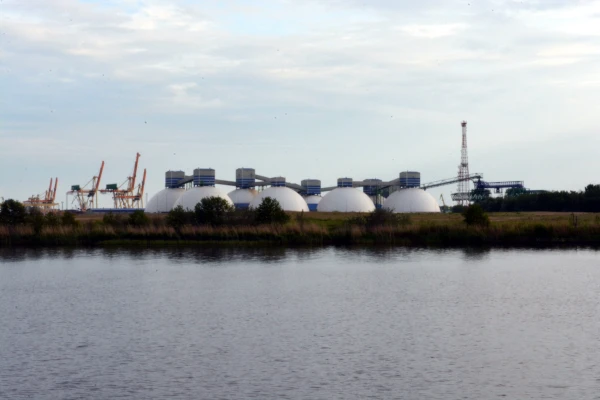
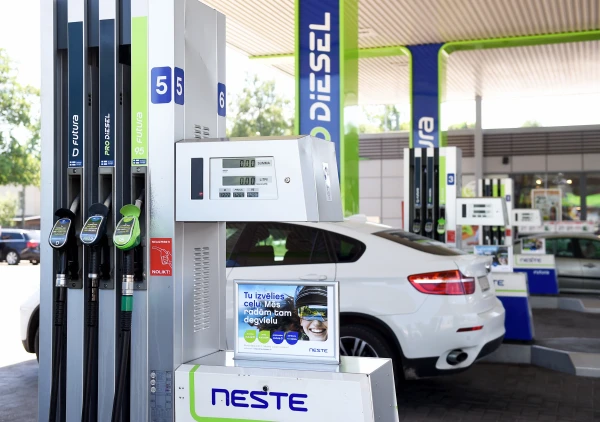
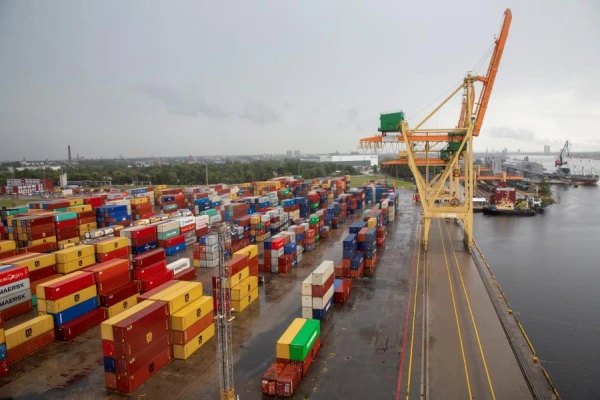
Girelli first expressed interest in acquiring Trafigura's stake in 2020. The deal was formally closed in 2021, but due to the Indian antitrust authority, it was delayed until 2023 and occurred 11 months after the start of the "special operation"* (in 2022, Trafigura's management announced its exit from long-term contracts with Russian companies). According to the businessman himself, neither the final price nor his decision to invest was affected by this. Public documents indicate that Girelli paid $169 million for the specified assets, which is 42% lower than the amount the former owner paid in 2017. Forbes USA now estimates that stake to be worth at least $1.1 billion, excluding debts. In addition to the refinery, Girelli's firm Nayara Energy owns the largest private network of gas stations in India and a deep-water port. As the country increased its imports of cheap Russian oil for its rapidly growing economy and population, the Italian's company profited significantly. For the financial year ending March 2025, it reported a profit of $760 million on revenues of $17.6 billion, meaning that since 2022, the figures have increased by 500% and 25%, respectively.
"Business turnover has multiplied. The company has significantly increased productivity and greatly improved margins," notes Girelli. "The financial investments have paid off handsomely."
The firm is arguably one of the most desirable assets in India. "Nayara plays a very important role. India is a growing country where the demand for fuel is constantly increasing," explains Pankaj Srivastava, senior vice president for commodity markets at the specialized research agency Rystad Energy. "Nayara covers a significant portion of the country's domestic fuel needs. The enterprise has a strategic location."
As stated in a March article by the Indian publication The Morning Context, attempts to acquire Nayara Energy were made by the state-owned Saudi giant Saudi Aramco and the conglomerate Reliance Industries of Indian billionaire Mukesh Ambani. When negotiations for the sale reportedly stalled, banks began delaying payments to the firm, and Microsoft cut off its access to its cloud products. Exports were also suspended by Iraq and Saudi Arabia, which, according to data from the analytical business platform Kpler, accounted for 37% of Nayara Energy's total oil imports before sanctions were imposed (the rest came from Russia). Rosneft and UCP did not respond to requests for comment. A representative of Saudi Aramco declined to comment, while a spokesperson for Reliance Industries stated that the firm is "not in negotiations to purchase Nayara."
The business recovered fairly quickly. Nayara Energy sells 88% of its products domestically, although in October 2025, this volume was two-thirds. Additionally, the company found new markets, including Brazil, Sudan, and Turkey, and began working with local banks to process payments. According to Kpler statistics, as of December, the enterprise receives almost all of its oil from Russia, with processing volumes nearing maximum levels. "Despite pressure on several fronts, Nayara has managed to scale up its operations," says Sumit Ritolia, an analyst at Kpler. "Open access to Russian crude oil, new logistics mechanisms, developing markets for exports, and an expanding network of buyers willing to transact under sanctions have allowed the refinery to achieve nearly optimal economic turnover."
Girelli, for his part, describes himself as a passive minority investor and believes that sanctions have not harmed his investment at all. "The company essentially lives off the Indian market. The problem would arise if the products were sold in Europe, but since the market is almost local, it does not affect the company's performance in any way," assures the entrepreneur, continuing: "If anything, this can be used as a tool to accelerate sales, but we need to look at it further."
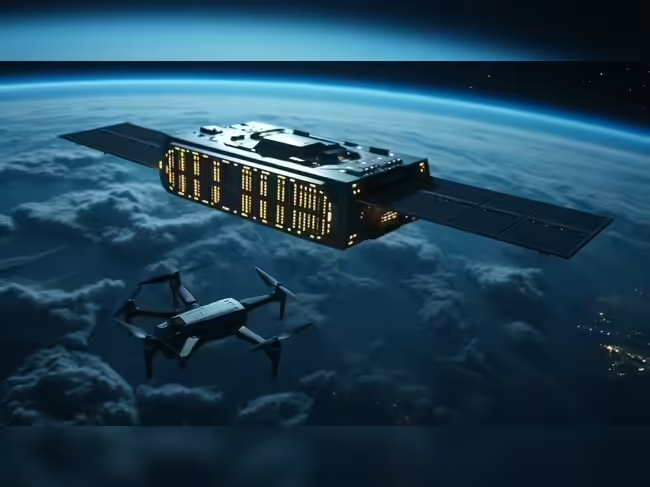
If the enterprise were put up for sale based on the figures in the reports, or even for more conservative amounts calculated by Forbes USA, Girelli would make a profit of over 500%. However, whatever happens with Nayara Energy, the businessman is pushing forward. In 2024, he established a new investment fund called Infracorp, which intends to build everything from spaceports and private airports to orbital data processing centers and nuclear reactors in open seas.
"The goal is to invest in systemic infrastructure," reflects the Italian, listing a whole array of current and future ambitious investments. "We want to generate energy for the power grid. We are working a lot on decentralized AI. We have acquired our first airport, which will become a major terminal for private jets in Europe. We are working on space modules, future space stations, and orbital data processing centers. In the next six months to a year, we will present a number of extremely interesting projects."
Some may see this as an unattainable dream, but Girelli has surrounded himself with industry experts in every area of interest and consults with them on how to turn all these ideas into reality. For example, near Monaco, the businessman plans to launch a private airport, and in southern Italy, a waste processing plant that will generate electricity.
"He is one of those who sees the bigger picture and takes action," says Stefano Poli, commercial director of the Israeli firm Ramon.Space, which specializes in space computing and advises Girelli on investments in the space sector. "He knows how to play chess on multiple boards at once."
Manfredi Lefebvre D'Ovidio, another billionaire from Monaco who made his fortune in the cruise and tourism business, adds: "He is extremely enterprising. He really does what he says."
Girelli was born into a middle-class family in Rome in 1980, raised by entrepreneurial parents. His father owned a construction company, while his mother initially managed an agricultural company before switching to real estate.
After studying civil engineering at the Sapienza University of Rome and obtaining an MBA from the business school at the Guido Carli Free International University for Social Sciences, young Filippo left Italy for West Africa in 2003 to work as a design engineer for the construction firm Astaldi. "It was a wonderful experience, albeit very challenging, as construction in those countries is quite difficult," recalls Girelli, referring to projects he worked on, including building a bridge between Guinea and Mali.
He was then involved in building highways in Turkey, and later, in 2006, he returned to Italy to design high-speed railway lines for the Italian industrial giant Impregilo, now known as Webuild. At the age of 27, the future billionaire moved to the Italian real estate agency De Angelis Group, which owned apartments, hotels, and medical clinics in Italy and France.
In 2009, tragedy struck: the company's founder died in a car accident. Girelli claims that by that time, he had been negotiating with the founder to acquire a stake in the business, but after his death, he negotiated to buy out key projects he was personally involved in, including one shopping center. After that, the entrepreneur founded his own construction company and began investing in residential and commercial properties in Morocco and Egypt.
In 2013, another setback occurred when anti-government protests erupted in Egypt. Girelli was forced to leave and suffered significant losses on projects in the country, so he had to start over in Italy. "It resulted in substantial losses, but it also became an important lesson," admits the businessman.
Subsequently, he founded Genera Group, which works on energy-saving projects with clients such as tire manufacturer Pirelli and consumer goods producer Unilever. Such activities include developing solar panels, installing more efficient lighting, capturing excess heat from industrial processes, with earnings derived from a share of the savings.
In 2017, the entrepreneur sold 49% of his company’s assets for an undisclosed amount to the management organization IKAV from Germany. Three years later, he bought back the shares from IKAV and sold 75% of the equity to the Swiss investment fund Susi Partners for the initially offered $30 million. At that time, he also began considering investing in Nayara Energy. "We had two goals. The first was to build a biorefinery for the eco-friendly production of aviation fuel, which allows planes to pollute less compared to conventional fuel," clarifies the billionaire. "The second was to sign an agreement with the Indian government for the production of electric rickshaws and the organization of battery replacements at more than 6,500 Nayara Energy gas stations."
All plans were derailed by the "special operation" in Ukraine. Girelli did not abandon the project but took a step back. "We decided to become a passive investor in Nayara," says the entrepreneur. "We played our role in terms of ecology, but focused our resources on other areas."
After selling the remaining part of Genera Group to the same Susi Partners for an undisclosed amount in December 2024 and considering exiting his stake in Nayara Energy, Girelli is now fully focused on investments through Infracorp. He categorizes his investments into four broad categories: transportation and infrastructure, energy transition and autonomy, space economy, decentralized artificial intelligence, and security.
The businessman claims that he has already allocated over $100 million and invested in more than 65 different projects. These include opening biogas and bioethanol production plants in the United States, a plant for converting automotive scrap into electricity in Italy, and 18 data centers in Italy and France. According to the billionaire, plans also include building data centers in low Earth orbit and nuclear power plants off the coast of Italy.
The most notable deal Girelli has recently reported is the purchase of the Albenga-Riviera airport in 2024 — a terminal for private jets on the northwestern coast of Italy near Genoa. It is an 80-minute drive (or a 25-minute helicopter ride) from Monaco. The Italian intends to make the facility an aviation hub for the wealthy city-state, which is too small for its own airport, and this will be the first point in a network of 16 private airports across Europe (the investment in each of these locations is estimated at around $60 million).
"Access to commercial airports is becoming increasingly difficult for private jets, the number of private flights is growing, and as their costs decrease due to new technologies, it will continue to rise," predicts Lefebvre D'Ovidio, specifically mentioning electric aircraft from manufacturers like California's Joby Aviation. "Private airports have enormous potential."
As for where to find funding for these large-scale projects — aside from his own wallet, especially in the case of selling his stake in Nayara Energy — Girelli is not particularly worried: "When there is a business model with predictable cash flow, finding money is quite easy. We have no issues finding financing worldwide. Many want to invest in such ventures in the Middle East."
The businessman’s consultants fully agree with him. "Smart people don’t spend their own money. They turn to capital markets," says Güçlü Batkın, CEO of the Dünyagöz ophthalmology clinic network and consultant for Infracorp. "There is money waiting to be invested all over the world. You just need to know where to look and who to partner with, and he excels at that."
Another Infracorp consultant, Massimiliano LadoVac, CEO of SpinLaunch, which receives funding through venture capital and specializes in space flights, adds: "He has, in a sense, an American mindset and is willing to take risks. He knows how to change course in time."
It is still too early to judge the success of Girelli's most recent ventures. But the entrepreneur is absolutely confident that when everything comes together, the enormous profits from Nayara Energy will seem like child's play. "I believe we will have something around four to five times the return," shares the businessman. "Especially in space with data processing centers."
If he manages to achieve this, it is likely to happen within a few years.