It is undoubtedly a capitalist country, but it was built by convinced socialists.
What is happening with the economy of Israel? Renowned economist Andrey Movchan, founder of a private capital management group, analyzes the situation.
- We are used to using the words "miracle" or "paradox" when talking about Israel – what’s so surprising about a nation with roots in pre-antiquity, the oldest people in history, having a national state today, a country built against the laws of geopolitics, based on pure ideas and ancient chronicles, demonstrating, let’s say, rather unusual properties? The economy of Israel (and the Jews as an economic community, and even the territory where Israel was first not present, then was, then was absent for 2000 years, and then became again) is no exception. At first glance, the economy of the Promised Land is one big paradox, whether in ancient times, the early 20th century, its mid-point, its end, or recent years. Want examples from today?
Israel is undoubtedly a capitalist country, but it was built by convinced socialists. Israel is practically the only country in the world with a high GDP per capita where significant roles in the economy are played by pro-communist forms of management. Kibbutzim and moshavim produce 40% of Israel's agricultural output and 9% of industrial goods.
Israel is a very small country in terms of territory, but its population density is no greater than that of England, while England seems quite spacious to a traveler, and we all know that Israel is crowded. At the same time, the population of the territory of Israel has grown 15 times over the past 100 years – this is almost a world record, leaving behind such territorial countries as Kenya (12 times), Brazil (10 times), all of Asia (4.5 times), and China (3 times). The population of developed countries has grown about one and a half times, while the world as a whole has grown four times. Only the population of the UAE has increased more times over these 100 years, but there the driver was the open and developed oil reserves; Israel also has its oil reserves – they amount to about one day of global production and are economically unfeasible to develop – a mockery of nature.
The population density in Israel is low, but its distribution is extremely uneven – more than 91% of the population lives in cities (only in 15 countries in the world is this figure above 80%), while only 5% of citizens live on 60% of the territory. Such an "urban" society, having one of the highest GDP per capita in the world and a lot of free land, should have created excellent housing conditions and have relatively low housing prices – but no, Tel Aviv recently surpassed Paris and became the most expensive city in Europe in terms of square meter cost, with the average price per meter in Israel being 15% higher than in Austria (the most expensive country in the EU) and 4 times higher than in Greece.
The average living space per Israeli is 2 times less than that of a Cypriot or a Dane, one and a half times less than that of an Italian, and 20% less than that of a Briton (and how tightly the British live is a constant subject of jokes in Britain itself). In Israel, there are fewer than 300 apartments per 1000 citizens, while the average in Europe exceeds 470. Israel can produce the most modern security systems, create the most advanced biotechnologies, and lead the world in the number of startups per capita – but it cannot organize a normal construction approval process that does not take several years, nor raise the quality of that construction to at least the average global level.
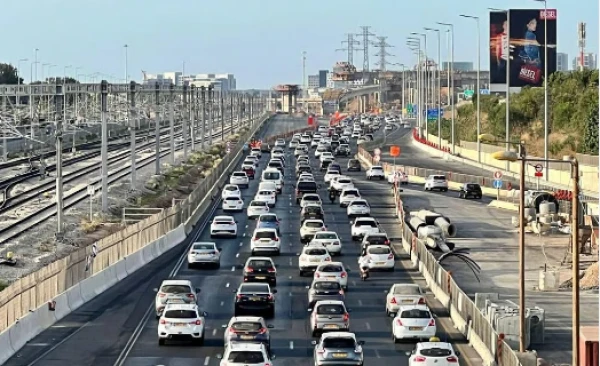
But Israeli cities are not only poor in housing – they are even poorer in roads (or rich in cars – count it as you wish). Despite huge taxes on car purchases, making them 1.5-2 times more expensive than in Europe, in Israel, there are 105 cars per kilometer of road (79 in Germany), and standing in traffic in a country of high technologies striving for maximum efficiency is a routine matter.
Israel is a country with a high surplus in international trade in services and a large deficit in trade in goods; in this sense (and in many others, as mentioned above), the Israeli economy resembles that of a developed metropolis the most, however, this "metropolis" is a major exporter of agricultural products – and this is in a country where the climate is practically unsuitable for agriculture, and the landscape makes theoretically no more than 29% of the land in the country suitable for cultivation, while practically only 12% can be cultivated (with the average global figure, considering polar regions, permafrost, forests, deserts, mountain ranges, etc., at 14.5%).
Israel, by common belief, is a country of open markets, striving for integration into the global economy, and many consider it "highly dependent" on its economic partners. At the same time, foreign companies in Israel produce only 12% of GDP (for Europe, the average figure is 50%, in Japan 33%), and foreign investments account for only 4% of GDP; only 6% of the country's workforce is employed in foreign enterprises. But the paradoxes related to the participation of foreign companies do not end there – despite their small share in investments in Israel, they account for 56% of investments in research and development: the "startup nation and scientists" is not eager to invest in technology development independently, instead preferring old traditional industries; it is also not eager to work in the new economy – only 8% of Israeli citizens participate in the creation of high value-added products.
The economic geography of Israel is also paradoxical: judging by the contribution of different types of transport to the country's foreign trade, Israel can confidently be called an island – land transport constitutes a negligible share. At the same time, Israel is surrounded by desert – the problem is not in the landscape, but in the hostile political environment. Israel is not the only country bordering hostile states, but it is the only one that simply has no other land border – even North Korea is luckier.
If geography favors Israel in any area, it is in the potential development of tourism: not only are there extremely diverse natural conditions and attractions, including 273 kilometers of coastline by two seas, but also a unique set of historical and cultural sites that should be on the top lists of tourists from all over the world. However, in a non-war year, Israel is visited by only up to 4 million tourists (for comparison, Antalya receives 13 million, with a coastline of 70 km and no significant historical sites).
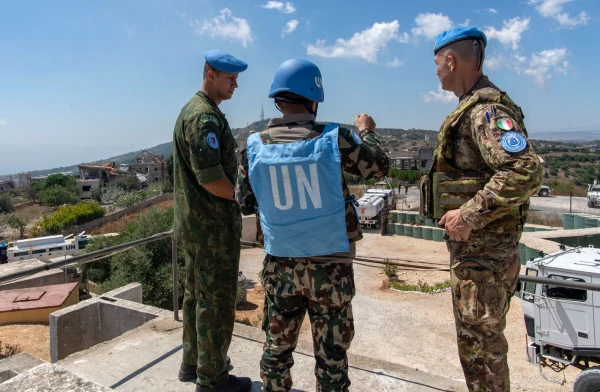
History knows many examples of political regimes organized and managed by the military. All such regimes turn out to be – quickly or very quickly – economically unviable; all except one: Israel, where your authority largely depends on the branch of the military in which you served, most of the country’s former leaders were career military personnel, and many businesses and institutions are run by "people in uniform" manage to be one of the richest economies in the world. Moreover, a country surrounded by official enemies, waging wars against opponents whose numbers and financial capabilities often exceed Israel's by several times, spends only a few percent of GDP on military needs from its budget and is a major exporter of weapons (as if it doesn't need them itself). War is undoubtedly a disaster for Israel, as for any country – but where else besides Israel does the local stock index rise by 80% during wartime, real estate prices increase under the threat of ballistic missiles, and bank liabilities grow?
Speaking of bank liabilities – the banking system of Israel has about 800 billion dollars, almost $100,000 for each Israeli citizen, twice as much as for each German, even when considering the assets of the central bank. At the same time, Israeli banks are rightly considered the most technologically backward, unfriendly to clients, and complicated to work with in the developed world (only Cyprus can probably compete with them).
And yes, Israel is a developed country, and its budget is deficit as is customary for developed countries – but less than 3% of GDP is spent on servicing the debt (the same as the budget deficit), and the Israeli shekel (which has known times when inflation exceeded 450% per year) is steadily rising against the dollar. Well, is that enough examples? This is just the beginning, and this is just about the present time, while in the history of Israel, there are many more such wonders – both good and bad.
Of course, the economy of Eretz Israel is subject to the same laws as all others – it was simply created, developed, and grew (and is growing – a number of economists seriously expect that Israel's GDP will double in 10-20 years) under special circumstances, by special people and in special ways.