Borrowed funds will provide a strong impetus in 2026, experts believe.
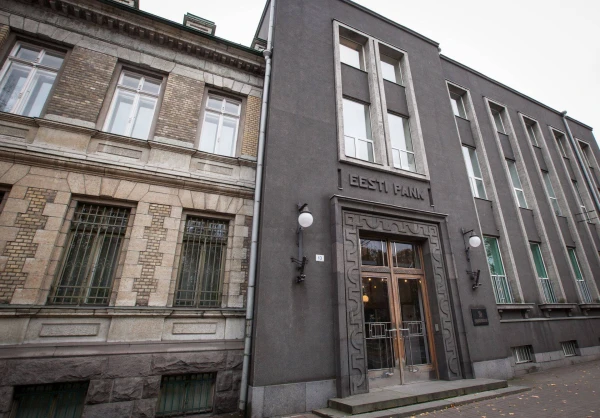
According to the latest economic forecast from the Bank of Estonia, the country's economy will grow by 0.7% this year and by 3.6% next year. Against the backdrop of geopolitical factors, the situation is overshadowed by a record budget deficit in the public sector.
The domestic conditions for economic growth will gradually improve until 2027, when government financial stimulus will begin to wane. By that time, external markets will be in better shape compared to the current situation, and Estonian enterprises will have better adapted to the new competitive environment, the Bank of Estonia reports.
Price growth in Estonia will remain high this year due to increased production costs and tax hikes, reaching 5.3%. Next year, inflation is expected to decrease to around 2% and remain at that level through 2027.
Estonia's economy has revived since last year, although this is not yet reflected in economic growth statistics. For instance, the development of exports, industry, and retail trade, as well as the revival of the credit market, indicate that since mid-last year, conditions have improved in several sectors. Summer trade agreements have reduced uncertainty caused by U.S. tariff policies, positively impacting Estonia's economy.
Additionally, growth has been supported by lower interest rates and falling prices for oil and other raw materials. The expected economic growth this year is 0.6%, which is lower than the June forecast of 1.5%. The main reason for the downward revision of the forecast is the adjustment of GDP data for 2024 by the Statistics Department, which serves as the basis for growth. The Bank of Estonia's assessment of the economy's ability to recover this year remains unchanged.
The borrowed funds directed by the government into the economy will provide a strong impetus for its development in 2026. The central bank's forecast for next year is based on approved tax changes and adopted spending plans, among which the most significant are the increase in defense spending to 5% of the economy, uniform application of tax-exempt income, and the abolition of income tax on the first euro.
Given these premises, the public sector budget deficit next year will grow to 3.8% of GDP, which means an additional borrowed inflow into the economy of about 1.1 billion euros (2.5% of GDP) compared to the current year. After preparing the forecast, the Bank of Estonia announced that the government plans to abandon the previously scheduled increase in income tax and has set a deficit target of 4.5%, which is the maximum allowable limit under the European Commission's temporary provision.