The new steel railway has proven unprofitable.
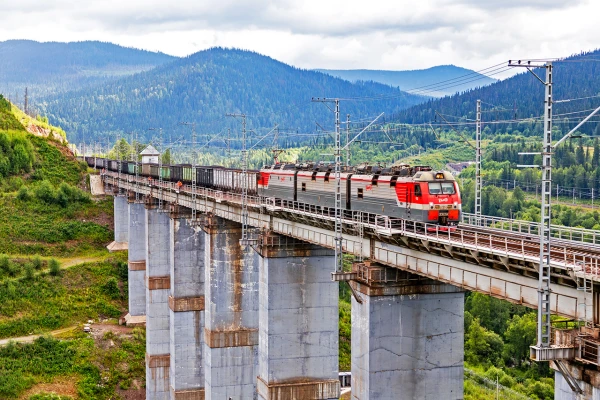
Russian authorities have deemed the construction of the North Siberian Railway, which could connect northern Siberia and the BAM, as well as provide Russian raw materials with additional access to China, to be impractical. Just two years ago, Putin spoke of the necessity of this construction. However, against the backdrop of war and an economic slowdown, the project has proven unviable.
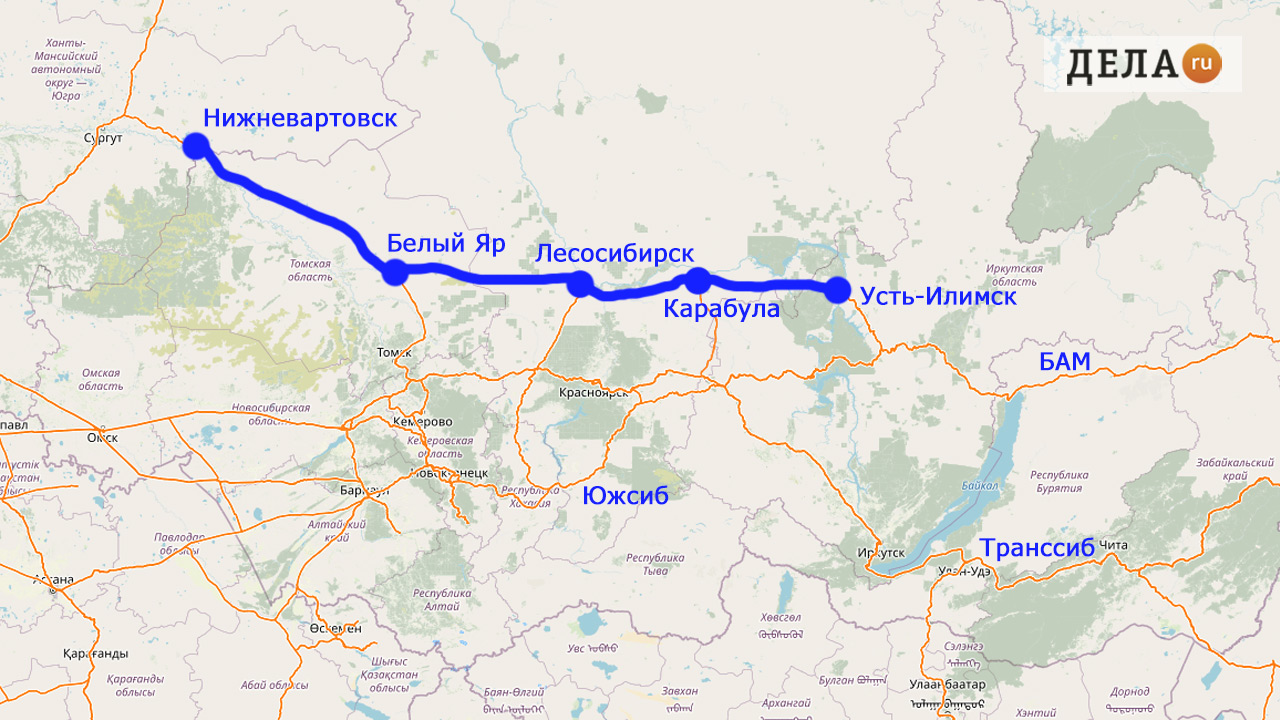
The first branch of the North Siberian Railway was supposed to run from Nizhnevartovsk in the Khanty-Mansi Autonomous Okrug to the Beliy Yar station in the northern Tomsk region, and then to Ust-Ilimsk in the Irkutsk region. The second branch, according to the project, was planned to be laid to Tashkent on the border of Kuzbass and the Altai Mountains, and then cross the border to reach Urumqi in China. It was expected that the railway would connect the industries of the Krasnoyarsk Territory and the Irkutsk region with the Northern Sea Route, while providing Kuzbass coal producers with additional access to China.
According to sources from Kommersant, the Russian government has concluded that the construction of such a railway would be too expensive – at 50 trillion rubles.
For comparison, budget expenditures in 2025 will amount to 42.2 trillion, while the country's GDP for 2024 in absolute terms will be 200 trillion rubles (in 2025, authorities forecast a growth of about 1%). For military expenditures in the first half of 2025, Russia allocated nearly 8.5 trillion rubles, or about 47 billion daily. The investment program of Russian Railways in 2026 will not exceed 1 trillion rubles.
Experts explain the high cost of constructing the North Siberian Railway by the complexity of geological work: part of the route runs through the territory of Yugra under the conditions of the Far North, and on the border with China in the Altai Mountains, two rock tunnels need to be built on the Ukok plateau (one of which was to be constructed by the Chinese side).
"There was a project 'Kyzyl-Kuragino' – where is it?"
The idea of building a railway that would connect northern Russia with Siberia and relieve the Trans-Siberian Railway was born during the Soviet era. Since the early 2000s, this project has been discussed repeatedly. In 2003, the Ministry of Transport included it in the closed part of the transport strategy of the Russian Federation until 2025 (that is, its possible construction was justified, among other things, by military-strategic arguments). In 2023, Vladimir Putin, speaking at the Valdai Forum, instructed to reconsider the possibility of constructing the railway, which, according to him, could become part of the "development of Siberia."
Proponents of the project argued that such a road would help connect the BAM with the western direction, which would give an impetus to the development of industry in the Lower Angara region and Yakutia. Additionally, the railway would link the Arctic shelf, where hydrocarbons are extracted, with the Asian part of Russia and further – with China. According to some estimates, the absence of such a railway leads to an annual decline in GDP growth rates by 0.2-0.4%.
The Sevsib project has always raised questions due to its excessively high cost and uncertain profitability. In 2021, Russian Railways considered how to reduce the project's cost: the construction of a border crossing on the border of the Altai Republic and the Xinjiang Uygur Autonomous Region of China was considered. Instead of expensive tunnels, Russian Railways planned to build an overpass, but that project was never realized.
In 2024, the chairman of the executive committee of the interregional association "Siberian Agreement" (MASS), Gennady Guselnikov, spoke about another project of the North Siberian Railway, estimating its cost at only 8 trillion rubles. The construction of a branch to the port of Sabetta on the shore of the Omsk Gulf of the Kara Sea in Yamal was proposed. Another branch was supposed to reach Lesosibirsk in the Krasnoyarsk Territory to connect the region with the Northern Sea Route.
– The project has been discussed for years, – says transport expert Yuri Zhuravlev (the names of our speakers have been changed for safety reasons). – But each time it turns out that it is too expensive. In recent years, Russian Railways has mainly had enough resources to optimize the infrastructure of the Trans-Siberian Railway – roughly speaking, to carry out current repairs and build additional tracks somewhere. Building another railway – whether it will cost 8 trillion or 50 trillion – is unrealistic. Plus, to build a railway, many organizational aspects need to be addressed: investments must be secured, contractors and workers found, and so on.
"Coal Exports Will Decrease"
In recent years, it was believed that the construction of another railway across the country would be beneficial for coal producers exporting raw materials to the east. The western Siberian section of the Trans-Siberian Railway has always been a problematic area: for example, the stretch from Omsk to Novosibirsk was recognized in 2010 as the most congested railway section in the world. The further route along the Trans-Siberian Railway to the Far East was also full of "bottlenecks," as railway workers say: trains from Kuzbass got stuck at the Chita railway junction, at the Taishat and Irkutsk sorting stations, which could not cope with the flow. In 2025, authorities announced plans to reconstruct the Chita railway crossing in Ulan-Ude for 2 billion rubles. There were also problems with capacity in the western direction: it was insufficient at the stations of Chelyabinsk Glavny, Kinel in the Saratov region, and Novorossiysk.
With the start of the Russian invasion of Ukraine, coal flows were sharply redirected to Asia, and representatives of the coal industry began to complain that the Trans-Siberian Railway's capacity was now even more insufficient. Currently, coal is transported, for example, from Kuzbass to ports in the Far East, after which it is shipped abroad. There are also coal supplies to China through land border crossings: for example, from Nizhnelininskoye to Tunjiang in the Amur region.
Experts surveyed by the editorial board acknowledge that several Russian regions are currently facing logistical problems. At the same time, they say that building another road at this moment is impractical, as the coal sector is experiencing a downturn. In November 2025, coal exports to China through border crossings fell by 38% due to declining demand in the northern provinces of China. Prices for Russian coal when exported to China have also decreased amid competition from other suppliers, such as Mongolia. In 2025, 74% of Russian coal enterprises are operating at a loss, and losses for the year could reach 350 billion rubles.
<iframe width="560" height="315" src="https://www.youtube.com/embed/S1K6TATuky8?si=5Uyi6zl6DDFyCQOz" title="YouTube video player" frameborder="0" allow="accelerometer; autoplay; clipboard-write; encrypted-media; gyroscope; picture-in-picture; web-share" referrerpolicy="strict-origin-when-cross-origin" allowfullscreen></iframe>