Not only are Latvian fields flooded with water, but this water is also of poor quality.
Just looking out the window is enough to grasp the essence of climate change — the weather in Latvia is becoming increasingly warm and humid. A temperature of +10 in December is just a continuation of the same trend that has caused massive rains and floods in the country, prompting the Ministry of Agriculture to declare a state of emergency. Latvia is being flooded!
What Pollutes the Rivers?
More than 60% of Latvia's agricultural land and about 40% of forest land are drained, the Advisory Council on the Environment reported recently. To facilitate faster water discharge, approximately 13,808 km of rivers are regulated, which accounts for over 30% of the total length of rivers in Latvia.
"Every year, including with funding from the European Union, many hundreds of previously straightened river sections or so-called state significance water bodies are being restored in Latvia," the document sent to the Saeima notes.
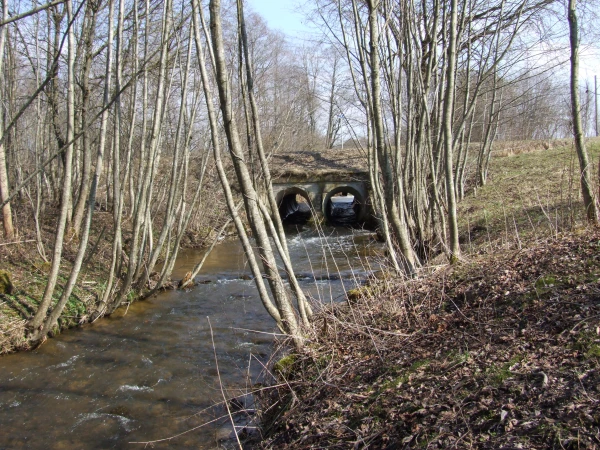
However, the work is mostly done in an outdated manner. As experts from the Council on the Environment indicate, "due to a lack of financial resources, the dominant approach to cleaning remains the restoration of the originally (during the Soviet Union) designed parameters, which mainly means re-excavating straightened rivers into long, uniform sections, with large volumes of soil removal." It is also common practice to cut down trees and shrubs in riverbeds. "These outdated methods destroy naturally recovering habitats and feeding grounds for fish, birds, amphibians, and species from other groups, negatively impacting the ecological quality of water, which is already low in Latvia."
The methods currently used to combat flooding are therefore not long-term — and only lead to flooding of downstream settlements. The straightening of riverbeds and other geomorphological transformations are an additional factor in the pollution of Latvia's inland waters from runoff from agricultural lands, which carry animal waste, mineral fertilizers, and plant protection products into the rivers. Such biogenic leaks lead to increased eutrophication — water bodies rapidly become overgrown with algae, leading to mass die-offs, decomposition, and consequently, oxygen deficiency in the water, fish kills, and the emergence of toxins that render the water unsuitable.
Wood and Salmon
By 2027, Latvia was supposed to meet the requirements of the Water Management Law — that is, rivers and lakes were obliged to "achieve good ecological quality and water potential." An innovative project is cited as a pilot on the Dzelzupes River in the Talsi region. A habitat assessment was conducted there, extensive excavation was not carried out, only the riverbed was carefully cleaned, which allowed for salmon spawning along a 10-kilometer stretch of the water body.
In practice, it was found that leaning trees over the river are beneficial, as they provide natural shade that prevents excessive growth of aquatic flora and also strengthen the banks against erosion.
Let It Flood
EU scientists, particularly from the scientific resource Nature, believe that in the conditions of Latvia, "it is more acceptable to flood uninhabited floodplain lands, which do not cause significant losses or risks." Flooded meadows, forests, and swamps themselves are "green infrastructure that ensures there is a place for floodwaters to accumulate."
"The role of river floodplains and other wetlands in reducing flood risks in Latvia has been little studied so far," states the Deputy Head of the Council on the Environment, Valts Vilnitis, "however, available studies confirm that the contribution of floodplains to flood reduction is significant. For example, it has been calculated that the floodplain of the middle Daugava significantly reduces flood risks for Jekabpils during the flood period, lowering the maximum possible water level in the city by more than a meter — thus reducing the potential for destruction and material damage that could occur if this natural hydrological regulating system did not exist in the middle Daugava. Plans for river basin management also recommend restoring the 'lateral continuity' of the river as soon as possible, that is, connecting it with the river floodplain, which plays an important role in trapping pollution."
Money for Storing... Floods
Latvia could, like in developed EU countries, make floods a source of income!
"Such territories are difficult to manage, so significant support should be provided by rural landowners who maintain these floodplains and provide public benefit. In the European Union, there are examples of good practice where local governments or even residents of local villages or towns, whose homes and infrastructure are in flood risk areas downstream, pay landowners for maintaining and allowing the flooding of floodplain meadows or other flooded areas during floods. Such an agreement exists, for example, in the Austrian town of Altenmarkt: there, an economic cooperative has been created for controlled accumulation of floodwaters, which receives support from local residents for the permissible flooding of this area."
Ministry Against Beavers
For its part, the Ministry of Smart Administration and Regional Development (VARAM) believes that even under conditions where Latvia is required to comply with the ecological measures of Natura 2000, "the demolition of beaver dams is still permissible," as well as "the removal of such accumulations of trees that obstruct the flow." "This way, it is possible to preserve both the function of water drainage and biological diversity," says the parliamentary secretary of the ministry, Janis Patmalnieks.
In the extensive works planned for 2025 to restructure the drainage systems, the opinions of environmental protection experts were taken into account. Thus, on 147 hectares of the 'Mejaras' drainage system, the municipal SIA Rīgas meži worked effectively, while on 283 hectares of the 'Langstini' system - the state AS Latvijas valsts meži. Basic directions for assessing forest drainage have been developed to reduce bureaucratic burdens.
Meanwhile, the Union of Local Governments of Latvia, represented by its chairman Gints Kaminskis, calls the issue of land fragmentation unresolved. "During the historical development of Latvia, including land reform, it often happened that historical drainage structures are fully or partially located on lands owned by other parties." "It is necessary to consider the complex, and sometimes impossible, process of collecting fines."
Therefore, municipal authorities are asking to be granted the right to carry out hydraulic engineering works, regardless of ownership forms. So if there is a water body on your private land, be prepared for a visit from ecologists and local authorities!