The idea arose against the backdrop of problems in global trade.
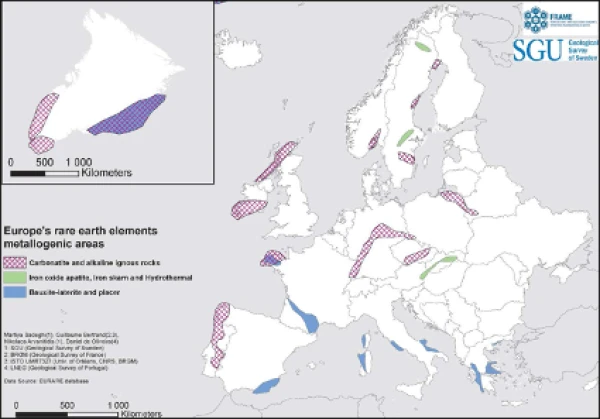
The new plan of the European Commission (EC) to strengthen the supply of critically important raw materials in the EU envisions providing Europe with rare earth elements and other essential materials based on the Japanese model. This was reported by the Euractiv portal.
It is noted that the plan presented by Commissioner Stefan Sejourne is referred to in Brussels as "inspired by Japan." According to the portal, Sejourne stated that the new EC plan will include the creation of a stockpile of important raw materials and a joint procurement system modeled after Japan, where these methods of securing minerals are already in use.
The portal reminds that the resource-poor Japanese authorities decided back in 2010 to reduce dependence on China for raw material supplies. The implementation of this initiative is ensured by the Japan Organization for Metals and Energy Security (JOGMEC). It purchases critically important raw materials and creates a stockpile of them. Information about the locations where it is stored is classified. Companies can access the stockpiles only after exhausting their own raw materials. If necessary, the authorities can decide to sell the stored raw materials. Furthermore, the organization finances not only the processing of raw materials within Japan but also invests in the exploration of new mineral deposits worldwide, as well as supports Japanese companies abroad.
According to the portal, there are several factors in Europe that hinder the establishment of a similar system. There are no precise guarantees that the raw materials needed by one EU country will be reliably stored in another. Additionally, EU members do not have enough personnel to direct them to explore deposits in other parts of the planet. Financial issues may also complicate the creation of a resource security system based on the Japanese model.
The portal notes that the desire of European politicians to develop a new plan for securing the EU with critically important materials has arisen against the backdrop of problems in global trade. The situation of the European Union is exacerbated by both the high import tariffs imposed by U.S. President Donald Trump and China's restrictions on the supply of rare earth elements necessary for European industry. According to the EC, the European Union still imports 100% of rare earths for permanent magnets and 97% of magnesium from China.