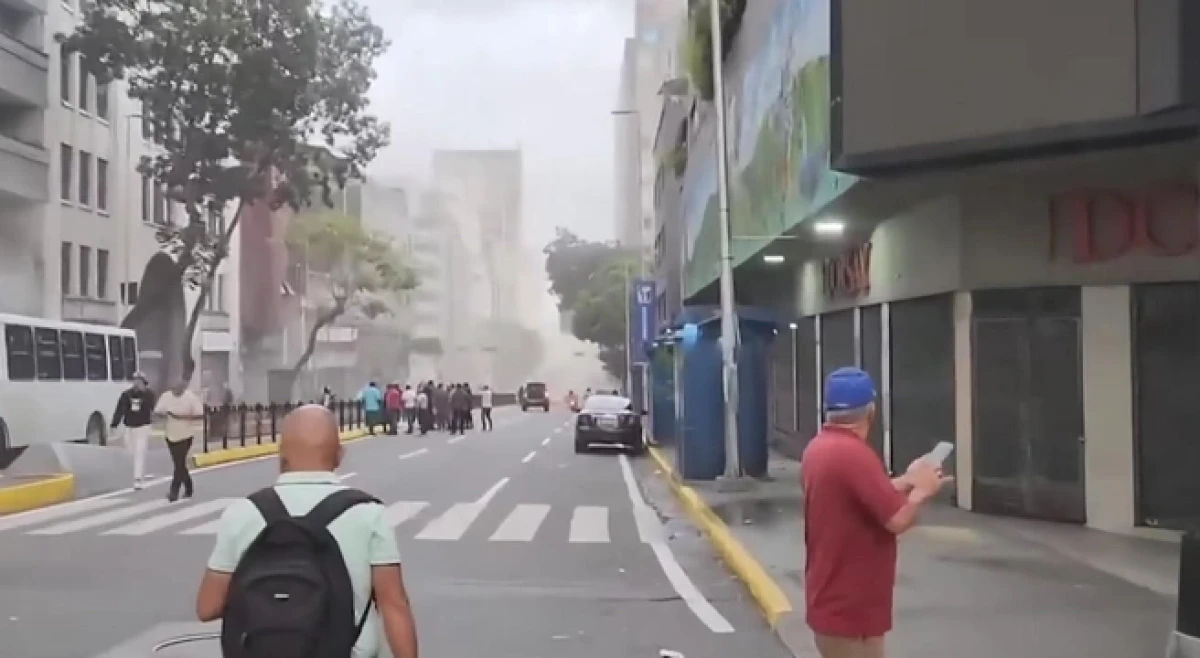
At least 188 people have died and more than 1,500 have been injured as a result of the two most powerful earthquakes in Venezuela in over a century. This was stated on Thursday by the Chairman of the National Assembly, Jorge Rodriguez.
The death toll may significantly increase as another 157 people are reported missing, and more than 200 remain trapped under the rubble of approximately 250 collapsed or damaged buildings.
According to the latest data, around 3,000 families have been affected.
According to the U.S. Geological Survey, on Wednesday afternoon, an earthquake with a magnitude of 7.2 occurred about 160 kilometers west of Caracas (the capital of the country), followed by another earthquake with a magnitude of 7.5 less than a minute later.
The most affected area was La Guaira state, located near Caracas and including the city airport. Dozens of buildings collapsed there, and intensive rescue operations are underway.
The UN Human Rights Mission in Venezuela, amid search operations, urged the government to lift restrictions on the use of social media, stating that it is a "matter of life and death." Access to them has become possible in some areas of the country where cellular communication is unreliable.
Bloomberg notes that a mobile application for reporting dissidents has been repurposed as a tool for search and rescue operations. Delcy Rodriguez urged citizens to use the VenApp application to report missing persons and damaged infrastructure. It was previously used as a tool for repression following the suppression of protests after the 2024 presidential elections.
In Morón, a small coastal town in Carabobo state, near the earthquake's epicenter, homes collapsed, and water and electricity were lost.
Other cities and towns near Caracas that were affected by the earthquake, including El Junquito and La Guaira, also remained without electricity.
The Venezuelan Red Cross stated that its headquarters sustained significant damage but sent rescue teams to the most affected areas.
The extent of the destruction caused by the two powerful earthquakes that struck Venezuela's northern coast is still being assessed as rescue operations continue and new data emerges from the affected areas.
Law enforcement in the most affected areas is asking local residents for help by providing protective masks and drinking water. Collection points for essential items have been set up in public buildings. The Red Cross stated that there is an urgent need for "temporary shelters for families whose homes have been damaged or destroyed, as well as emergency medical assistance, including treatment for injuries and psychosocial support," as well as clean water, sanitation, and essential household items.
The earthquakes occurred at an extremely difficult time for Venezuela, as the country is in the midst of a deep political and financial crisis. Rodriguez stated that she is coordinating efforts with the International Monetary Fund to create an initial aid fund of $200 million.