
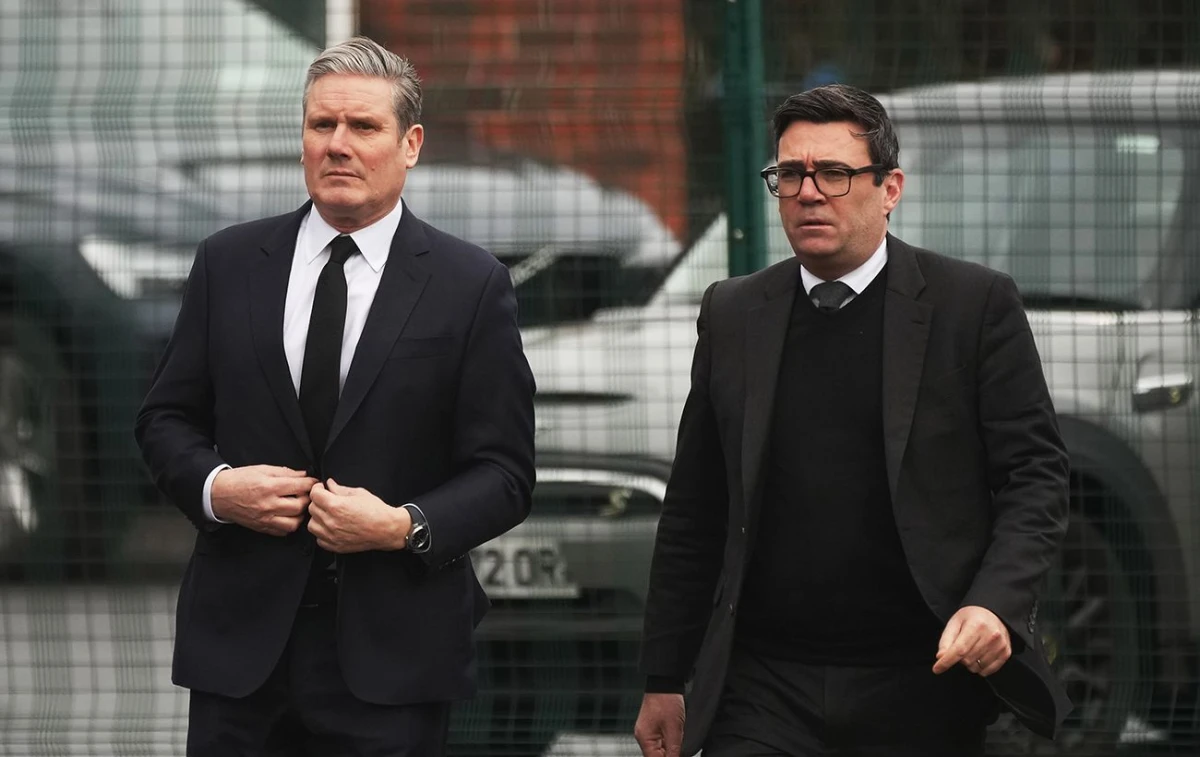
A feature of London politics lately is the unpopularity of all major leaders.
The resignation of Sir Keir Starmer as leader of the Labour Party and his inevitable imminent departure from the post of Prime Minister of the United Kingdom are expected events; the only question was the candidacy of his successor. As soon as he appeared — former Mayor of Manchester Andy Burnham — the party demanded Starmer's resignation. The Prime Minister's low popularity threatened defeat in the parliamentary elections of 2029. However, another change in leadership may not be enough to resolve the long-standing crisis of the British political system.
Starmer became the fifth consecutive British Prime Minister who could not serve even one full term in office. Before him were four short-lived Conservative Prime Ministers — Theresa May, Boris Johnson, Liz Truss, and Rishi Sunak. Now the Labour government has also demonstrated its instability, with discussions about Starmer's resignation starting as early as last year, but the Prime Minister was ultimately dealt a blow by the defeat in the local elections this year.
Ahead is the cabinet of the newly elected MP, former Mayor of Greater Manchester Andy Burnham, but even he is not guaranteed success. Earlier this year, Starmer blocked his candidacy for Parliament, but after the disappointing local election results for Labour, further blocking became impossible. Burnham has just defeated the candidate from the Reform UK party in the Makerfield constituency in Greater Manchester, which has given Labour some optimism.
Burnham's victory was prepared for. Bloomberg reassured the markets in advance: his advisors include former Chief Economist of the Bank of England Andy Haldane, former Chief Economist of Goldman Sachs Jim O'Neill, and Caris Roberts, former Executive Director of the IPPR think tank, who previously worked for Keir Starmer in the Prime Minister's Office.
So, despite the fact that Burnham is to the left of Starmer in the party, anti-market policies are not expected from his possible premiership.
But winning an election is one thing, and being Prime Minister is quite another. Johnson had an even more significant success when he led the Conservatives to victory in the 2019 election, when blue-collar workers from the industrial North switched to their side. And then came strong disappointment.
Fatigue with Politicians
Burnham, celebrating victory, stated that Labour has "one last chance for change" and "we must take it." However, his ratings across the country were declining before the elections. According to Ipsos, in June, 26% of Britons had a positive view of Burnham (-6 percentage points since May), while 33% viewed him negatively (+9), giving him a net approval rating of -7. The reason for the decline may be that he was initially assessed as a successful mayor, and then as a potential Labour leader who does not differ significantly from Starmer.
Despite this, Burnham remains the most popular among current Labour politicians. In a direct confrontation over who would make a better Prime Minister, Burnham still leads Starmer by 13 percentage points. 25% believe Burnham would be the best Prime Minister, while 12% think Starmer would be. However, 50% of Britons believe there will be no difference or that neither will be the best Prime Minister, which is 11 percentage points higher than in May.
However, a feature of British politics is the unpopularity of all major leaders. After the effective collapse of the two-party system, based on the constant rivalry between Labour and the Conservatives, both old and "new" party leaders have high disapproval ratings. 20% of respondents view Starmer positively, while 58% view him negatively. 26% have a positive view of the far-right Reform UK leader Nigel Farage, while 56% view him negatively. The ratings of the leader of the Green Party, which is vying for Labour's electorate, Zak Polanski: 20% of respondents view him positively, while 47% view him negatively (and he has a strong downward trend). 28% view Conservative leader Kemi Badenoch positively, while 40% view her negatively — and this is her best balance since being elected leader of the Conservatives in 2024.
Against this backdrop, the leader of the Liberal Democrats Ed Davey has better ratings: 22% view him positively, while 32% view him negatively. But the Liberal Democrats are not seen as potential election winners — they are a party of refined pro-European intellectuals who will not gain support in the British provinces, where the outcome of the elections is decided.









Leave a comment