
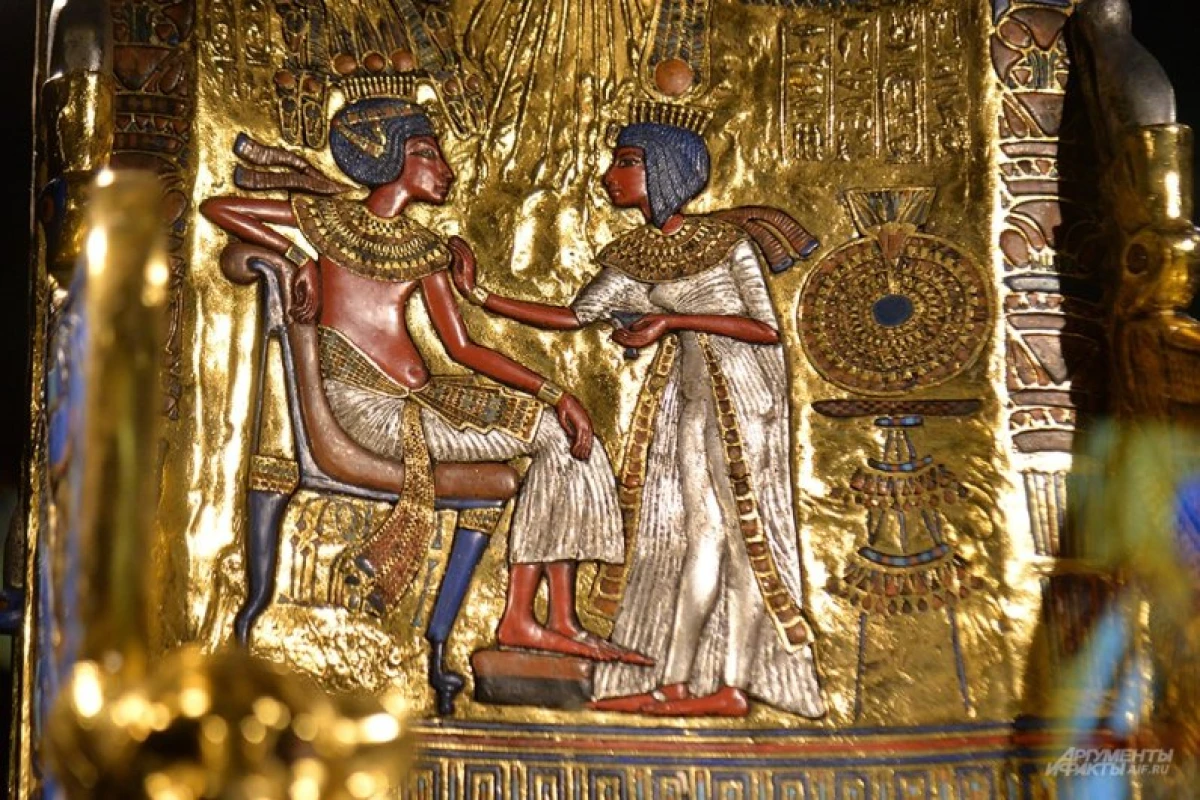
Honey from the tomb of Tutankhamun, having lain underground for over 3000 years, remained edible. Laboratory analyses confirmed the authenticity of the amber mass and helped scientists discover the triple biochemical protection of this product and the secrets of its ideal storage.
The Most Durable Product
In the early 20th century, archaeologists, while exploring ancient burials, discovered solid masses of amber color in stone vessels. Laboratory tests confirmed: this is bee honey, the authenticity of which was beyond doubt. The discovery prompted scientists to reconsider the longevity of products. Unlike other foods that turn to dust, honey demonstrated astonishing viability.
The Secret of Eternity
The secret of such immortality, according to recent research, lies in a unique triple protection. Firstly, extreme dryness: bees evaporate almost all moisture from the nectar. As a result, the finished product contains an insignificantly small amount of water (less than 18-20%). Such extreme dryness creates an environment where the osmotic pressure is so high that any bacteria or fungal spores entering the honey instantly lose their own moisture and die from dehydration.
For microorganisms, this is a chemical desert. Secondly, the acidic barrier: a low pH level (3.2–4.5) creates an aggressive environment that is lethal for most pathogenic microbes, which prefer neutral pH for their development. Thirdly, enzymatic attack: in the bee's crop, there is a special enzyme — invertase (diastase), which enters the nectar during collection. Additionally, bees add their own glucose oxidase. During the maturation of honey, these enzymes react with residual moisture and glucose, resulting in the release of hydrogen peroxide in minuscule but constant concentrations — a powerful natural antiseptic.
However, mere biochemistry would not be enough. The meticulousness of the Egyptians played a crucial role. Honey was poured into thick-walled jars and subjected to a kind of mummification: the neck was sealed with wax or resin and reinforced with a clay stopper. In the complete darkness of the tomb, in a stable cool climate and without drafts, the vessel turned into an ideal thermos.
Ancient tribes that practiced smoking may have given rise to modern populations in Southeast Asia — the same ethnic groups of Dani and Pumo, who still use this form of ritual.
A Few Changes
Undoubtedly, over such a colossal period, the product undergoes irreversible changes. It loses its original fluidity, crystallizing into a solid mass. Its color darkens to a deep brown or almost black hue, and the delicate floral aroma dissipates. Some volatile compounds and active enzymes degrade over time, reducing its original antibacterial potency. Nevertheless, on a chemical level, it remains completely safe and edible. Honey has proven to be one of the few substances on Earth capable of surviving the collapse of great empires and the change of eras, retaining its essential nature.













Leave a comment