
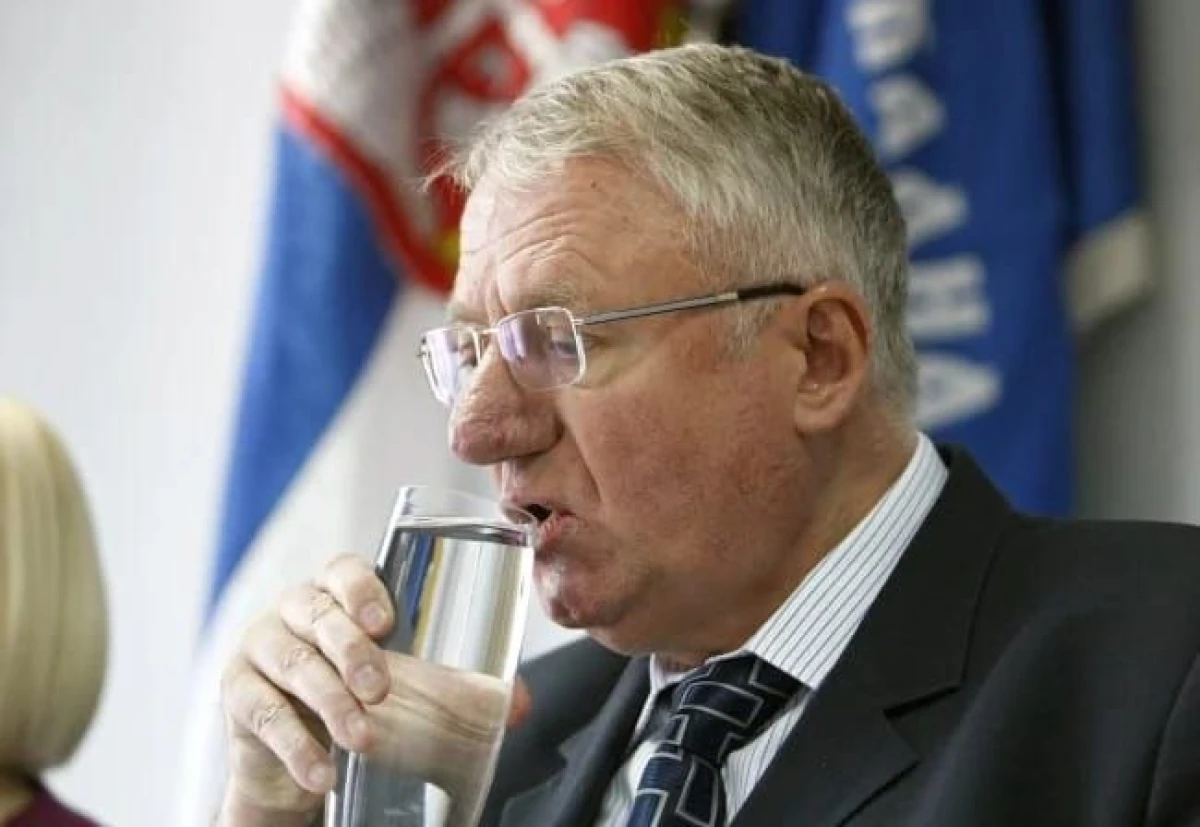
His party has already begun to distribute campaign materials on social media.
The leader of the Serbian Radical Party, Vojislav Šešelj, stated that he may once again run for the presidency of Serbia, but emphasized that a final decision on this matter has not yet been made.
According to him, the possibility of candidacy is already being considered, but there is no official decision yet, as the party leadership has not held a meeting of its central committee.
"I am considering such a possibility. However, this is not yet an official decision because we have not had a meeting of the 'Central Homeland Administration' yet," Šešelj said in an interview with the Beta agency.
The politician added that he expects his candidacy to be submitted for consideration by the party leadership. At the same time, he noted that it is still unknown when exactly the next presidential elections will take place in Serbia.
Earlier, the Serbian Radical Party began to distribute campaign materials on social media featuring Šešelj and the slogan: "Serbia, everyone knows who. President." The party is also publishing other campaign slogans, including "Radicals win" and "We have one Homeland."
Vojislav Šešelj (born October 11, 1954, Sarajevo, FNR Yugoslavia) is a Serbian political figure and has been the leader of the Serbian Radical Party since 1991. He holds a Doctor of Law degree (1976). He has run for the presidency of the Republic of Serbia four times. He served as Deputy Prime Minister of the Government of the Republic of Serbia (1998–2000) and as the head of the Zemun municipality (1996–1998).
He spent over 11 years in pre-trial detention at the Hague prison as a defendant in the International Criminal Tribunal for the former Yugoslavia (ICTY) proceedings. From 2009 to 2012, the ICTY issued three guilty verdicts against Šešelj for secondary offenses. Šešelj had been in custody since February 24, 2003, which, according to ICTY judge Jean-Claude Antonetti, is a world record for developed countries. On November 12, 2014, he was conditionally released from pre-trial detention due to health reasons and returned to Belgrade, and on March 31, 2016, he was fully acquitted by the International Criminal Tribunal for the former Yugoslavia. In April 2018, the acquittal was overturned, and Šešelj was sentenced to 10 years in prison, but the 12 years he had previously spent in custody were counted towards his sentence.




Leave a comment