
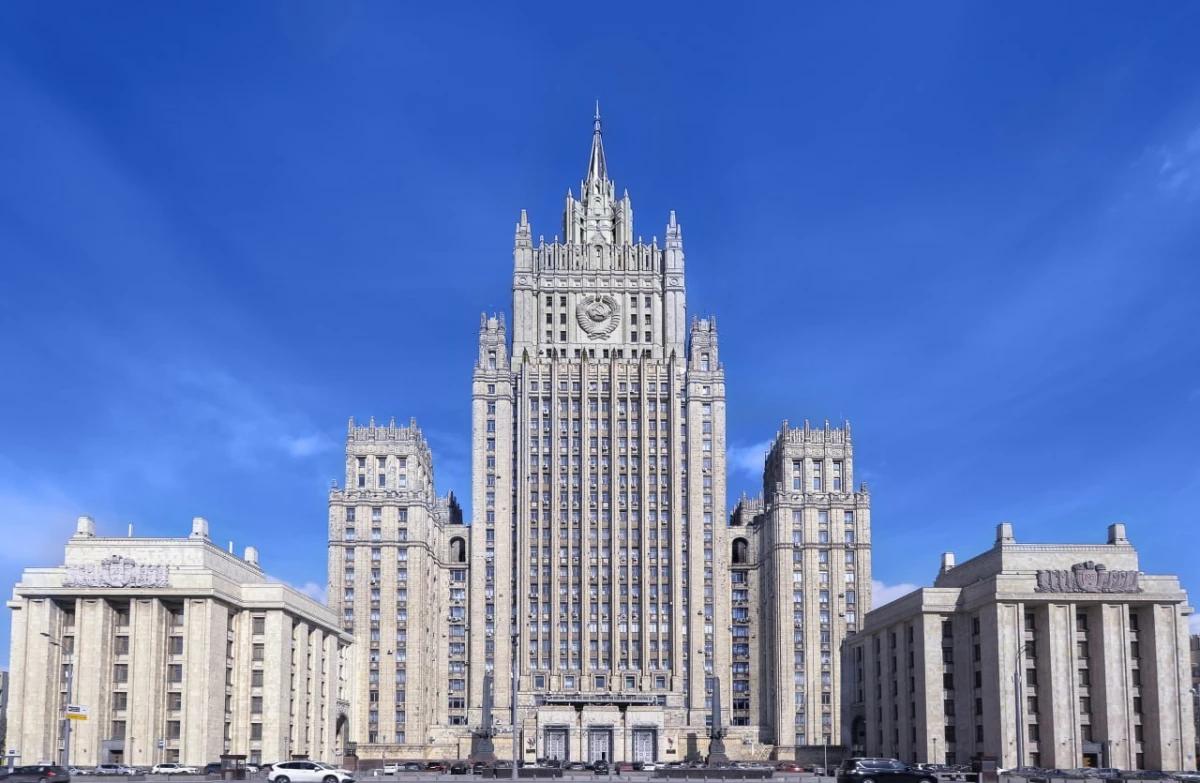
Diplomats from three European countries held a rare meeting with the Deputy Foreign Minister of Russia in Moscow. They condemned the escalation of the war unleashed by Russia and reaffirmed their support for negotiations regarding Ukraine.
A meeting took place at the Russian Ministry of Foreign Affairs between the ambassadors of three European countries and the Deputy Minister of Foreign Affairs of Russia, Mikhail Galuzin. The ambassadors of France, the United Kingdom, and Germany in Moscow met on Thursday, June 11, with Deputy Foreign Minister of Russia Mikhail Galuzin. The diplomats of the 'European Trio' (E3) condemned the recent escalation by Russia in the war against Ukraine and reaffirmed their support for negotiations between Kyiv and Moscow with the participation of the United States and Europe.
The ambassadors also took the opportunity to express their concern and condemn the intensification of information manipulation campaigns by Russia 'in the context of its aggression against Ukraine,' according to a joint statement from the heads of the diplomatic missions of the three countries, released by the British Embassy in Moscow.
The meeting was initiated by the ambassadors - Nigel Casey (United Kingdom), Nicolas de Rivière (France), and Alexander Lambsdorff (Germany).
As noted by Reuters, such meetings between Western diplomats and high-ranking Russian officials have become extremely rare since Russia's armed invasion of Ukraine.
Position of the Russian Ministry of Foreign Affairs
The Russian Ministry of Foreign Affairs, for its part, reported that Deputy Minister Galuzin presented to the European ambassadors 'objective assessments of the destructive policies of their countries' leadership' regarding the war against Ukraine - a policy that, according to the Russian side, is 'aimed at maximizing the stimulation' of Ukraine to 'continue the war' at the expense of and with the direct assistance of the Western 'coalition of the willing.'
In addition, the Russian side reported that Galuzin outlined to the diplomats Moscow's 'principled approaches' to seeking a political-diplomatic resolution to the conflict 'based on eliminating its root causes.'
The phrase 'root causes of the conflict' is used in Russia to justify its armed aggression against Ukraine. The main of such 'root causes' in the understanding of the Russian Federation is Ukraine's movement towards obtaining NATO membership. Russia insists that NATO should not expand eastward, explaining this demand by its 'strategic interests.'






Leave a comment