
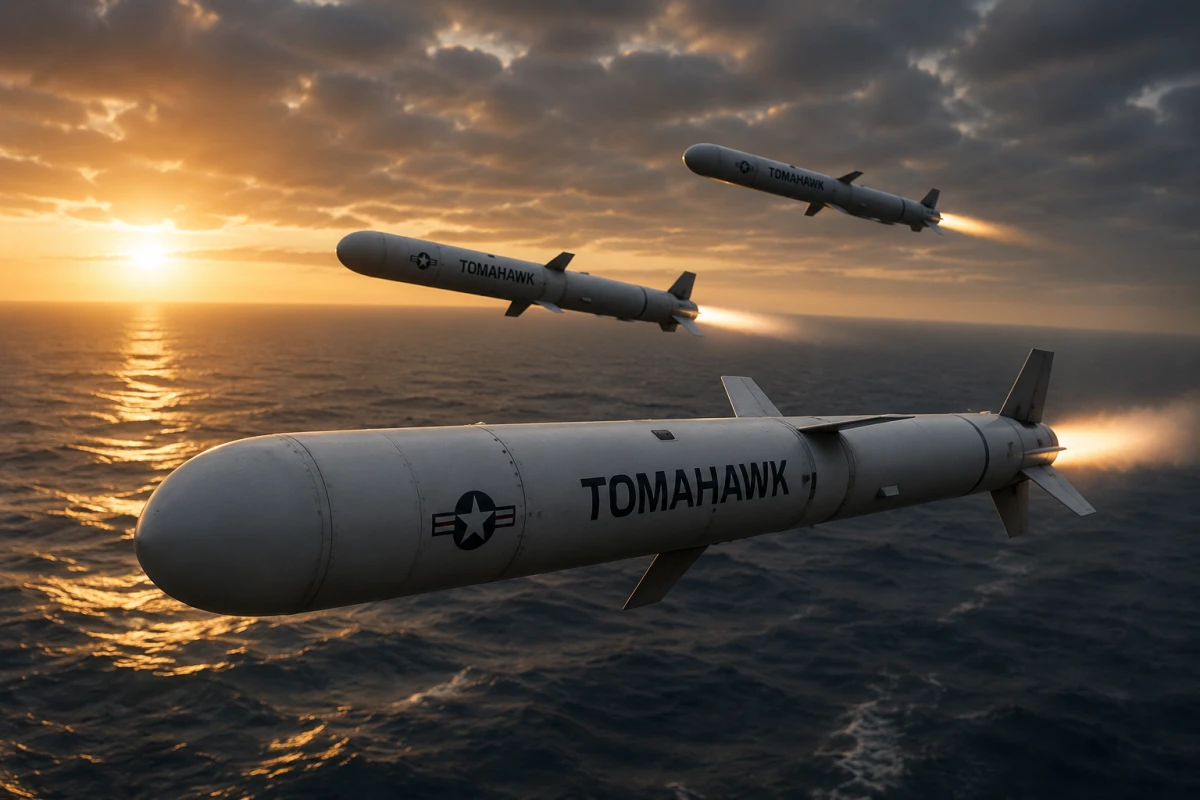
The Trump administration is considering canceling plans to deploy American long-range Tomahawk cruise missiles in Germany. According to sources from Politico, Washington is concerned that such a move could be perceived by Moscow as escalation and lead to retaliatory actions from Russia.
The U.S. Department of Defense plans to refuse the transfer of long-range precision-guided Tomahawk cruise missiles to Germany. This was reported by Politico, citing two European and one American official familiar with the situation.
According to the publication's sources, officials in President Donald Trump's administration are concerned that the implementation of the previous administration's plans under Joe Biden to deploy American missiles in Germany could be perceived by Russia as a step toward further escalation.
If a decision is made, Germany will lose an important element of its defense strategy, which Berlin considers necessary to strengthen the security of the country and the entire eastern flank of NATO.
As Politico's sources note, Washington's concerns are related not only to the possible reaction from Moscow. U.S. authorities are also worried about the state of their own weapon stockpiles.
After the recent conflict with Iran, the U.S. has expended thousands of Tomahawk and Patriot missiles. In May, Defense Secretary Pete Hegseth told Congress that restoring these arsenals would take significant time.
"Months and years," Hegseth characterized the timeline for replenishing precision-guided weapon stockpiles.
The decision under discussion is part of a broader adjustment of the American military presence in Europe. According to media reports, Washington is also considering reducing the number of its troops in Germany.
The German publication WELT previously reported that the U.S. may decrease the number of deployed fighters, drones, and naval units in Europe.
Meanwhile, Russia already possesses significant missile capabilities in the region. The Kaliningrad region is home to Iskander systems capable of carrying nuclear warheads. Additionally, Moscow has deployed medium-range Oreshnik missiles in Belarus, which experts estimate can strike targets almost anywhere in Europe within minutes.
In this situation, Germany has begun to seek alternative solutions. According to Politico, the German authorities are considering several options: purchasing ready-made European systems, expanding joint weapons production with partners, or participating in the development of new long-range missile systems.
However, German military experts emphasize that existing drone systems and cheaper munitions are currently unable to fully replace Tomahawk-class missiles in terms of range, accuracy, and operational capabilities.
A possible refusal by the U.S. to deploy Tomahawks in Germany could serve as an important signal regarding a reassessment of American military strategy in Europe. For Berlin, this means the need for an accelerated search for its own solutions in the field of long-range precision-guided weapons amid ongoing tensions in relations with Russia.














Leave a comment