Washington feared that Beijing would use scientific facilities to spy on American satellites.
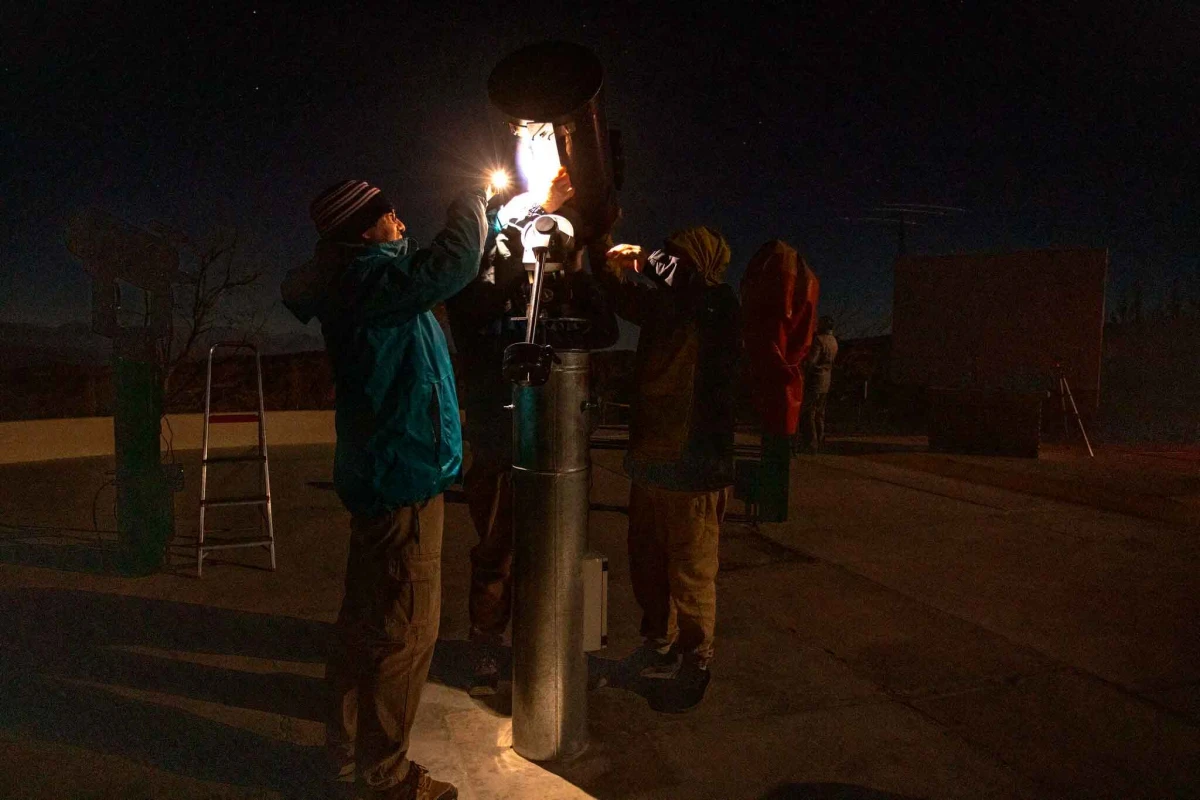
In the foothills of the Argentine Andes, amidst clear skies and untouched light pollution-free valleys, stands an unfinished Chinese radio telescope. Its enormous antenna, intended for studying distant stars and galaxies, now gazes into nothingness, while important components meant for the telescope have been gathering dust at customs for nine months. Local astronomers, who dreamed of peering into the depths of the Universe, unexpectedly found themselves caught up in a larger geopolitical game: Washington, fearing that Beijing would use scientific facilities to spy on American satellites, is systematically pushing Chinese projects off the South American continent.
The rivalry between the U.S. and China has long transcended trade wars and struggles for resources. The new arena for confrontation between the two countries has become space and technology. The United States, following the updated Monroe Doctrine, seeks to limit China's influence in the world, and South America, with its unique astronomical conditions, has become an ideal foothold.
The dry air, almost complete absence of light pollution, and numerous clear nights throughout the year make Argentina and Chile some of the best places in the world for astronomical observations. Due to its geographical position, it is impossible for China to study the entire celestial sphere equally well, especially its southern parts. Therefore, projects in South America provide Beijing access to those areas of space that are poorly visible or not visible at all from Chinese territory.
In 2015, when China was actively increasing its presence in South America, a $50 million satellite and space mission control center appeared in the Argentine province of Neuquén (Patagonian desert). According to Reuters, the facility is linked to the People's Liberation Army of China.
Argentina provided China with land for the station and free rent for 50 years. For hawks in Washington, this facility became a symbol of Buenos Aires falling into Chinese dependence, and the 450-ton antenna of the complex served as a cautionary example: Americans feared it would be used for military purposes.
Now, even purely scientific projects have come under threat. The administration of U.S. President Joe Biden (and later Donald Trump) systematically pressured the authorities of Argentina and Chile to reconsider China's involvement in the construction of telescopes in the Andes. American diplomats openly stated that these facilities posed a threat to national security. Astronomers, who dedicated their lives to studying the stars, were forced to urgently navigate the world of high politics, where their research became a bargaining chip.
Who Was Affected?
A new conflict erupted around the Carlos Cesco Observatory in the province of San Juan, specifically the China Argentina Radio Telescope being built there. The $32 million facility began construction nearly 15 years ago. The collaboration between the National University of San Juan and the National Astronomical Observatory of China was supposed to become the largest international scientific cooperation in South America.
The main element of the complex is a giant 40-meter diameter antenna, allowing scientists to capture weak radio waves from the depths of space. With this radio telescope, specialists hoped to learn more about star formation, galaxy formation, and other processes in the Universe. It was installations of this type that helped astronomers obtain the first image of a black hole's shadow in 2019.
In the Southern Hemisphere, there are significantly fewer large radio telescopes than in the Northern Hemisphere. Argentine scientists planned to use the installation in collaboration with China and other countries.
Project Suspension
In 2023, 100 trucks carrying metal structures for the future telescope arrived at the construction site via narrow mountain roads. Along with the equipment came teams of Chinese builders, engineers, and technicians. They settled in the nearby town of Barreal — a relatively quiet place where cows and horses roam freely along the streets next to low houses.
Today, the only reminder that the Chinese were involved in this project is an instruction in Chinese hanging on the wall of the technical room at the base of the antenna, detailing how to behave when encountering a puma. On the tables are chopsticks, cans of oyster sauce, and packages of green tea — remnants left behind by the workers. They left in a hurry, either unable or unwilling to take their personal belongings. These small details show that China had already deeply integrated into the work, creating its own microenvironment, but American officials destroyed that environment.
<iframe width="442" height="786" src="https://www.youtube.com/embed/NqP2FdFTCCA" title="🌌‘China’s Heavenly Eye’ — the largest radio telescope on Earth" frameborder="0" allow="accelerometer; autoplay; clipboard-write; encrypted-media; gyroscope; picture-in-picture; web-share" referrerpolicy="strict-origin-when-cross-origin" allowfullscreen></iframe>