The Stockholm International Peace Research Institute (SIPRI) has warned of a serious crisis in international peacekeeping missions. Against the backdrop of global tensions and funding shortages, the number of operations and personnel has dropped to a minimum level in many years.
International peacekeeping operations are experiencing one of the most challenging periods in recent decades, according to a new report from the Stockholm International Peace Research Institute (SIPRI).
According to the institute, by the end of 2025, fewer than 79,000 international personnel will be involved in peacekeeping missions worldwide — the lowest figure in at least a quarter of a century.
At the same time, for the first time since 2016, the number of active operations has dropped below 60. In 2025, there were 58 peacekeeping missions worldwide.
SIPRI believes that the main reasons are the rise in geopolitical tensions and serious financial problems, especially in missions under the auspices of the United Nations.
"If the situation continues to develop in this way, we may witness a dramatic weakening of multilateral conflict management," warned SIPRI's Director of Peacekeeping Operations, Jair van der Lijn.
According to him, the consequences could be severe primarily for civilians, as states increasingly move away from previous international norms and mechanisms for collective response.
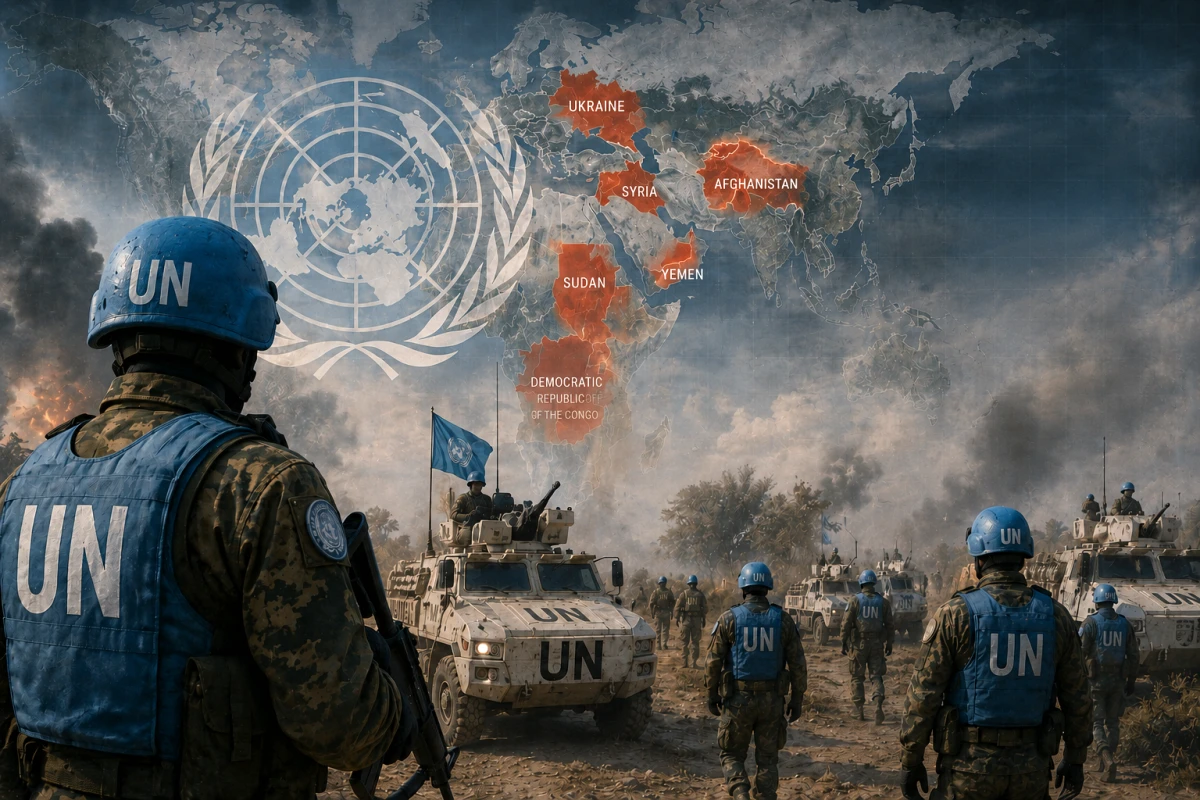
Currently, nearly three-quarters of all personnel in international missions are concentrated in just five countries — the Central African Republic, South Sudan, Somalia, the Democratic Republic of the Congo, and Lebanon.
SIPRI is particularly concerned about the funding situation for UN operations. According to the institute, of the $5.6 billion budgeted for 2024–2025, peacekeeping missions are short by about $2 billion.
The reason is that some of the largest donor countries have fully or partially failed to meet their financial commitments. At the same time, political consensus on decisions within the UN Security Council is becoming increasingly difficult.
SIPRI notes that the rigid positions of permanent members of the Security Council and threats of veto are increasingly blocking the extension of peacekeeping mandates. As an example, the institute cites the situation surrounding the UNIFIL mission in Lebanon. According to SIPRI, the United States advocated for the cessation of its activities even despite ongoing violations of the ceasefire between Israel and Lebanon. As a result, the mission was extended only as a compromise solution — until December 2026.
Despite the crisis, SIPRI believes that the very idea of international peacekeeping and multilateral conflict management still retains support.
However, the institute warns: if funding cuts and political blockages continue, the international community's ability to respond to armed conflicts will gradually weaken.