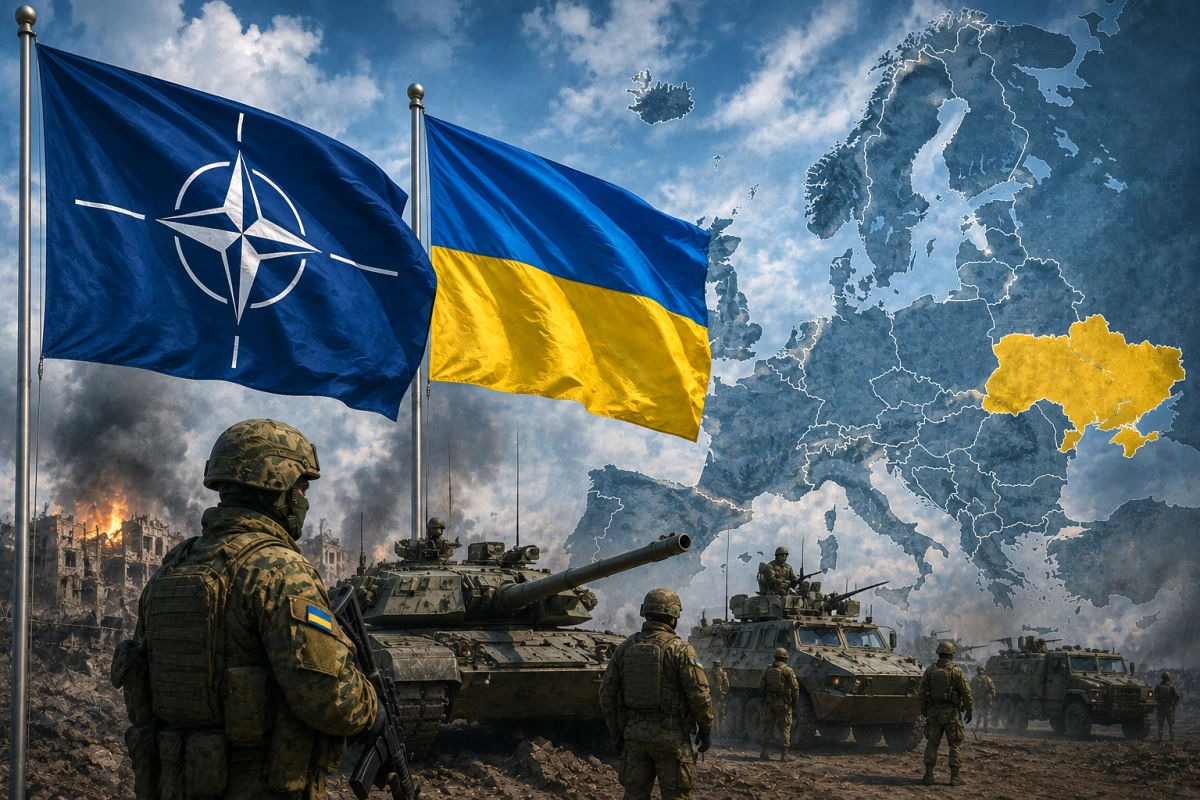
NATO Secretary General Mark Rutte's initiative to allocate 0.25% of GDP from alliance countries for military aid to Ukraine did not receive unanimous support. Several major NATO countries opposed it.
NATO has experienced disagreements regarding a new plan to increase military aid to Ukraine.
According to The Telegraph, the United Kingdom, France, Spain, Italy, and Canada blocked an initiative by Mark Rutte that proposed mandatory contributions from alliance member countries of 0.25% of their GDP to support Ukraine.
The publication reports that the NATO Secretary General hoped to secure approval for the initiative at the upcoming alliance summit in Ankara, but acknowledged that it would not be possible to implement it due to a lack of unanimous support.
This is particularly important for NATO, as key decisions within the alliance are made only by consensus.
According to journalists, several countries are already spending at least 0.25% of their GDP on aid to Ukraine and support Rutte's proposal. Among them are the Netherlands, Poland, as well as the Baltic and Northern European countries.
Amid the ongoing war, the eastern flank states of NATO remain among the most active supporters of expanding military support for Kyiv.
A source within the alliance told The Telegraph that some major Western European countries are "not thrilled about this idea."
According to the Kiel Institute for the World Economy, which tracks international aid to Ukraine, some countries are already exceeding the spending level proposed by Rutte.
The NATO Secretary General has repeatedly emphasized that support for Ukraine within the alliance is distributed extremely unevenly. In his opinion, many states are not sufficiently involved in financing aid to Kyiv. Rutte has also long advocated for Europe to take on a greater share of the responsibility for supporting Ukraine, rather than relying mainly on the U.S.
Swedish Prime Minister Ulf Kristersson has expressed a similar position.
"I would very much like more countries that speak so well of Ukraine to back up their words with real money," he stated.
The discussion around the new funding mechanism shows that there are still differing approaches within NATO regarding the scale and form of long-term support for Ukraine.
At the same time, Eastern and Northern European countries continue to increase pressure on their allies to raise the volume of aid to Kyiv.