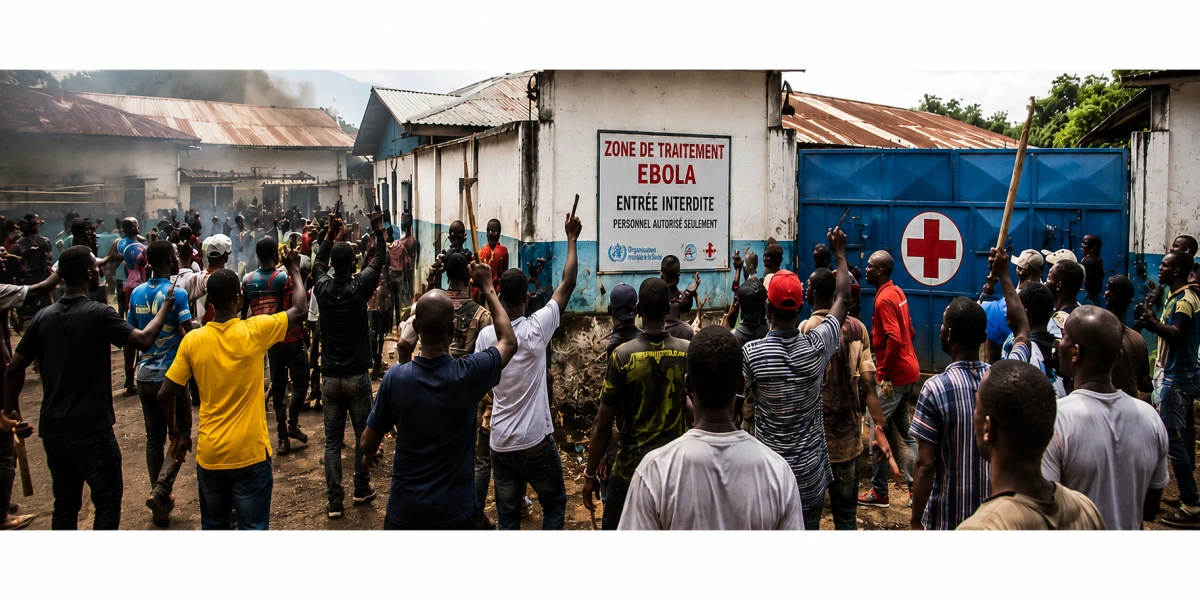
In the Democratic Republic of Congo, a group of angry locals stormed a hospital where patients with Ebola fever are being treated. The incident occurred in the city of Mongbwalu and is already the third attack on medical facilities in the region in recent days.
According to eyewitnesses, people demanded to be handed the bodies of deceased relatives. During the unrest, gunshots were heard; however, there is currently no information about any casualties, reports NOS.
Medical staff refuse to hand over the bodies of those who died from Ebola to their relatives, as the deceased patients remain extremely contagious. Special teams in protective suits conduct the burials, and armed guards are often stationed at cemeteries to prevent further clashes.
The situation in the region remains tense. Earlier, in the settlement of Rwampara, unknown individuals set fire to a tent center for patients suspected of having Ebola. As a result of one of the attacks, 18 people with possible infections escaped, and their whereabouts are still unknown.
World Health Organization Director-General Tedros Adhanom Ghebreyesus acknowledged that there is strong distrust among the population of Congo towards medical personnel and humanitarian organizations. According to him, fear, misinformation, and years of armed conflict only exacerbate the tension.
Additional complications arise from the fighting in the eastern part of the country, where government forces are confronting Islamist groups and M23 rebels. Due to the ongoing instability, it is difficult for medical staff to carry out vaccinations, track contacts of the infected, and provide basic medical assistance.
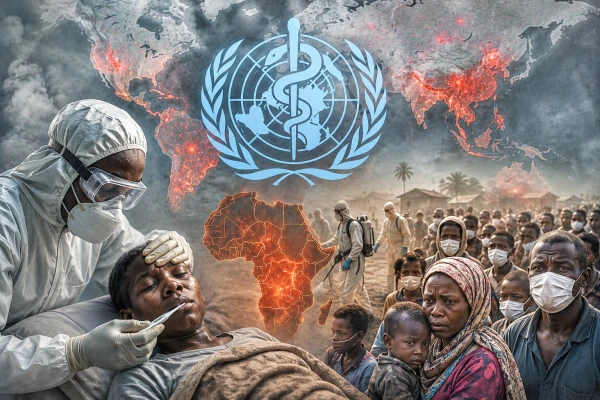
According to the latest WHO data, there have been over 900 suspected cases of Ebola in the Democratic Republic of the Congo, of which 101 have been confirmed in the laboratory. The death toll has reached at least 176 people.
Experts warn that the Ebola outbreak in Congo could spiral out of control if violence against medical personnel and humanitarian missions continues. Amid war, panic, and distrust among the population, the fight against the dangerous virus becomes not only a medical but also a humanitarian issue.