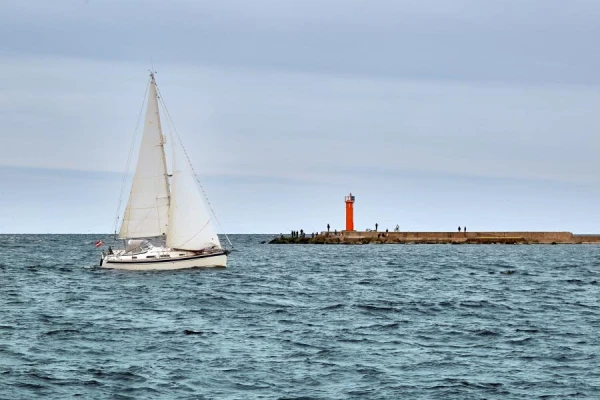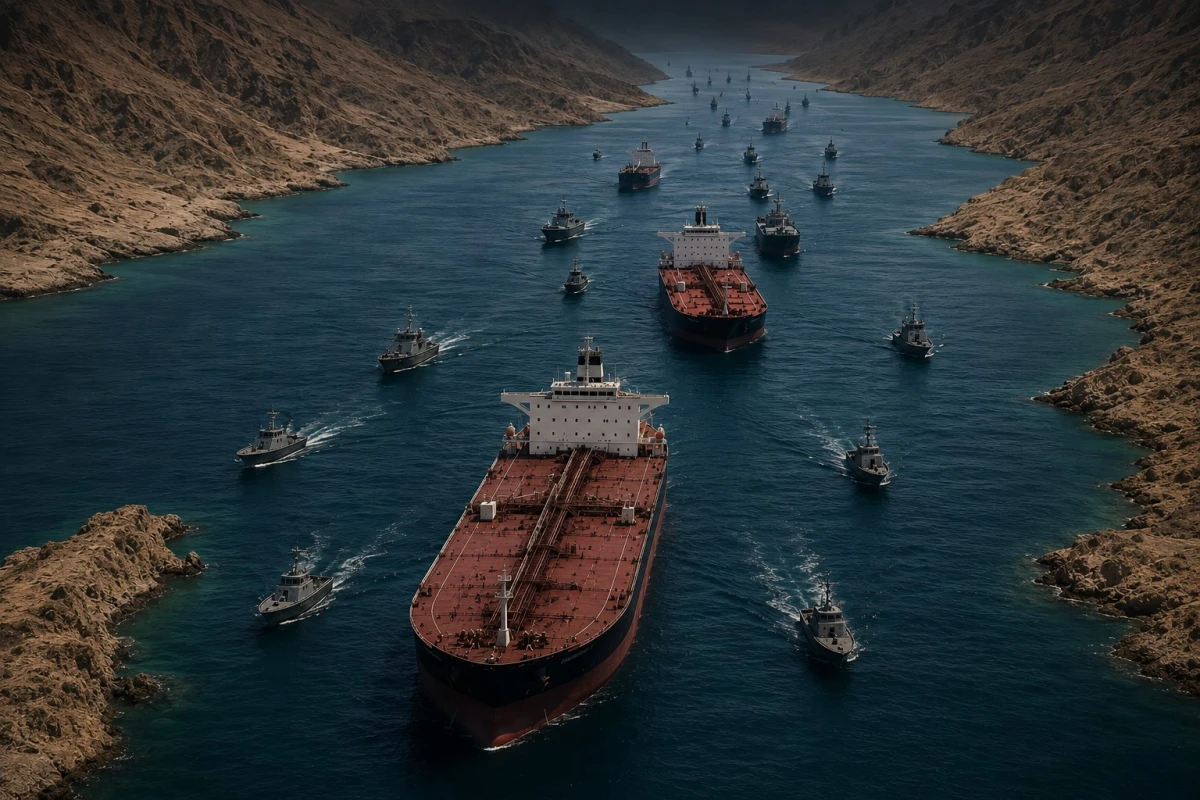
Iran has created a "Vessel Information Declaration" that shipping companies must fill out for their tankers to pass through the Strait of Hormuz. The document contains more than 40 questions.
Iran intends to require tanker owners to fill out a "Vessel Information Declaration" for safe passage through the Strait of Hormuz, U.S. television channel CNN reported on Thursday, May 7, having obtained the document. The declaration, consisting of more than 40 questions, was prepared by the Iranian Administration of the Persian Gulf Strait (PGSA), established by the country's authorities on May 5.
The document requires, among other things, the name and identification number of the vessel, its previous name, as well as the country of origin and destination. Information about the citizenship of the owners, operators, and crew members of the vessel must also be provided. Detailed information about the cargo being transported is mandatory.
All this data should be sent to the PGSA's email before the vessel passes through Hormuz. "The responsibility for providing incorrect or incomplete information lies solely with the applicant, and they will also bear responsibility for all resulting consequences," the organization's email, reviewed by CNN, states.
It is unclear whether Iran will charge a fee for passage through the strait
The document does not indicate whether Iran intends to charge a fee for passage through the Strait of Hormuz. As the channel points out, earlier authorities in Tehran viewed this as a potential source of revenue, the funds from which could be directed towards the country's recovery after bombings by the U.S. and Israel. According to CNN, Iran can currently charge up to two million dollars from each vessel.
At the same time, if such payments are introduced, U.S. citizens and American companies will be prohibited from making them. "Payments to the government of Iran or the Islamic Revolutionary Guard Corps (IRGC), directly or indirectly, for safe passage through the Strait of Hormuz will not be permitted for U.S. individuals, including American financial institutions, or for foreign entities owned or controlled by U.S. persons," the U.S. Treasury Department clarified.
The U.S. intended to undermine Iran's control over the strait with the "Project Freedom"
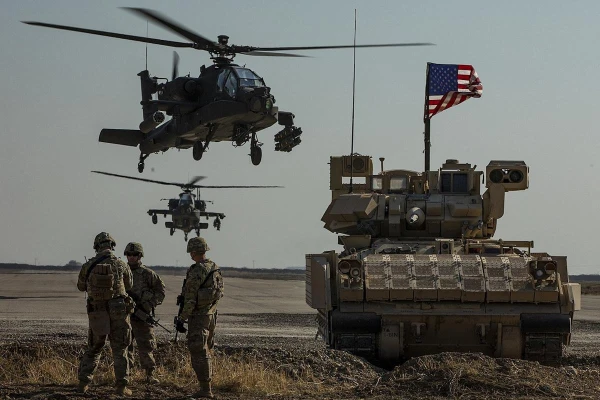
On May 4, the U.S. launched a new operation called "Project Freedom," under which American military forces were to escort commercial vessels in the Strait of Hormuz. U.S. President Donald Trump threatened Iran with retaliatory measures in the event of attacks on American ships. According to the country's Secretary of State Marco Rubio, this is a "defensive, not offensive operation." "There will be no shooting unless they open fire on us first," the U.S. Secretary of State explained.
On the night of May 6, Trump wrote on the social network Truth Social that the "Project Freedom" operation would be "paused for a short period of time to determine whether it is possible to finalize and sign an agreement" with Iran. According to the U.S. president, he was asked about this by Pakistan "and other countries."