
Russia leads the trend of global undermining of human rights. The world is flourishing with "primal brutality," and 2025 was the year of "predators and bullies," writes Amnesty International in its annual report.
The world is flourishing with "primal brutality," and the year 2025 has only "added fuel to the fire," continuing a sharp turn towards "betrayal of international obligations" and "self-destruction," writes the international organization Amnesty International in its annual report published on Tuesday, April 21, as reported by DW. Its Secretary General Agnes Callamard emphasizes that the deterioration of the human rights situation worldwide is "not just another 'difficult period.' "This is a complex moment that threatens to destroy everything that has been built over the last 80 years," she warns, calling 2025 the year of "predators and bullies."
"This predatory alternative world order suppresses dissent and protests, uses dehumanizing rhetoric, and contributes to hate crimes and the use of law as a weapon. It is based not on respect for our common humanity but on commercial superiority and technological hegemony," Callamard continues. "War, not diplomacy, rules the day," she adds, highlighting, as in previous years, the conflict in the Middle East and Russia's war against Ukraine.
Russia at the Forefront of the Attack on Human Rights
According to Amnesty International, "at the forefront" of the global undermining of human rights are Europe and Asia, with "Russia continuing to lead this trend." The human rights situation in the Russian Federation has worsened over the past year, the organization states: the Kremlin continues its aggressive war against Ukraine, authorities restrict the freedom of peaceful assembly, expression, religion, and beliefs, intensify censorship on the internet, and suppress dissent.
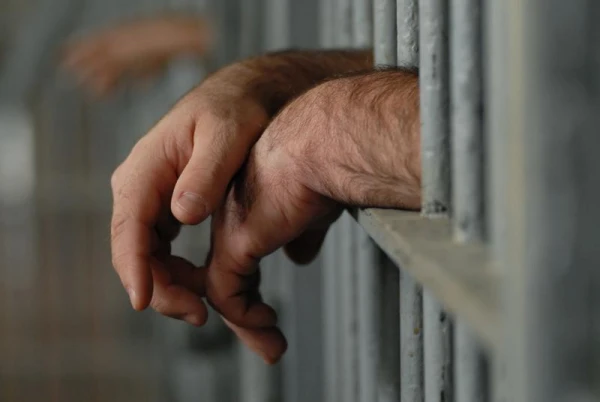
A distinctive feature of the Russian law enforcement and judicial system remains arbitrary detentions on fabricated charges without independent and impartial investigations and trials, human rights defenders point out. "Torture and other forms of ill-treatment have been endemic and carried out with near-total impunity. Detainees were held in inhuman or degrading conditions," the authors of the report list.
The main source of human rights violations in Russia and by Russian authorities remains the full-scale invasion of Ukraine. Amnesty, as in previous years, points to gross violations of the rights of Ukrainian prisoners of war, including civilians taken to Russia. "Enforced disappearances, arbitrary arrests, detention without communication with the outside world, torture and other forms of ill-treatment, as well as unfair trials. Some of these actions constituted war crimes and crimes against humanity," human rights defenders state.
The War in Ukraine as a Factor of Repression within Russia
The war also remains the main factor limiting freedoms within Russia. Those opposing the invasion of the neighboring country face severe penalties and long sentences. As an example, Amnesty cites the case of Mark Kislicin. In 2023, he was sentenced to 12 years in a penal colony on charges of treason for transferring 865 rubles to a Ukrainian account, which the security forces considered financing the Armed Forces of Ukraine (AFU). In March 2025, the Supreme Court of the Russian Federation upheld the sentence.
Overall, the number of politically motivated criminal prosecutions on charges of extremism, terrorism, treason, and espionage has increased over the year. "Repressive measures against opposition politicians both inside and outside Russia, as well as the movements they represented, have paved the way for mass repressions against their associates," Amnesty states, citing the case of Alexander Skobov, who was sentenced to 16 years in prison in March on terrorism charges for his social media posts and participation in the Free Russia Forum conference in Lithuania - an organization recognized as "terrorist" in Russia.
Censorship in the Russian Federation as a Weapon to Suppress Civil Society
Russian authorities continue to create a "sovereign internet," restricting access to websites, blocking social networks, and slowing down internet traffic, Amnesty lists. Under the pretext of combating fraud, the operation of messaging services Telegram and WhatsApp has effectively been limited, and users are being forced to switch to the Russian platform Max. Since September, "intentional searches for extremist materials on the internet" and advertising VPNs have been considered administrative offenses.
Human rights defenders have also included the persecution of the group "Stop Time" for performing songs by artists recognized as "foreign agents" among the manifestations of censorship in the Russian Federation. The tightening of legislation on "foreign agents" and "undesirable organizations" is described by Amnesty as "a weapon for suppressing civil society." Over the year, 95 organizations were recognized as "undesirable" in Russia, and 219 individuals and organizations were labeled as "foreign agents," the report notes.
A key trend of the year in Russia, according to Amnesty International, has been "the increasingly widespread application of legislation on 'extremism' and 'terrorism' against critics of the authorities, representatives of civil society, and independent voices," says DW Janine Uhlmannsiek, an expert on Russia at the organization.
Victims of the Deterioration of Relations between Russia and Azerbaijan
Describing the situation in Russia, Amnesty specifically mentions the brutal detention of Azerbaijanis in Yekaterinburg. As a result of the raids, two Azerbaijanis died. The forensic examination in Azerbaijan, which received the bodies, determined that the men died due to beatings and torture.
After this, 11 Russians were detained in Baku. They were accused of being part of an organized criminal group allegedly involved in smuggling and selling drugs from Iran. The detained were brought to court with demonstrative brutality, showing signs of beatings. Human rights defenders and analysts stated that the detention of random individuals, the charges brought against them, and the demonstrative brutality were a mirror response from Baku to Moscow. The detainees are still in pre-trial detention.
While pointing to numerous human rights violations in Azerbaijan, Amnesty International does not mention the case of the detained Russians.
Amnesty: The Isolation of Belarus Has Weakened after U.S. Decisions
In Belarus, the situation with human rights violations has not improved over the year: authorities still restrict freedom of expression and assembly, suppress dissent, and apply torture and other forms of ill-treatment, the report states. Minsk continues to seek the return of emigrants, denying them consular services abroad. Despite this, the "sense of Belarus's international isolation" has weakened after diplomatic initiatives from the U.S., including the lifting of some sanctions in exchange for the release of political prisoners, Amnesty states.
According to Amnesty International, over the year, more than 170 political prisoners were released, but hundreds of human rights defenders, activists, journalists, and lawyers convicted on political grounds remain in Belarusian prisons. "An increasing number of people were subjected to arbitrary persecution and imprisonment," Amnesty writes.
A similar trend of weakening isolation is observed by Amnesty International in relation to Russia. The willingness of the EU and the international community to "respond clearly and decisively" to Russia's aggression in Ukraine is also "under increasing pressure," notes Uhlmannsiek. "Political and economic problems in Europe, changes in U.S. policy under President Trump, as well as new conflicts and military escalation in other countries, weaken international attention," she states.
"Influential figures are increasingly willing to ignore international law and weaken the rules-based order. This is reflected in rhetoric that downplays Russia's responsibility for serious violations and in suggestions that impunity for aggression might be an acceptable price for ending hostilities," the Amnesty expert believes, urging EU leaders to "strengthen their commitment to international justice in Ukraine."
Suppression of Dissent in Kazakhstan
In Kazakhstan, authorities in 2025 continued to use criminal articles on "spreading knowingly false information" and inciting ethnic, social, racial, and religious hatred to "silence critical voices and suppress dissent," Amnesty points out.
According to local human rights defenders, over the year, at least 39 people were imprisoned on politically motivated charges. Pressure on the LGBT community has also intensified in the country, especially after amendments prohibiting "LGBT propaganda" were introduced.
Georgia Descends into Authoritarian Practices
One of the most serious deteriorations in the human rights situation over the year occurred in Georgia, according to Amnesty International's report. "Georgia has plunged headlong into authoritarian practices, systematically suppressing dissent," human rights defenders write.
In response to a wave of protests, the ruling party "Georgian Dream" adopted a series of repressive laws, the report emphasizes. Authorities used their political influence to "strengthen control and turn law enforcement, the judicial system, and oversight bodies into instruments of political retribution," Amnesty's report states. The purge affected all state institutions and was accompanied by mass layoffs of civil servants who, in the authorities' view, sympathized with the protests, AI notes. By sharply limiting the freedom of assembly, authorities also began systematically persecuting activists, journalists, and opposition supporters.
Masked police officers regularly beat detainees during arrests and detention, and unknown individuals in civilian clothes, including armed ones and likely linked to the authorities, intimidated and attacked protesters and journalists with police complicity, Amnesty writes.
Rise of Hate Crimes in Germany
In Germany, according to Amnesty International, the number of racist, anti-Semitic, and Islamophobic crimes, as well as hate crimes against women and members of the LGBT community, doubled over the year compared to pre-pandemic levels. Amnesty criticized the German government's policy of reducing migration, limiting the acceptance of refugees, including through humanitarian programs, and increasing deportations, as it did last year.
Amnesty also highlights police actions during pro-Palestinian rallies in Germany. The report notes that actions related to the fighting in the Gaza Strip are only permitted in German and English in Germany. "When protesters chanted in Hebrew and Arabic at the demonstration on February 8, the protest was immediately violently dispersed by the police," AI writes.
At the same time, Amnesty International criticizes the ban in Germany on the slogan "From the river to the sea," which was actively used at rallies worldwide after the attack by militants of the terrorist group Hamas on Israel on October 7, 2023. At that time, the German Ministry of the Interior banned it, ruling that it expresses support for Hamas and incitement to violence against Jews and the State of Israel. "Do not doubt that Hamas welcomes chanting 'From the river to the sea' because the Palestinian territories 'between the river and the sea leave Israel with no space at all,'" states an open letter signed by 30 Jewish media outlets worldwide and published after the Hamas attack.
Speaking about Israel's policies, Amnesty reiterated that the country "continued to commit acts of genocide and apartheid." "The population of Gaza has been subjected to mass starvation, killings, and displacement, as well as the destruction of homes and other civilian infrastructure, which continues despite ceasefire agreements," human rights defenders write.
The ruling groups in the Gaza Strip, primarily Hamas, "held and mistreated hostages until their release," and also endangered civilians by placing military facilities in densely populated areas, Amnesty notes. Additionally, Hamas militants executed at least 39 people, accusing them of collaborating with Israel, the report states.
"Racist, Anti-Immigrant Program of Trump"
In the United States, the administration of President Donald Trump implemented a "racist, anti-immigrant program through decrees that dehumanized and criminalized migrants and asylum seekers," writes Amnesty International.
Human rights defenders point to regular raids, patrols, and unlawful detentions on the streets, as well as the creation of a system of mass detention, in which thousands of people find themselves in overcrowded facilities without legal assistance. Moreover, Amnesty accuses Washington of persecuting students for participating in pro-Palestinian demonstrations, pressuring universities, and attacking LGBT rights.
Overall, it is the United States that Amnesty International holds responsible for the establishment of a "new order," the vision of which, the organization writes, was described by U.S. Secretary of State Marco Rubio at the Munich Security Conference.
At the same time, Amnesty warns that resisting the attacks of Trump or Russian President Vladimir Putin on the rules-based order "does not mean accepting the Chinese concept." "This is not an alternative, as China also consistently rejects universal human rights. China's pursuit of hegemony may take different forms and be carried out with different tools, but the result is the same: inequality and repression," Amnesty International states.









Leave a comment