
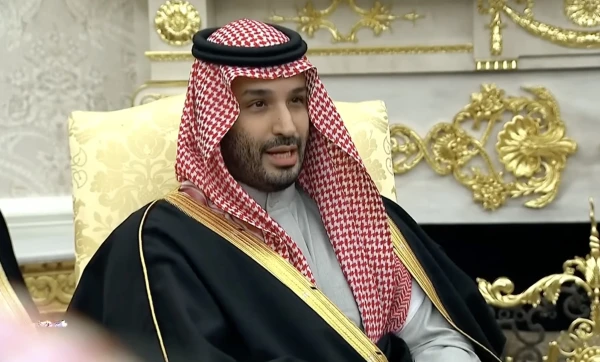
Saudi Arabia is trying to convince the US to abandon the blockade of the Strait of Hormuz and resume negotiations with Iran, fearing further escalation in the Middle East, Arab officials told The Wall Street Journal.
They warned that the current pressure tactic by Washington on Tehran could have the opposite effect, namely the closure of the Bab-el-Mandeb Strait, which accounts for 12% of all maritime oil transport and 8% of liquefied natural gas, connecting the Red Sea with the Gulf of Aden. This strategic artery runs between Yemen and Eritrea and serves as the southern gateway to the Suez Canal — one of the key trade routes between Asia and Europe.
Saudi Arabia has recently managed to return its oil exports to pre-war levels — about 7 million barrels per day, despite the blockade of the Strait of Hormuz, thanks to the transportation of crude oil via pipeline to the port of Yanbu. However, these supplies will be threatened in the event of a closure of the exit from the Red Sea.
The area near the Bab-el-Mandeb Strait is controlled by Yemeni Houthis. According to Arab officials, Iran is pressuring the group to block this maritime corridor. The Houthis themselves have previously admitted such a possibility. They may also start charging fees for the passage of ships through the Bab-el-Mandeb Strait.
US President Donald Trump announced a maritime blockade of the Strait of Hormuz after failed negotiations with Iran in Pakistan last weekend. It began on April 13. Trump threatened to seize vessels that attempt to violate it and sent more than 15 ships to the region.
Thus, the US president hopes to achieve the complete opening of the Strait of Hormuz for the free movement of energy resources, officials said from the White House. At the beginning of the war, Iran effectively closed it by attacking vessels in the waters, which reduced oil exports by about 13 million barrels per day and pushed futures above $100 per barrel.
Saudi Arabia and other Gulf countries do not want the war to end with Iran gaining control over the Strait of Hormuz, which is their economic lifeline. But at the same time, they advocate for the Americans to resolve the issue at the negotiating table, officials noted.
According to them, despite the public hardline stance of the US and Iran, both countries are actively engaging with intermediaries and are open to diplomatic resolution if each shows sufficient flexibility.
Media reports suggest that delegations may return to Islamabad for a new round of negotiations as early as the end of this week. The US demands that Iran agree to a 20-year suspension of uranium enrichment; however, the republic is currently only willing to accept a five-year pause, Bloomberg sources cited by The Moscow Times reported.









Leave a comment