
The U.S. demands that Tehran fully comply with the "real agreement reached" and ensure safe passage through the Strait of Hormuz. European countries call for the ceasefire to be extended to Lebanon.
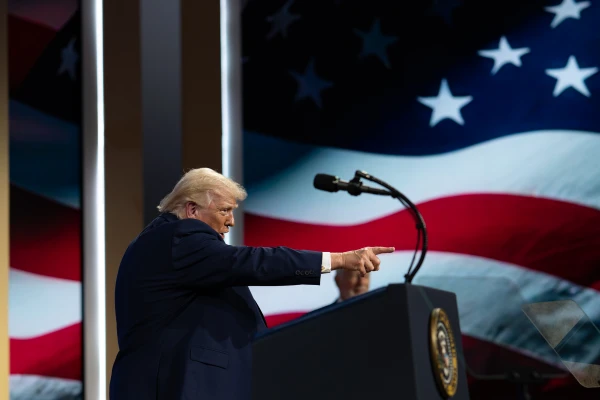
The United States will carry out strikes on Iran that are "more extensive, more successful, and stronger than anyone has ever seen" if Tehran does not fully comply with the "real agreement reached" and does not ensure safe and open passage through the Strait of Hormuz. This was stated by U.S. President Donald Trump on Thursday, April 9, on the social network Truth Social.
According to him, "all American ships, planes, and military personnel, as well as additional ammunition, weapons, and everything else that is reasonable and necessary for delivering lethal strikes and destroying the enemy - whose forces have already been significantly weakened - will remain in their positions in Iran and around it" until Tehran implements the agreements.
This specifically concerns Iran not acquiring nuclear weapons and guaranteeing unobstructed passage through the strait, Trump wrote.
European countries call for the ceasefire to be extended to Lebanon.
Meanwhile, Spain, the United Kingdom, France, and the EU's High Representative for Foreign Affairs and Security Policy, Josep Borrell, called on April 9 to extend the ceasefire reached between the U.S. and Iran to Lebanon as well.
Spanish Foreign Minister José Manuel Albares accused Israel of violating international law and the two-week ceasefire in the Middle East with its airstrikes. In turn, British Foreign Secretary Yvette Cooper described Israel's bombings in Lebanon as "extremely harmful," as reported by Reuters.
France condemned the "massive" Israeli attacks on April 8, emphasized Foreign Minister Jean-Noël Barrot. Iran, in turn, must stop supporting the Lebanese radical Shiite movement "Hezbollah," he added.
Iranian President: Strikes on Lebanon Make Negotiations Meaningless
Meanwhile, Iranian President Masoud Pezeshkian stated on April 9 that Israeli strikes on Lebanon violate the ceasefire agreement and make negotiations meaningless. According to Pezeshkian, the Islamic Republic will not abandon the Lebanese people.
"Hezbollah" Promised to Continue Striking Israel
The Iran-backed group "Hezbollah" promised to continue striking Israel after devastating Israeli airstrikes in Lebanon. On the night of April 9, in response to Israel's "violation of the ceasefire," the kibbutz Manara in northern Israel was shelled, according to a statement from the Shiite group. Counterstrikes against Israel will continue until the "Israeli-American aggression" ceases, "Hezbollah" added.
As a result of Israeli airstrikes, more than 250 people have died, Reuters reported. More than 890 have been injured, according to Lebanon's Ministry of Health. UN Secretary-General António Guterres sharply condemned the strikes, calling them "massive attacks" that resulted in "hundreds of civilians, including children, being killed and injured," as well as damage to civilian infrastructure.
The U.S. Did Not Confirm Agreement on the "Hezbollah" Clause
The cessation of attacks by Israel on "Hezbollah" was among the conditions put forward by Iran for a ceasefire in the region. However, the U.S. did not officially confirm agreement on this point. Donald Trump, announcing the ceasefire, described Iran's proposals as a "workable basis for negotiations," but did not indicate that the U.S. agreed to all of these points.
Iran later stated that it did not consider it reasonable to continue the ceasefire regime. According to Iranian Parliament Speaker Mohammad Bagher Ghalibaf, three out of ten points of Iran's plan to end the war were violated in less than a day. In addition to Israel's strikes on "Hezbollah," Tehran listed the discovery of a drone over its territory and statements from opponents about further opposition to Iran's nuclear program as violations.
Two-Week Ceasefire
The U.S. and Iran agreed on a two-week ceasefire on the night of April 8 - the agreement was reached less than an hour before the expiration of the ultimatum set by U.S. President Donald Trump, who promised to "destroy" the Islamic Republic. Trump stated in a comment to AFP that the deal was a "complete and absolute victory" for the U.S. Tehran, in turn, regarded the ceasefire as its victory. "The enemy has suffered an undeniable, historic, and crushing defeat in its cowardly, illegal, and criminal war against the Iranian nation," stated the Iranian Supreme National Security Council.
The White House reported that Israel also joined the ceasefire, but Prime Minister Benjamin Netanyahu clarified that it does not extend to Lebanon.
The War of the U.S. and Israel Against Iran
Since February 28, the U.S. and Israel have been carrying out airstrikes on Iran, resulting in the deaths of Iran's Supreme Leader Ayatollah Ali Khamenei and a number of high-ranking officials and security personnel.
In response, Iran attacked neighboring countries in the Persian Gulf region using missiles and drones. According to the Islamic Republic, the targets of these attacks were American military bases in the region. Iranian strikes also targeted oil storage facilities in several Persian Gulf countries and oil tankers. Additionally, Azerbaijan and Cyprus, which is temporarily presiding over the European Union, have been affected by Iranian attacks since the beginning of the war.









Leave a comment