
A national mourning period has been declared in Lebanon after at least 254 people were killed in Israeli strikes on Wednesday. The EU insists that the ceasefire agreement between the U.S. and Iran should extend to the country.
The European Union has strongly condemned the new wave of Israeli strikes on Lebanon, warning that the military escalation threatens to destroy the fragile ceasefire agreement reached between the U.S. and Iran to end the war.
Pakistan, which mediated the deal, stated that the ceasefire would extend to Lebanon "with immediate effect." However, Israel denied this claim and launched a massive strike. As a result, according to Lebanese authorities, at least 254 people have died.
This figure marks the highest number of fatalities in a single day in the long-standing war between Israel and Hezbollah, the Iranian-backed Shiite militia.
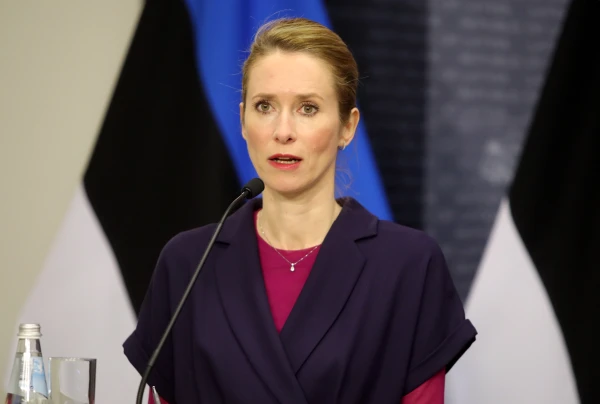
"Hezbollah has dragged Lebanon into war, but Israel's right to self-defense does not justify such widespread destruction," said High Representative Kaja Kallas on Thursday morning, adding her voice to the growing chorus of criticism.
"As a result of Israeli strikes last night, hundreds of people have died, so it is difficult to argue that such brutal actions fall under self-defense. Israel's actions pose a serious threat to the ceasefire between the U.S. and Iran. The Iranian ceasefire must also extend to Lebanon," she added. "The Hezbollah group must disarm. The EU supports Lebanon's efforts to disarm it."
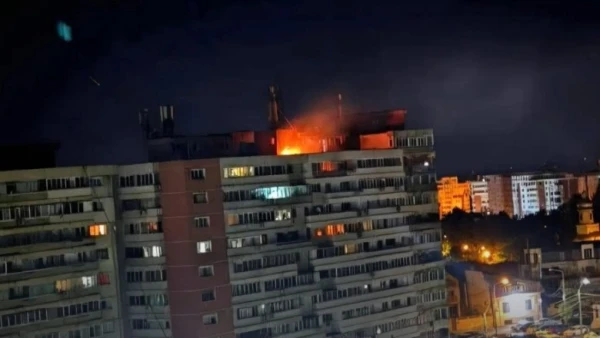
Lebanon declared a period of national mourning following the Israeli attacks on Wednesday, during which over 100 airstrikes were carried out in just 10 minutes. The offensive dealt a powerful blow to southern Lebanon and several areas of the capital Beirut, causing panic among the civilian population and attempts to rescue those trapped under the rubble.
The Israeli army stated that it targeted military facilities used by Hezbollah militants and accused the militants of attempting to infiltrate areas beyond their strongholds.
Lebanese Prime Minister Nawaf Salam stated that the shelling of civilian areas was carried out "with complete disregard for the principles of international law and international humanitarian law." President Joseph Aoun described it as a "massacre."
Second Gaza
The surge in violence has greatly alarmed Europeans, who fear that the growing instability and violence could undermine the fragile efforts of the Lebanese government to strengthen the national army and weaken Hezbollah's insidious influence on the multinational state. There are also concerns about a potential wave of migration.
After a phone call with Salam and Aoun, French President Emmanuel Macron condemned the Israeli bombings "in the strongest possible terms."
The attacks "represent a direct threat to the stability of the recently achieved ceasefire. Lebanon must be fully encompassed by it," Macron said.
Italian Foreign Minister Antonio Tajani warned of a "second Gaza" and summoned the Israeli ambassador in response. His Belgian counterpart, Maxime Prevot, who was in Lebanon during the strikes, stated that Israel's actions were "disproportionate."
German Foreign Minister Johann Wadephul urged Israel to "limit itself to necessary self-defense against Hezbollah and not go beyond it," his spokesperson reported.
Spanish Prime Minister Pedro Sanchez stated that Israeli Prime Minister Benjamin Netanyahu's contempt for human life and international law is unacceptable.
Sanchez, a vocal critic of Netanyahu's government, also called for the EU to suspend the Association Agreement with Israel - a proposal that Spain and other countries have promoted in the context of Israel's war in Gaza.
Last year, when the humanitarian situation worsened, the European Commission proposed a partial suspension of the agreement with Israel, but irreconcilable differences among member states prevented the necessary qualified majority from being reached to advance it.
Amid growing outrage, the White House has struggled to explain the terms of the ceasefire agreement with Iran, which are fiercely contested by the two opposing camps, raising doubts about how long the fragile ceasefire can last.
Tehran insists that Lebanon has always been part of the 10-point plan, and therefore the Israeli strikes are a violation of its provisions. However, U.S. Vice President J.D. Vance, who was involved in crafting the agreement, stated that Washington "never made such a promise," and the conflicting versions are a result of "misunderstanding."
According to Vance, Israel suggested "to test itself a little in Lebanon" to "ensure that our negotiations will be successful."
Meanwhile, Caroline Levitt, White House Press Secretary, stated that the potential inclusion of Lebanon in the ceasefire agreement will be "discussed further," but warned that closing the Strait of Hormuz in response to the recent Israeli attacks is "unacceptable."









Leave a comment