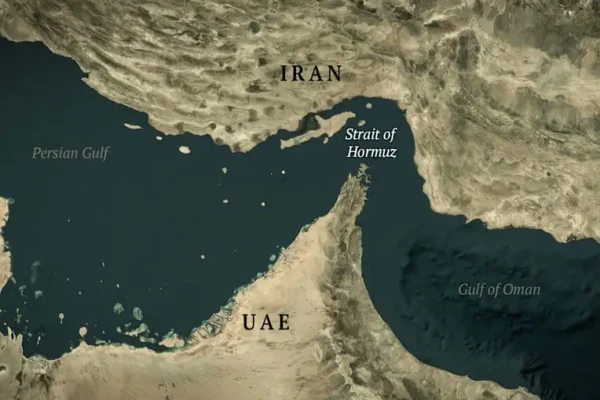
The two-week ceasefire and agreement to resume operations in the Strait of Hormuz have not yet brought relief to the global shipping market. Experts warn that due to strict inspections by Iran and the massive accumulation of tankers, it will not be possible to clear the 'bottleneck' in the short term.
Despite the official announcement of a ceasefire, shipping companies remain extremely cautious. The main issue is the uncertainty in coordinating the passage of vessels with Iranian authorities, CNN reports. Richard Meade, editor of the specialized publication Lloyd’s List, notes that shipowners still do not have clear instructions from Tehran. According to him, the system of thorough inspections that was in place until midnight has not fundamentally changed: Iran continues to scrutinize the ownership, insurance, and charter history of each vessel. The primary goal of these inspections is to completely eliminate any connection of cargoes or companies with Israel and the United States.
The scale of the logistical collapse is confirmed by analysts' data. Ana Subasic from Kpler reported that currently around 1,000 ships are amassed in the Strait of Hormuz, with 80% of them remaining blocked inside the Persian Gulf. Under normal conditions, it would take just over a week for such a convoy to pass, however, the current regime of 'manual control' by Iranian military significantly slows down the process.
Experts estimate that due to the need for individual approvals, no more than 10–15 vessels will be able to pass through the strait each day. Thus, during the entire 14 days of the ceasefire, only 150–210 ships will manage to escape the trap. This means that the overwhelming majority of tankers and bulk carriers will remain in the waiting zone even after the agreement expires, raising questions about the rapid stabilization of global supplies.