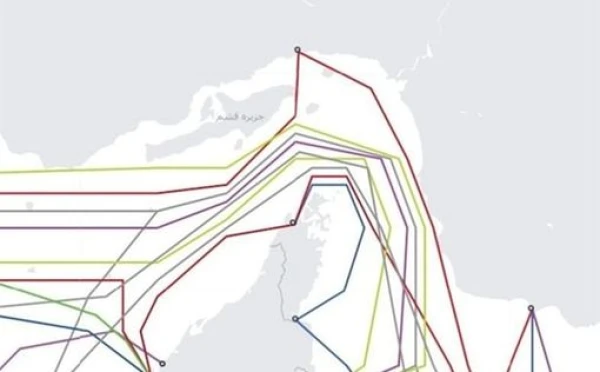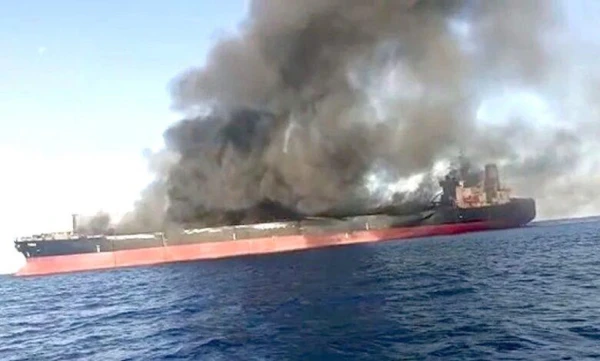
The United Arab Emirates are ready to assist the US and allies in forcibly opening the Strait of Hormuz. If this occurs, the UAE would become the first country in the Persian Gulf to enter into war with Iran, writes The Wall Street Journal.
The United Arab Emirates (UAE) are preparing to assist the US and its allies in forcibly opening the Strait of Hormuz, which has been blocked by Iran, the American newspaper The Wall Street Journal (WSJ) reported on Wednesday, April 1, citing Arab officials. If this occurs, the UAE would become the first country in the Persian Gulf to engage in combat against Iran, WSJ notes.
According to its information, UAE diplomats have urged the US and military powers in Europe and Asia to form a coalition to forcibly open the strait. One UAE representative noted that the Iranian regime is convinced that it is fighting for survival and is ready to destroy the global economy by blockading the Strait of Hormuz.
Military Participation Opportunities
A UAE representative also stated that his country is actively exploring military participation options to ensure the security of the strait, including demining and other support operations. Several Arab officials indicated that the UAE supports the occupation of strategically important islands in the strait by the United States, including Abu Musa - an island that has been under Iranian control for half a century and is a subject of territorial dispute with the UAE.
The UAE Ministry of Foreign Affairs stated there is a "broad international consensus in favor of preserving freedom of navigation in the Strait of Hormuz." A corresponding resolution in the UN Security Council is sponsored by Bahrain. Voting is expected on Thursday, April 2.
Strategic Shift
The new position of the UAE marks a fundamental shift in the country’s strategic course, noted representatives of one of the Persian Gulf states. The commercial center of the UAE - Dubai - has long financed the Iranian regime, and Emirati diplomats had actively sought to mediate between the US and Iran until the onset of the war, including organizing a visit to Abu Dhabi by Ali Larijani - a senior Iranian national security official who later died in an airstrike.
Now the UAE is following the course of US President Donald Trump, who insists that allies take on a greater share of the military burden - primarily regarding the issue of unblocking the strait.
Saudi Arabia and other Gulf countries are also opposed to the Iranian regime and want the war to continue until it is weakened or overthrown, although they are not yet ready for military commitments, Arab officials told WSJ in interviews.
Iranian Strikes on the UAE
Iran has launched more missiles and drones at the UAE than any other country, including Israel - about 2,500 units to date. After several weeks of relatively low intensity, Iranian attacks sharply increased: on March 31 alone, about 50 ballistic missiles, cruise missiles, and drones were fired at the Emirates. Tehran warned that it would destroy the vital civilian infrastructure of any Gulf state that supports an operation to seize Iranian territory, specifically mentioning the UAE.
Iranian strikes have disrupted air travel and tourism in the UAE, damaged the real estate market, and triggered a wave of layoffs. The main image of the country - an oasis of stability in a turbulent region - is now under threat. In response, the UAE has imposed strict restrictions: Emirates airline has banned entry and transit for Iranian citizens, and authorities have closed the Iranian hospital and Iranian club in Dubai.
Military Potential
The UAE has a small but capable air force with American F-16 fighters, which participated in airstrikes in Iraq alongside the US Air Force during the fight against the Islamic State. The country also possesses reconnaissance drones and stocks of American bombs and short-range missiles that can partially compensate for shortages faced by the US and Israel. The deep-water port of Jebel Ali and its proximity to the entrance of the Strait of Hormuz make the UAE a convenient base for American operations to seize islands or escort tankers.
A decision to join the military campaign would send a public signal of Arab support for the war against Iran and open additional opportunities for operations against that country and attempts to open the Strait of Hormuz, noted Bilal Saab, a fellow at Chatham House and former Pentagon advisor on the Middle East.
"Proximity to the strait allows for the consolidation of efforts and the deployment of various platforms to protect shipping and strike Iranian targets on the other side of the Persian Gulf," added Grant Rumley, a senior fellow at the Washington Institute for Near East Policy.
Possible Risks
The question of whether a military operation can actually open the strait remains open. According to military analysts, this would require control not only over the waterway itself but also over the entire adjacent territory extending about 160 km - possibly involving ground troops. "I don’t think we can achieve this. Iran only needs to keep the strait under threat - for that, one drone, one mine, one small suicide boat is enough," noted Congressman Adam Smith, a member of the House Armed Services Committee.
Elizabeth Dent, a fellow at the Washington Institute for Near East Policy and a former Pentagon official who oversaw issues related to the Persian Gulf, warned of the dilemma facing countries in the region: by entering the war, they risk facing an even more aggressive Iran, continuing to receive strikes on their critical infrastructure, and struggling to restore relations with their neighbor, especially if Trump declares victory without achieving either the opening of the strait or neutralizing Iran’s missile-drone capabilities.
Russia and China may block the UN Security Council resolution, while France is proposing an alternative version of the document. However, according to officials from Persian Gulf countries, even if the resolution fails, the UAE is ready to join military efforts. Iran, for its part, insists on maintaining permanent control over the strait, including a toll system, while Gulf countries are categorically opposed to any diplomatic settlement that would de facto grant Tehran a voice in the management of this strategic waterway.