The guest even praised the appearance of the U.S. President's younger son.
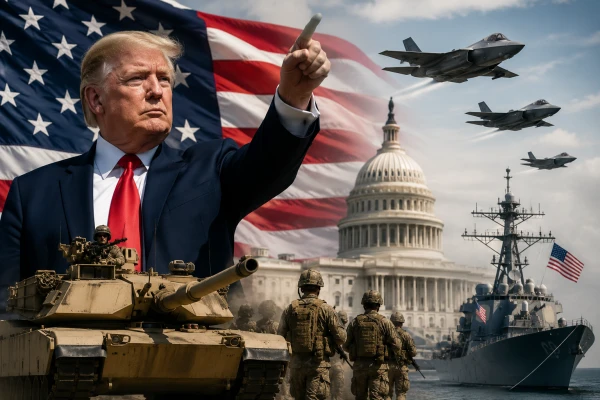
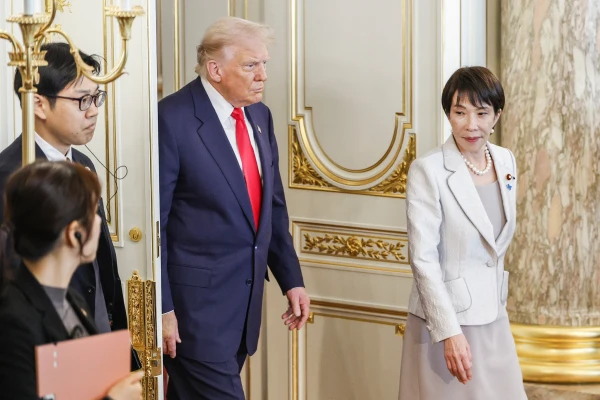
Recently, a meeting took place at the White House between U.S. President Donald Trump and Japanese Prime Minister Sanae Takaiti. What was supposed to be a demonstration of the unbreakable U.S.-Japan alliance turned into a series of diplomatic blunders, scandalous jokes, and sharp criticism directed at the Japanese leader.
Sanae Takaiti's visit to Washington was her first trip to the U.S. and her second meeting as Prime Minister with Donald Trump. They first met on October 28, 2025, just a few days after Takaiti took office. The U.S. President stopped in Tokyo on his way to the APEC summit in South Korea. The initial experience of communication between the two leaders was positive. Their close worldview helped Trump and Takaiti quickly find common ground, and they announced the beginning of a "golden age" in bilateral relations.
The second summit in Washington was intended to build on these successes. It was implied that the main agenda would focus on the economy, specifically the $550 billion investment that Takaiti promised to inject into the U.S. economy in exchange for a reduction in tariffs from 25% to 15%. An agreement to replace Chinese rare earth metals was also expected. The focus was on the island of Minamitorishima, where large reserves of rare earth elements, as well as cobalt and nickel needed for modern energy and technology, were found. The deposit is located at a depth of 6,000 km, so Japan planned to develop it together with the Americans.
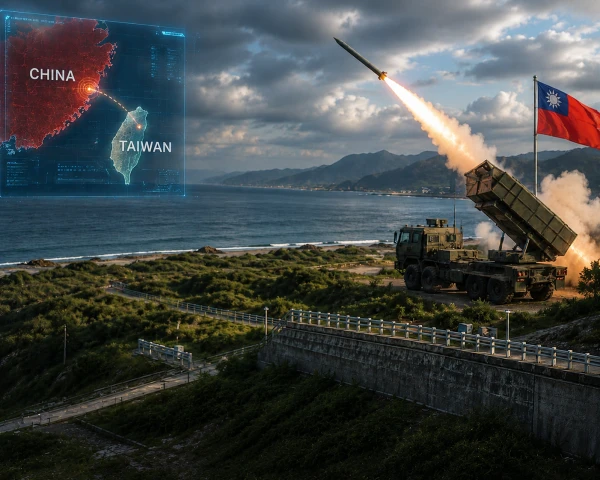
It was also important for Takaiti to discuss China with Trump. Relations between Tokyo and Beijing sharply deteriorated in November 2025 after Takaiti called a possible Chinese attack on Taiwan an "existential threat" to Japan. The careless remark escalated into a major diplomatic crisis and even economic sanctions from Beijing, which banned the sale of dual-use goods to Tokyo and restricted the export of rare earth metals. In such conditions, the Japanese Prime Minister wanted to influence the U.S. President's position before his trip to China, scheduled for March 31, and convince the American leader not to strike a "massive deal" with Xi Jinping.
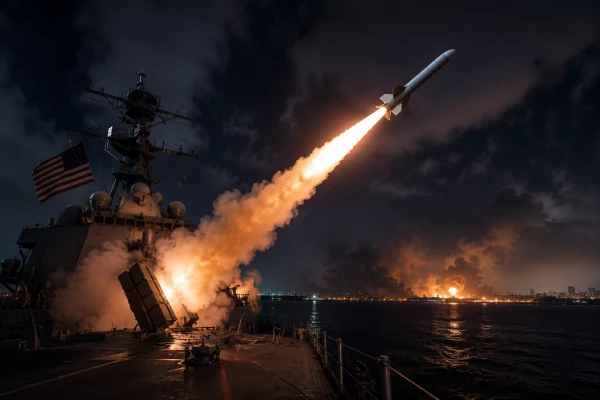
However, due to the war in Iran, the agenda of the three-day visit had to be changed almost on the fly. In addition to the desire to solidify Japan's position as America's indispensable partner in Asia, Takaiti had another goal: to ensure that Japan had no obligations to the U.S. in this story.
To achieve this, she had to work hard. Trump expected more active actions from allies in the Middle East, and by the time of Takaiti's visit, he was already extremely irritated by a series of refusals from close friends, particularly from Britain and Spain. On the eve of the visit, the U.S. President intensified pressure on Tokyo, stating that Japan critically depends on Middle Eastern oil and therefore "must act," demanding that Japanese minesweepers and naval forces be sent to ensure security in the Strait of Hormuz. This was despite the fact that only 9% of the Japanese population supported a U.S. attack on Iran. Even fewer wanted the government to involve the country in a distant and unnecessary conflict.
Takaiti managed to handle the personal Iranian crisis excellently. The Prime Minister dodged all attempts to draw her into this topic. She effectively refused Trump, making it clear that Japan does not intend to send military ships to the Strait of Hormuz, while managing to avoid public reprimands directed at her. Instead, the U.S. President even praised Tokyo for planning to act, unlike NATO, although the Japanese Prime Minister repeatedly stated publicly that she had made no promises to Trump.
Perhaps the investment agreements that the Japanese delegation brought to the White House lifted the U.S. President's spirits. As a result of the negotiations, Washington and Tokyo announced an energy cooperation package totaling $73 billion. It included projects for building nuclear power plants with small modular reactors in Tennessee and Alabama ($40 billion), as well as gas power plants in Pennsylvania and Texas ($33 billion).
Takaiti's promises to increase defense spending and deepen cooperation with the U.S. also contributed to the American leader's favor. To prove her intentions, the Japanese Prime Minister promised to get involved in the production of U.S. air-launched missiles AIM-120 and help quadruple the production of interceptors for Aegis systems.
As for the Chinese issue, the results appeared less clear-cut. Takaiti did not receive direct commitments from the U.S. President. In official documents, China was generally avoided, preferring to refer to "common strategic rivals" instead. The conflict between Beijing and Tokyo over Taiwan was reduced to a confirmation of the desire to ensure peace and stability in the Taiwan Strait.
However, the Japanese did not manage to create a sensation from the visit to the U.S. This was partly facilitated by Donald Trump, whose behavior overshadowed all real and imagined diplomatic achievements. The occasion was an unsuccessful joke that the U.S. President made during the negotiations at the White House.
A Japanese journalist asked him why Washington did not inform its allies about the start of military operations against Iran. In response, Trump became familiar and recalled the Japanese about Pearl Harbor, which they also did not warn Americans about. "We didn’t tell anyone about it because we wanted the element of surprise. Who knows surprises better than Japan, right? Why didn’t you tell me about Pearl Harbor?" the U.S. President stated.
The unexpected attempt to press on a sore spot made Takaiti blush. While Trump was discussing Pearl Harbor, the Japanese Prime Minister abruptly stopped smiling, nervously shifted in her chair, and repeatedly cast significant glances at her delegation. Despite the obvious tension, she did not respond to the U.S. President's outburst and preferred to quickly shift the discussion to a more comfortable topic for everyone.
In Japan itself, the reaction was immediate and harsh. Journalists and politicians criticized Trump for his impudence and tendency to bring up taboo topics. They felt that the U.S. President should have kept himself in check, at least while Takaiti was sitting right in front of him. Others directed their anger at the Prime Minister herself, arguing that the comment about Pearl Harbor was a direct jab that she should have responded to. However, there was also an opinion that Takaiti acted correctly. Conflicts with the U.S. President in such a complex international situation were unnecessary for her.
While the Japanese could still forgive Takaiti's silence during the negotiations with Trump, accepting her frivolous behavior in Washington proved to be much more difficult. Japanese society traditionally values restraint and dignity in diplomacy, yet the Prime Minister managed to break all possible and impossible rules of etiquette.
Takaiti seemed to be completely unconcerned about how she appeared from the outside. Upon arriving at the White House, the Japanese Prime Minister nearly threw herself into Trump's arms right out of the limousine. She also made a mark during the tour of the "Presidential Hall of Fame" – a gallery in the West Wing of the White House that features portraits of former U.S. Presidents. In place of Joe Biden, Trump hung a photo of a pen for automatic signing, hinting at his incapacity and lack of independence during his presidency. Takaiti found this amusing, so upon seeing the portrait, she began to point at it with her finger, laugh loudly, and cover her mouth with her hand.
However, the most vivid episode was not even this, but the moment from the official dinner. White House photographers captured Takaiti exclaiming enthusiastically and jumping with her fists raised in the air. Later, the Prime Minister's office explained that the American military orchestra played the track "Rusty Nail" by the Japanese heavy metal band X Japan. Upon hearing her favorite music, Takaiti couldn't contain herself and started dancing.
However, this explanation satisfied few. The Prime Minister's manners were considered at least unprofessional – many compared them to the behavior of a frivolous schoolgirl rather than a 65-year-old woman leading one of the largest economies in the world. The Korean press called her approach "diplomacy of humiliation," while the Chinese did not hold back on offensive nicknames. There, Sanae Takaiti was referred to as a "wind-up doll," Trump's main "cheerleader," and simply a sycophant who did everything to please the American President.
In this context, not only Takaiti's gestures were criticized, but also her persistent attempts to praise her colleague. The Japanese Prime Minister told Trump in front of everyone that only he could achieve peace in the world. She also praised the appearance of the U.S. President's younger son Barron, which, according to Takaiti, he clearly inherited from his father.
Former Deputy Foreign Minister of Japan Hitoshi Tanaka believed that the Prime Minister somewhat overdid it with her attempts to please Trump. "This is a relationship between heads of state. A little flattery is acceptable, but if there is too much of it, it ultimately causes rejection among observers," he wrote. According to political scientist Hiromi Murakami from Temple University, Takaiti can only hope that the episodes of excessive flattery toward Trump will soon be forgotten. And the Prime Minister will not have to explain them to the next potentially Democratic administration in the U.S.