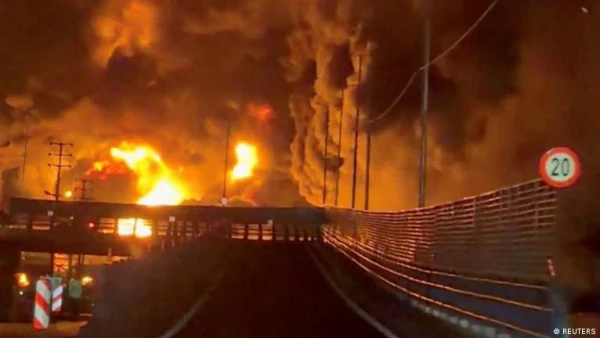
Fires at oil facilities release numerous harmful substances into the atmosphere: carbon monoxide, soot, sulfur and nitrogen oxides, hydrocarbons, and metal compounds. Residents of Tehran after Israel's strikes on the oil depots of the Iranian capital complain of a constant smell of burning, and some say they "cannot see the sun."
Satellite images showed that on Monday, thick plumes of smoke rose over Tehran after strikes on a fuel depot and a refinery. The WHO warned that attacks on such facilities pose a serious threat to the health of residents. Since the start of the American-Israeli strikes on Iran on February 28, BBC Verify has confirmed attacks on at least four oil facilities near the Iranian capital.
Residents report dense smog and a strong smell of burning that obscures the sun. Experts believe that the volume of emissions could be unprecedented - this is an environmental catastrophe with consequences for many years. The Israeli army previously stated that it struck "fuel storage facilities" near Tehran.
Images from March 9 show that two major oil facilities continue to burn: the Shahran oil depot in the northwest of Tehran and a refinery in the southeast. Video footage after Saturday's strike captured fire flashes above the plant. Due to smoke and cloud cover, the extent of the destruction is difficult to assess, although the footage shows burned tanks and damaged buildings.
Fires at oil facilities release numerous harmful substances into the atmosphere: carbon monoxide, soot, sulfur and nitrogen oxides, hydrocarbons, and metal compounds. Residents complain of a constant smell of burning, and some say they "cannot see the sun." Scientists consider the pollution to be extremely severe and unusual for urban smog, as it is caused by strikes on refineries.
On Sunday, residents also reported "black rain" - precipitation darkened by impurities. The head of the WHO warned that damage to oil infrastructure could contaminate the air, water, and food, which is especially dangerous for children, the elderly, and people with chronic illnesses. According to scientists, such emissions can cause both immediate lung problems and long-term consequences, including an increased risk of cancer.
Meteorologists expect rain and stronger winds, which may partially disperse the pollution. However, the danger will remain: harmful substances may settle on the soil, enter water bodies, and rise back into the air.
Strikes on fuel depots by American forces will lead to an environmental catastrophe in the Middle East with far-reaching consequences. This conclusion was reached by Glenn Dezen, a professor at the University of Southeast Norway, on the social network X.
"Even sewage in Tehran caught fire after the attacks on fuel depots. The US has unleashed an environmental catastrophe that will cause cancer and other diseases for decades," he lamented.
The professor also criticized the Western political and media elite. He believes they present the actions of the US and Israel as a humanitarian project.