
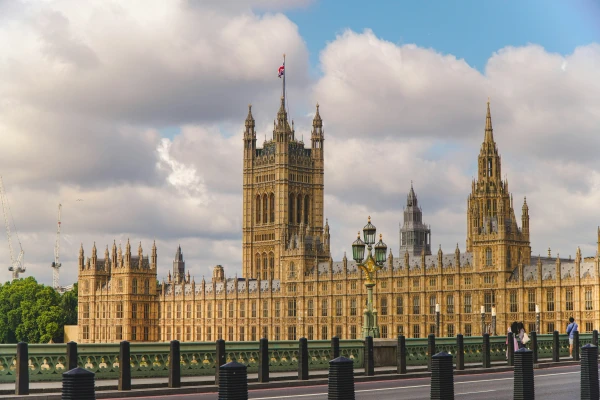
Putting an end to a centuries-old British political tradition, the UK Parliament has decided to abolish the right of aristocrats to inherit seats in the House of Lords, LETA reports, citing AP.
The House of Lords on Tuesday evening rejected objections to a bill passed by the House of Commons, which will strip several dozen dukes, earls, and viscounts of their seats, inherited along with their aristocratic titles, in the upper house of Parliament.
Government Minister Nick Thomas-Symonds emphasized that these changes will put an end to the "archaic and undemocratic principle."
"Our Parliament must always be a place where talents are recognized and merits are taken into account. It should never be (...) a place where titles, many of which were granted centuries ago, carry more weight than the will of the people," the minister emphasized.
The House of Lords plays an important role in the parliamentary democracy of the UK, as it carefully scrutinizes legislation passed by the elected House of Commons. However, critics have long pointed out that it is cumbersome and undemocratic.
The case of Peter Mandelson, who left the House of Lords in February after it became known about his friendship with American financier and convicted sex offender Jeffrey Epstein, has once again drawn public attention to the upper house and the behavior of its lords.
Currently, there are more than 800 members in the House, making it the second-largest legislative chamber in the world after the National People's Congress of China.
Since the establishment of the House of Lords about 700 years ago, it has long been composed of aristocrats who inherited their seats, as well as some bishops, but almost never women. In the 1950s, aristocrats who could not pass on their titles by inheritance, such as retired politicians, community leaders, and other prominent figures appointed by the government, joined the lords, and now they make up the majority of the chamber's members.
In 1999, the Labour government of then-Prime Minister Tony Blair stripped the majority of the 750 aristocrats with hereditary titles and seats in the upper house of their positions, although 92 of them were temporarily allowed to remain. Twenty-five years later, the Labour government of current Prime Minister Keir Starmer proposed a bill that would exclude these remaining aristocrats with hereditary seats from the House of Lords.
The lords opposed this and achieved a compromise, under which an unspecified number of these aristocrats will be allowed to remain in a status similar to that of those aristocrats who cannot pass on their titles and seats in the House of Lords by inheritance.
The bill will come into effect as soon as King Charles III gives his consent, which is a formality. The relevant changes in the House of Lords will be introduced at the end of this year's spring parliamentary session.
The Labour Party has promised to eventually replace the House of Lords with an alternative second chamber that would better represent the citizens of the UK. However, judging by past experience, these changes will not happen quickly.












Leave a comment