
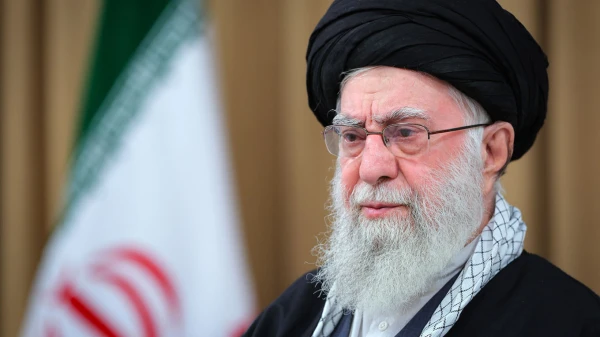
Along with the head of Iran, members of his family and at least 40 high-ranking military-political officials were killed.
Israeli military forces managed to eliminate Iran's Supreme Leader Ali Khamenei by monitoring him through hacked street cameras in Tehran, informed sources told the Financial Times (FT). According to them, images were encrypted and transmitted to servers in Tel Aviv and southern Israel for several years. One of the cameras was installed on Pasteur Street, where government buildings are located, allowing Israeli intelligence to glimpse into the everyday life of the heavily guarded complex and identify the security service's operational features. "We knew Tehran as well as Jerusalem," one of the FT sources noted.
Before the strike on Khamenei, Israel was also able to disable individual components of a dozen cell towers, causing calls to the ayatollah's security phones to fail. As a result, the Supreme Leader's security representatives did not receive warnings about the danger at the crucial moment. Israel struck Khamenei and senior Iranian leaders on the morning of February 28, as part of a joint military operation with the United States. According to FT sources, the decision to eliminate the ayatollah on the first day of military operations was made because Khamenei could have taken refuge in a bunker and become an inaccessible target for Israeli bombs.
Unlike his ally, Hezbollah leader Hassan Nasrallah, Khamenei did not hide and spoke about the possibility of being killed. However, during the war, he rarely left one of his two bunkers, FT notes. At the same time, Israel did not attempt to strike him even during the 12-day war in June 2025. Meanwhile, the operation against Iran that began on February 28 had been planned for several months, but the decision to proceed was made, according to one of the publication's sources, when Israeli and American intelligence received information that Khamenei would meet with senior leaders of the Islamic Republic at his residence in Tehran.
Israeli fighter jets flew for several hours to timely release up to 30 precision munitions on Khamenei's location. "The decision to strike in the morning rather than at night allowed Israel to achieve tactical surprise for the second time, despite Iran being well-prepared," noted the FT source.
Along with Khamenei, members of his family and at least 40 high-ranking military-political officials were killed. Currently, Iran is led by President Masoud Pezeshkian, head of the judiciary Gholam Hossein Mohseni-Ejei, as well as a member of the Guardian Council. Vladimir Putin sent condolences to Iranian President Masoud Pezeshkian regarding the death of the ayatollah, calling the incident a "cynical murder."







Leave a comment