
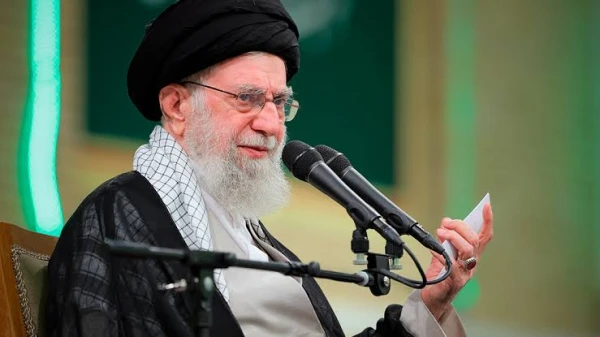
Who was the Supreme Spiritual Leader of Iran really?
While the Iranian people lived in humiliating poverty - under the burden of international sanctions and the regime's tyranny - the Supreme Leader was building a global financial empire worth up to $200 billion. Preaching modesty and even asceticism, Ayatollah Ali Khamenei, eliminated during Operation 'Lion's Roar', was not at all what he portrayed himself to be. The father of the nation shamelessly plundered this nation. This is reported by the Russian-language publication Vesti Israel, citing an investigation.
Most of the money was obtained through state organizations. To understand the amount in question, it is enough to say that it is twice the export shipments of Iranian oil for the entire year of 2025.
Part of Khamenei's fortune is invested in gold and diamonds. The family owns significant stakes in telecommunications and oil companies, as well as venture funds. The money flows through thousands of shell companies, most of which have the word 'charity' in their names. An additional source of income was the allocations that the family received from the total sales volume of Iranian oil, as well as huge land plots transferred by the state into the ownership of the Khamenei family.
Khamenei, who was so proud of his modest lifestyle, essentially controlled all of Iran - not only politically but also economically.
Most of Khamenei's wealth was obtained through the Setad holding - an economic empire operating under the auspices of the Supreme Leader. This structure began with the management of 'abandoned' assets but soon turned into a well-oiled mechanism for confiscating property, including public lands, property of minorities, and dissenters. Setad employees conducted house visits, demanding immediate proof that the residents were the rightful owners. Those who could not confirm this were forcibly evicted from their apartments, and the housing became the property of the company. Through Setad, the Khamenei family controlled almost the entire economy of the country. No major business could operate without transferring shares to this holding. There was a stake in every social sphere: healthcare, education, social security. When another IRGC commander completed his term, he was 'elected' as the mayor of Tehran, paying off the Khamenei family with gifts in the form of the most prestigious real estate in the capital. The family also controlled the media, which constantly praised the modest lifestyle of the Supreme Leader. According to the official version, he spent most of his time working and praying, lived in a 60 sq. m house, slept in a dark basement, and ate ordinary food.
Perhaps in his early years, Khamenei was modest. But after the victory of the Islamic Revolution, he began to rapidly accumulate wealth. The regime of tyranny and corruption brought enormous profits. And with them, symbols of status - private jets, helicopters, luxury apartments, yachts, a fleet of dozens of elite cars.
The Khamenei family used its enormous wealth and control over security forces primarily to preserve its own prosperity. If dissent needed to be suppressed, it was done in the most brutal form. At the same time, the task was to increase the fortune. In addition to the enormous sums deposited in banks around the world, the Khamenei family acquired luxury apartments and hotels in the most expensive areas of London, Vienna, Dubai, bought resorts and golf courses, especially in Mallorca.
The family did not shy away from less 'presentable' means of making money, such as the sexual exploitation of life. In recent years, Ayatollah Khamenei transferred control of the financial empire to his sons. Being more practical people, they understood that with their father's death, their freedom might end, and therefore actively moved money abroad. Fortunately, banks in Liechtenstein and Switzerland did not ask too many questions about the origin of the capital.
Ali Khamenei was born in 1939, the second of eight children. His father was a high-ranking religious figure, and he began studying Islam at the age of 4. As he grew older, he became close to Shia spiritual leaders, including Ayatollah Khomeini. He spent long months in prison, in solitary confinement, where he was tortured for his involvement in attempts to overthrow the Shah. In 1989, after Khomeini's death, he was appointed Supreme Leader and held this position with fanatical devotion and rigidity for three and a half decades. His survival in the face of reformist forces and protests on the streets demonstrated charisma and unique self-preservation abilities. These abilities also helped Khamenei build his enormous economic empire.
In 2013, when Reuters published a major investigation into the colossal wealth of the Rahbar (Supreme Leader), there were estimates in Iran that more than 50% of the population suffered from malnutrition, including an even higher percentage of children and infants. This did not prevent Khamenei from continuing to increase his wealth. He also turned a blind eye to corruption among high-ranking military and political figures.
When Sadegh Mahsouli, a high-ranking IRGC commander and later a minister in Ahmadinejad's government, was asked in parliament about the origin of his wealth and his lifestyle, he replied that 'Supreme Leader Khamenei always opposes ostentatious luxury in palaces, but never - against life inside the palace itself.' This answer accurately describes Khamenei's attitude towards wealth: he wanted everyone to know that he lived in a cramped hut, but did not reveal that inside this hut, they ate with golden spoons. Mahsouli was known among officers and high-ranking politicians in Iran by the nickname 'the billionaire.'






Leave a comment