
Thanks to the engine's controllability in flight, there is no need for expensive thermal protection systems.
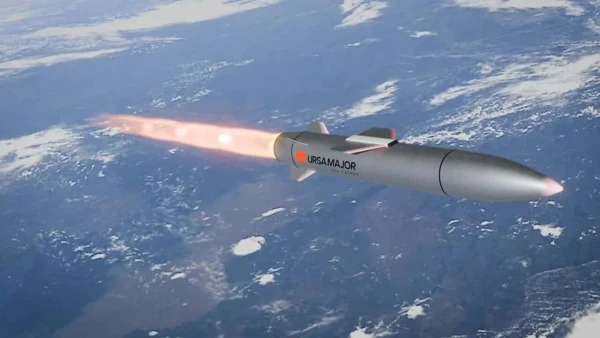
The American company Ursa Major, specializing in hypersonic propulsion systems, has introduced a new hypersonic missile system designed for mass production. This move signals the company's commitment to creating faster and more cost-effective high-speed weapons.
The new system, called HAVOC, is being developed not only as a combat asset but also as a hypersonic target for testing and training personnel. According to company representatives, this dual approach allows for addressing urgent operational needs while strengthening the industrial base of the U.S.
At the core of the HAVOC missile system is a liquid rocket engine developed in-house by the company, known as Draper.
One of the key features of HAVOC is the ability to adjust thrust and restart the engine at all stages of flight — during the boost phase, in the cruise phase, and at the terminal guidance stage. This flexibility enables the execution of more complex maneuvers and combat profiles compared to traditional hypersonic systems that follow a "boost-glide" or cruise missile model.
Thanks to the engine's controllability in flight, there is no need for expensive thermal protection systems that are typically required under extreme thermal loads at hypersonic speeds. This solution reduces the overall cost of the system and simplifies supply logistics.
HAVOC has a modular architecture that allows integration with various solid-fuel rocket boosters. This ensures compatibility with a wide range of launch platforms.
The missile can be deployed on fighter jets and bombers, launched from shipboard vertical launch systems, as well as from ground complexes. Depending on the chosen booster, extended range options are available.
The company emphasizes that the program is backed by more than a decade of experience in the development and flight testing of hypersonic systems. Its Hadley liquid engines have already been tested under hypersonic flight conditions, confirming their functionality in real-world scenarios.













Leave a comment