
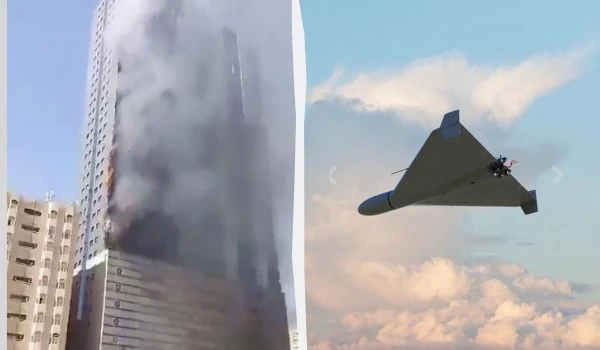
Iran attacks key infrastructure in an attempt to psychologically exhaust the enemy's population while simultaneously inflicting economic damage.
This weekend, Iran launched hundreds of drone strikes against Arab states in the Persian Gulf, damaging American bases and critical infrastructure, while also creating a serious threat to the Middle East's air defense systems.
In these attacks, Iran is mimicking the tactics employed by Russia in Ukraine—targeting key infrastructure in an attempt to psychologically exhaust the enemy's population while simultaneously inflicting economic damage, The Wall Street Journal reports.
Iranian strike drones are small, difficult to intercept, and easy to produce. While they do not inflict the same physical damage as a stockpile of thousands of missiles, they successfully hit civilian airports, seaports, and other key facilities. Iran has used a large number of drones or combined drone and missile strikes to suppress the air defenses of targeted countries.
"Their main advantage here is that mass production is relatively simple and effective, and they can launch them from both sea and land," says former Israeli military intelligence officer Danny Citrinovich.
Iran's Tactics
Iran has used drones to strike targets such as the American naval base in Bahrain, airports in Abu Dhabi and Kuwait, high-rise buildings in Dubai and Bahrain, as well as seaports. At least three people have died as a result of strikes in the UAE and one in Oman.
These attacks have caused global transportation chaos and contributed to a sharp rise in oil prices, demonstrating Iran's strategy of striking at the vulnerabilities of the global economy. Analysts believe Iran is trying to internationalize the conflict by pressuring U.S. allies in the Persian Gulf and inflicting economic losses on the West.
According to official government statements, Iran has so far launched 541 drones at the UAE, 283 drones at Kuwait, nine drones and 136 Shahed drones at Bahrain, 12 drones at Qatar, and dozens of drones at Jordan, as well as hundreds of missiles at these countries. Israel has stated that it intercepted more than 50 Iranian drones, which is an easier task since it is farther from Iran, and the drones take much longer to reach their destination.
"Iran has watched as Russia has used the same tactics for four years," said Samuel Bendett, an advisor in the strategy, policy, plans, and programs division at the CNA analytical center.
Time to Use Ukraine's Experience
Now, the countries of the Persian Gulf need to learn how to effectively defend against the threat of drones. Ukraine has learned to detect Russian UAVs, for example, by using inexpensive drones that can attack Russian Shahed drones after they are detected.
Experts believe that over time, the Gulf states will likely learn to defend more effectively. To do this, they will need to share intelligence on incoming Shaheds and create multi-layered defense systems capable of countering drones, as Ukraine has done, Bendett said.
"However, it is impossible to protect and defend every building in a city like Dubai, Abu Dhabi, or others," he said.











Leave a comment