
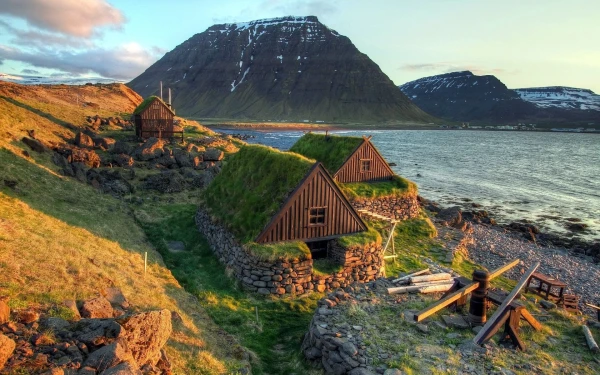
Reykjavik hopes for a swift acceptance.
The government of Iceland is launching perhaps the most important foreign policy project of the 21st century for the country. It is expected that it will soon announce the date of a referendum on joining the European Union. Initially, the vote was planned for 2027, but Reykjavik intends to accelerate the process. Citizens will be asked whether they want to resume negotiations with Brussels, which were halted in 2015. In the event of a positive response, Iceland hopes to join the EU as soon as possible.
In 2008, Iceland experienced the largest economic disaster in its history. The global financial crisis that began in the United States triggered the simultaneous collapse of the three main banks in the country. They dragged the rest of the economy down with them: the Icelandic króna lost half its value, GDP fell by 10%, stock market capitalization plummeted by 90%, inflation jumped from 5% to 12%, and Reykjavik had to urgently seek financial assistance from the IMF.
The collapse on all fronts provoked political unrest. In 2008-2009, a series of protests swept across Iceland, dubbed the "Pots and Pans Revolution." Armed with kitchenware, demonstrators surrounded the parliament and banged until the then center-right government of Geir Haarde resigned. In the snap elections, a new left-center cabinet was formed, led by the Social Democratic Alliance and Prime Minister Jóhanna Sigurðardóttir.
It was in this situation that Iceland decided to join the European Union for the first time. Sigurðardóttir's government believed that switching to the euro would help stabilize the country's financial system, lower interest rates, and ultimately help deal with the gigantic public debt, which at that time had peaked at 145% of GDP.
Brussels received Iceland's application with enthusiasm. EU Commissioner for Enlargement Olli Rehn referred to the country as an "old democracy" and stated that he would like to see Iceland in the bloc alongside Croatia (which joined the EU in 2013). However, the process turned out to be significantly more complicated than its participants had expected.
In July 2009, the Icelandic parliament Althing voted to begin negotiations with the EU. Although even then, the first difficulties arose. Sigurðardóttir's government pushed through the law with great difficulty — 33 in favor, 28 against, and two abstentions.
Sociological surveys consistently showed that the majority of Icelanders were against joining. The island's residents believed that Iceland would gain virtually nothing from it. Benefits such as a free trade area and unhindered movement across Europe were already available to Reykjavik through bilateral agreements. And the supposed financial stability was not worth losing economic and political independence.
The negotiations also did not go smoothly. By the time they began, there was already a serious disagreement between Reykjavik and Brussels over fishing. Iceland's economy had historically depended almost entirely on this sector, while the EU had a strict quota system aimed at limiting fish catches. The parties did not even attempt to resolve this issue — on the contrary, they decided to postpone it until the end of the negotiations, focusing first on simpler matters.
However, this played against Icelandic supporters of euro integration. Icelanders, who were concerned about the fate of the fishing industry, did not receive any specifics on this topic. As a result, resistance among them began to grow. In 2009, according to a Gallup poll, 48.5% of the country's citizens were against Iceland joining the EU. Conversely, 34.7% were in favor. By 2013, the shares of opponents and supporters looked like this: 58.5% to 25.1%.
Moreover, in 2013, the camp of euro-optimists suffered a serious defeat. After another parliamentary election, Jóhanna Sigurðardóttir resigned. She was replaced by a right-liberal cabinet led by Prime Minister Sigmundur Davíð Gunnlaugsson. The new government immediately suspended negotiations and stated that it would continue them only after a consultative nationwide referendum. This referendum was never held: in 2015, Reykjavik officially withdrew its application. Subsequent attempts to resume negotiations with Brussels were unsuccessful.
Talks about Iceland's accession to the EU resumed in 2024 when the Social Democratic Alliance returned to power. By that time, the Icelandic economy had once again been shaken. Under the weight of high interest rates, inflation, and a housing crisis, the country's GDP went into recession, and foreign policy shocks led to sharp fluctuations in the króna's exchange rate.
Against this backdrop, public sentiment underwent significant changes. The idea of joining the EU regained popularity. The idea was supported by two of the three parties in the ruling coalition, prompting Reykjavik to try to get closer to Brussels again. This time, however, the social democrats took the previous mistakes into account — they did not rush events, instead agreeing to hold a referendum on continuing negotiations only in 2027, and under pressure from the People's Party (the same one that opposed accession), they decided to make it legally non-binding.
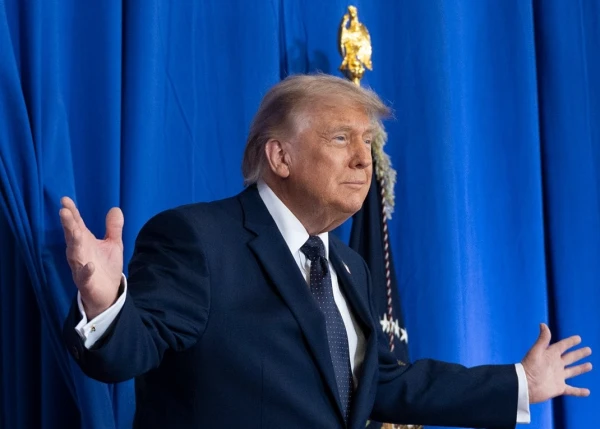
However, plans were disrupted by a "black swan" named Donald Trump. After being re-elected as President of the United States, he initially imposed tariffs on Icelandic goods. This hit the island's economy hard, as the United States is Iceland's second-largest trading partner. Then the White House launched a campaign to annex Greenland, which left a very depressing impression on neighboring Iceland.
After listening to Trump's justifications for the claims, Reykjavik decided that they could be next in line for potential annexation. The fire was further fueled by the U.S. president himself: at a forum in Davos, he inadvertently mixed up Greenland with Iceland several times. The newly appointed U.S. ambassador, Billy Long, also opened a new chapter in bilateral relations poorly — he first joked that Iceland should become the 52nd state of America. Locals did not understand and demanded that their government block his appointment.
As a result, Reykjavik panicked and decided to urgently move the referendum from 2027 to August 2026. Now, in addition to economic considerations, Iceland is also concerned about security. Meanwhile, Brussels is actively supporting Reykjavik's aspirations — starting in 2025, European Commission President Ursula von der Leyen has visited the country twice and met with its leadership. The third round of negotiations is planned for March.
However, Iceland's future is not predetermined yet. The vote will only decide whether to resume negotiations or not. The idea of a referendum as such is mostly viewed positively by Icelanders. However, the situation regarding EU membership is less clear-cut. The experience of 2008 shows that Icelandic public opinion is very fluid. When the country faces significant problems, its residents support closer ties with the EU. But as soon as the danger recedes, the situation changes 180 degrees.
Since 2022, all polls have shown a significant share of undecided voters regarding EU membership — 20-27% of Icelanders. How these people will vote when the topic of accession arises is unclear. But given that the old disagreements between Reykjavik and Brussels have not gone away, the Icelandic government will have to work hard to convince voters to support their plan.






Leave a comment