
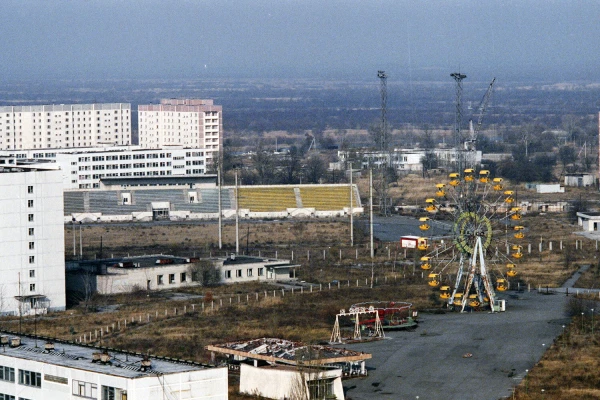
On April 27, 1986, the residents of Pripyat were forced to leave their homes. Four decades later, DW journalists accompany Vladimir Vorobey, one of the evacuees, back to his hometown. How has his home changed and what does he feel remembering those tragic events?
On both sides of the roads, abandoned decontamination equipment is still visible. Children’s toys, fragments of household appliances, dishes, and half-worn signs about the radiation situation in Russian are scattered on the ground near the houses. Empty buildings with shattered windows and torn doors stand as mute witnesses to the past. At that time, no one could have imagined that there would be no return, writes DW.
Forty years ago, Pripyat was considered the pride of Soviet nuclear energy, earning the nickname "atomgrad". This promising city was located near the Chernobyl Nuclear Power Plant, which, according to Soviet plans, was to become the largest in the world. Soviet authorities planned to build 12 power units, actively developing the city for nuclear workers.
By the time of the Chernobyl disaster, Pripyat had already existed for more than 16 years. The city had 160 buildings, offering 13,500 apartments, as well as 15 kindergartens and 5 schools.
Return to the Family Home
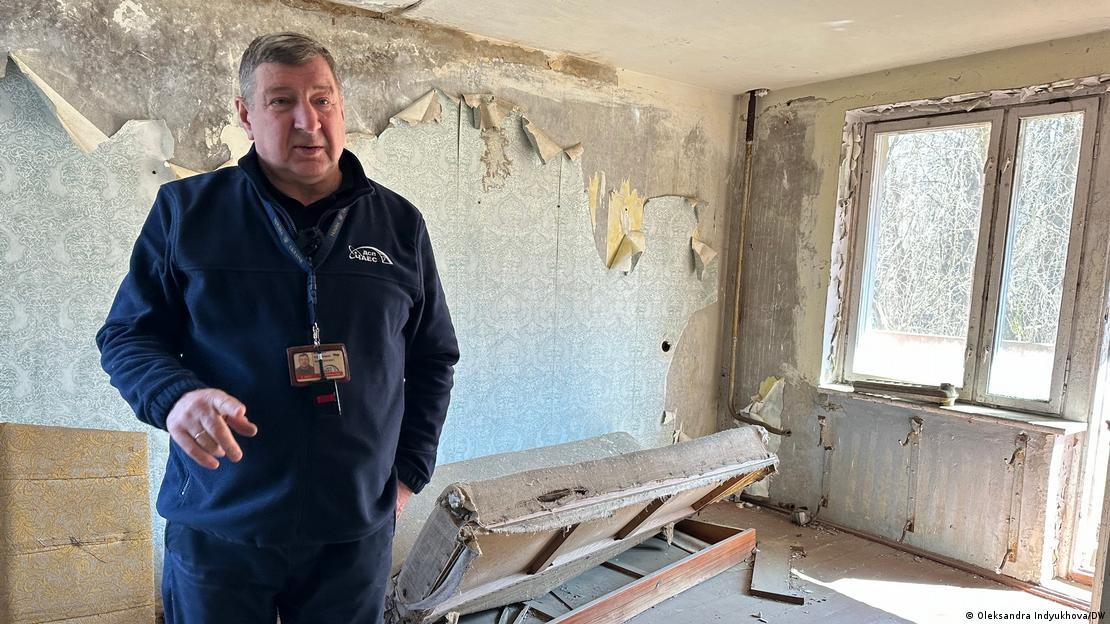
After four decades, all these once-new buildings are gradually falling into disrepair. The surrounding area is overgrown with dense trees and shrubs. Through this thicket, 58-year-old Vladimir Vorobey, a former resident of Pripyat, leads the DW correspondent.
"This is Lesya Ukrainka Street and my house 18-A, where I lived with my parents and my older brother’s family on the first floor," says Vladimir. We enter a spacious entrance with massive doors, comfortable staircases, and wide corridors.
The door to Vladimir's apartment is wide open. He immediately heads to his room and pulls an old vinyl record from a pile of debris. Vladimir recalls how his family used to listen to music.
He left his new trendy sneakers in one of the closets, which he later regretted not taking during the evacuation. We step out onto the balcony.
"This was my foam chair. There was a built-in lamp here. I read so many books here! And under the lid, you see, we stored preserves. It was very convenient," says Vladimir.
In the dark corridor of the apartment, we turn on the flashlights on our phones. Vladimir pulls out a pair of men’s shoes from a pile of things, confidently stating, "These are definitely mine. We were issued such shoes in vocational school."
Day of the Catastrophe
In April 1986, 18-year-old Vladimir worked as an electrician at the plant. The day before the disaster, his team was laying electrical networks leading to the fourth power unit.
He did not hear the explosion and went to work in the morning as usual. Suddenly, there were no buses, and when he and a friend walked to the Chernobyl Nuclear Power Plant, they were confronted with the destroyed building of the station.
"At that time, we didn’t know that an accident had occurred and where exactly. There was not even smoke coming from there, but some kind of heat - a thermal flow into the sky. A man was riding a bicycle and said it was dangerous here. So we went home," Vladimir continues.
He learned about the accident at the Chernobyl Nuclear Power Plant and the need for evacuation only in the evening. This news was conveyed to him by his older brother, who worked at the power plant.
"We thought it would be for a couple of days. I went as I was," recalls Vladimir. The family left Pripyat on a suburban "diesel" train on the evening of April 26.
According to Vladimir, there were an incredible number of people on the train. "From the train window, we saw the destroyed fourth power unit. At that time, we didn’t think or know what consequences this accident would have and that we would never return home again."
Ideals and Reality
We continue our journey along the central streets of Pripyat, heading to the "Prometheus" cinema. Vladimir recalls how often he spent time here with friends.
The entrance to the main stage of the cinema is now blocked by collapsed beams. The storage room in front of the stage is cluttered with faded portraits of once-famous, now forgotten communist leaders.
Soviet symbols are found everywhere in the center of Pripyat. On the roofs of two multi-story buildings, the metal emblems of Soviet Ukraine and the USSR are still visible.
The roof of another high-rise is adorned with giant metal letters forming the slogan of Soviet nuclear workers: "Let the atom be a worker, not a soldier." According to Vladimir, this principle was the fundamental basis of the entire nuclear energy sector in the USSR.
In universities, institutes, and training courses for station employees, it was constantly asserted that Soviet nuclear energy was the safest in the world. Therefore, as Vladimir says, no one could even imagine that a reactor could explode.
"We were told that a radiation accident was impossible. They said everything was accounted for and calculated. We didn’t even think that an accident could happen."
Thus, most residents of Pripyat and Chernobyl, including the plant staff, had no idea about the real risks to health and the environment. They also did not know the scale of radiation contamination.
"And those who knew didn’t spread the information much. These were Soviet times. An extra word could end very badly for a career."
Life After the Tragedy
A year after the disaster, Vladimir Vorobey went to serve in the army and later received an engineering education. He lived in the city of Slavutych and subsequently returned to work at the Chernobyl Nuclear Power Plant.
Vladimir rose from an ordinary mechanic to a manager, and for the last 11 years, he has headed the thermal automation and measurement shop. In his opinion, if it weren’t for the authoritarian management style of the nuclear industry in the USSR and the policy of silence, the Chernobyl disaster might have been avoided.
Scientists point out that a similar accident had already occurred in 1975 at the Leningrad Nuclear Power Plant but was classified. "I think that if there hadn’t been such totalitarian propaganda at that time, scientists could have actually calculated and predicted this accident," he tells DW.
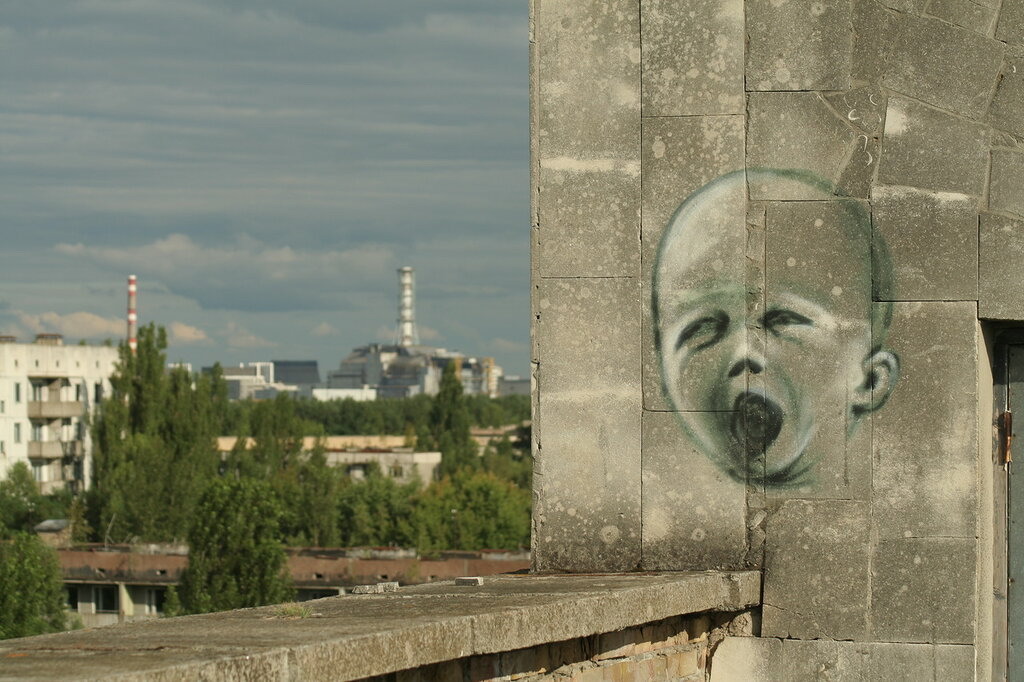
Photo: DW.
Unknown Future
The world-famous Ferris wheel in Pripyat was shown to tourists until recently. Vladimir recalls that it was prepared for a ceremonial launch for the May Day holiday.
He smiles and tells the DW correspondent that "you shouldn’t believe the fairy tales that no one rode it." "Students from my vocational school and I were sent to test the wheel as 'ballast'. So I rode it."
We continue walking through the center of Pripyat, where residents once gathered to celebrate the New Year and participated in demonstrations. Vladimir admits that he still does not know what dose of radiation he received in 1986.
"You can order this certificate. But I don’t want to." In the entrance of Vladimir's building, there is still a plaque with the names of the residents.
The man does not know what happened to them after the evacuation, as since the accident he has "not met them even once."







Leave a comment