
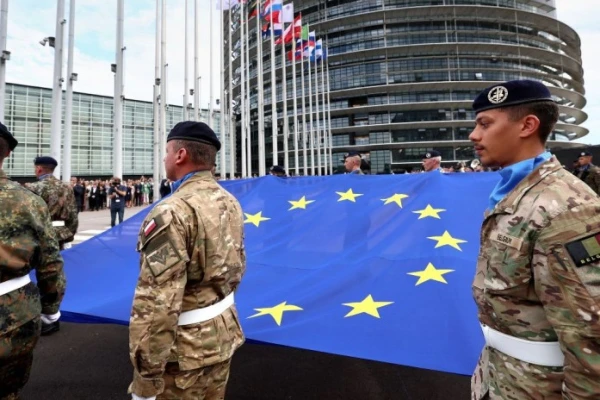
The European Union is actively reviewing its collective security mechanisms, aiming to create a clear action algorithm in the event of armed aggression. This will help eliminate bureaucratic barriers and ensure prompt assistance, but not without challenges.
Article 42.7 of the European Union treaties obliges member states to provide mutual assistance in the event of armed aggression. However, in practice, this mechanism remains unclear and requires specification. European Commission President Ursula von der Leyen, speaking in Cyprus, openly acknowledged the existing gaps in the system. She emphasized that while the treaty clearly states the obligation, it does not contain practical instructions. "The treaty does not clearly define what happens, when, and who does what," von der Leyen stated. Brussels is actively seeking solutions to develop a clear and effective action algorithm. Currently, no state has a clear understanding of how to initiate the assistance procedure and who should coordinate it.
Cyprus Under Threat: Why the Issue Has Become Urgent
Cyprus has become a key initiator of these discussions, and this is not without reason. As a non-NATO country, the island is entirely dependent on European security guarantees. Cyprus's security has come under serious threat since the onset of the conflict in the Middle East. During that period, Iranian drones attacked Cypriot territory. The authorities in Nicosia realized that mere legal declarations are insufficient to protect against real threats such as drones. Cypriot Foreign Minister Konstantinos Kombos specifically noted that Article 42.7 is not just a symbolic statement. This article imposes a legal obligation on the other 26 EU member states to act and respond.
What Such Assistance May Include
Potential assistance may cover several key areas. This includes diplomatic pressure on the aggressor, providing technical and medical support to the affected party, as well as civilian assistance in overcoming the consequences. It is important to note that while military support is possible, it is not automatically obligatory.
The Shadow of NATO and Donald Tusk's Cautious Position
Countries that share a border with Russia are demonstrating a certain skepticism. They fear that new European Union defense initiatives may undermine NATO's authority. For countries like Poland or the Baltic states, Article 5 of the North Atlantic Alliance remains the "golden shield" of their security. Polish Prime Minister Donald Tusk expressed support for the practical application of Article 42.7 but is proceeding with great caution. He insists that strengthening the EU should not come at the expense of weakening NATO. A senior EU diplomat, commenting on the situation for the publication, explained: "This is not at the expense of the commitments that NATO member states have to NATO. EU institutions have no role if member states do not assign such a role."
France's Experience and Current Challenges
Europe has already faced the necessity of activating this pact. France requested assistance after the tragic attacks in Paris in 2015. An analysis of that experience revealed significant chaos, as there was a lack of clear coordination and it was unclear who should interact with whom in the first critical hours. Today, security issues are actively discussed at the highest level. German Chancellor Friedrich Merz and Cypriot President Nikos Christodoulides have joined these important discussions. The latter presented concrete proposals to leaders for reforming the existing mechanism.






Leave a comment