Decisions regarding strategic infrastructure will be viewed as a geopolitical element.
It seems that Chile has found itself at a difficult geopolitical crossroads. For Santiago, the US remains the largest foreign investor, while China is the main trading partner. This dual position has led to a new wave of tension: the White House expressed dissatisfaction with the underwater digital cable project involving Chinese companies, according to CNBC.
The situation escalated after US Secretary of State Marco Rubio announced that the Donald Trump administration is imposing visa restrictions on three Chilean officials associated with this project. Washington explained the decision by citing regional security concerns and potential risks that, in the American view, could arise from the involvement of Chinese entities in the construction of strategic infrastructure.
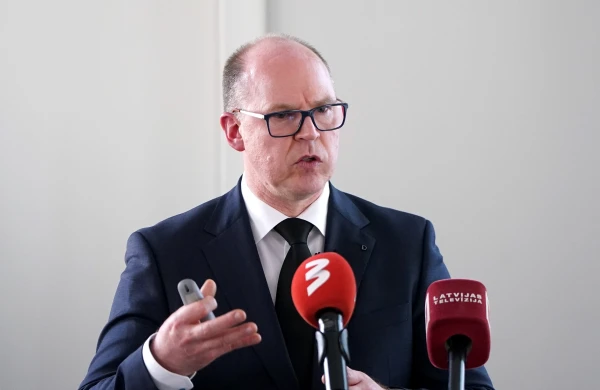
Leftist President of Chile Gabriel Boric (1986), who will leave office on March 11, sharply criticized Washington's decision. He rejected accusations that Santiago allegedly supports actions that could threaten its own security or the stability of the region.
It has become known that among those affected by the American restrictions is the Minister of Transport and Telecommunications Juan Carlos Muñoz. The names of the other two officials were not disclosed.
In Washington, however, they did not back down from their position. The US Ambassador to Chile, Brandon Judd, told reporters that the United States has the right to act independently if it believes that regional security is at risk.
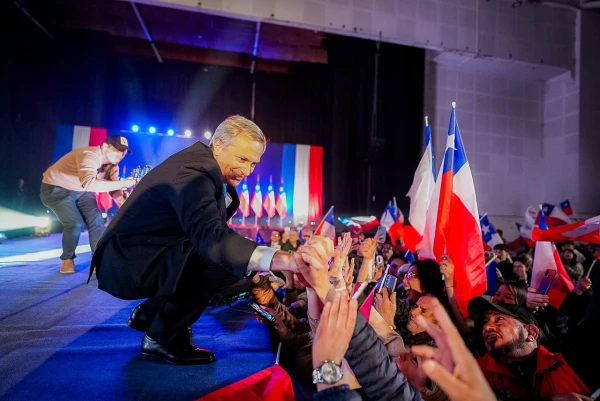
The escalation occurred at a highly sensitive moment. Only a few days remained before the summit of Latin American leaders in Miami, and about two weeks before the transfer of power in Santiago: on March 11, the elected president José Antonio Kast (1966), a right-wing liberal, will take office.
For the new administration, this is the first serious foreign policy challenge. The conflict over digital infrastructure effectively sets the tone for future relations between Santiago, Washington, and Beijing.
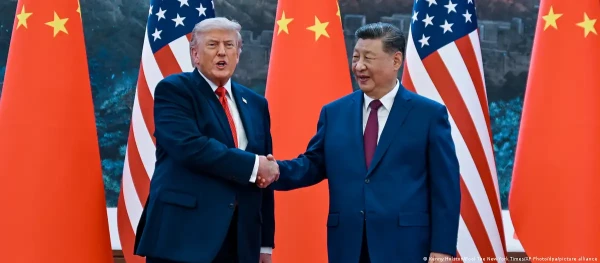
Experts note that Donald Trump's actions go beyond a bilateral dispute. Amid increasing competition with China, the US is demonstrating to Latin American countries that decisions regarding strategic infrastructure will be viewed as a geopolitical element.
According to Mariano Machado, a leading analyst for the Americas at Verisk Maplecroft, the current tension is primarily a signal to the new administration in Santiago. Washington is making it clear that decisions regarding strategic infrastructure will be perceived not as technical or commercial procedures but as an indicator of the country's foreign policy orientation.
This concerns underwater digital cables — key components of the global internet and telecommunications system. They carry the bulk of international data exchange — from phone communications to financial transactions. It is estimated that up to 95% of the world's cross-border traffic is transmitted through these lines.
In the short term, Machado notes, the situation may affect the upcoming contacts of the elected president José Antonio Kast in Washington. In particular, the upcoming Shield of the Americas summit will be a test of how Chile intends to balance between key partners amid increasing pressure.
"The tougher the competition between the US and China in the region becomes, the more carefully investors will look at political risks. Chile will only be able to develop its plans to become a digital hub if these risks are accounted for in advance. Projects that have clear governance rules and security guarantees from the outset will appear more reliable and attract more investment," he added.
Beijing's reaction followed immediately. The Chinese Embassy in Chile stated that Washington's actions demonstrate "obvious disrespect for the sovereignty, dignity, and national interests of Chile."
China's economic and strategic presence in Latin America has long become a systemic factor in regional politics. In this context, analysts increasingly mention the so-called "Donroe Doctrine" — a reference to Donald Trump and the historical Monroe Doctrine, which proclaimed the special role of the US in the Western Hemisphere.
There are already precedents. The Supreme Court of Panama ruled the concession of the Hong Kong company CK Hutchison to manage ports on both sides of the Panama Canal unconstitutional. Many viewed the decision as a result of pressure from the US.
At the same time, Washington has tightened its stance on Cuba, threatening tariff measures against countries supplying oil to Havana. Additionally, the US conducted a military operation against Nicolás Maduro's regime in Venezuela, further confirming that Washington intends to curb the influence of rivals in the region.