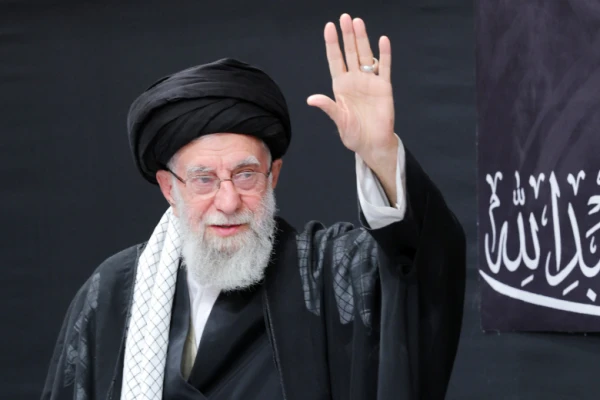
The Supreme Leader of Iran, Ayatollah Ali Khamenei, was killed in Tehran on February 28 as a result of a joint airstrike by the U.S. and Israel. He ruled Iran since 1989, and under his leadership, the country became what it is known as today: closed, militarized, and harshly and brutally suppressing dissent against the authorities. Who and how can become Khamenei's successor?
"The Supreme Leader of Iran has died a martyr's death," reported the state Iranian television company IRIB on Sunday morning. Thus, a few hours after statements from the United States and Israel about the death of Ayatollah Ali Khamenei, Tehran officially acknowledged the death of its supreme leader, who had been in power since 1989, as a result of an airstrike. A 40-day mourning period has been declared in the country, with the next seven days being non-working, writes BBC Russian.
"With the martyr's death of the supreme leader, his path and mission will not be lost and will not be forgotten; on the contrary, they will be continued with even greater energy and zeal," stated the host with tears in his eyes.
Alongside Khamenei, Iran also lost other representatives of the highest leadership. On the same day, February 28, the commander of the Islamic Revolutionary Guard Corps, Mohammad Pakpour, and Khamenei's advisor, Secretary of the Iranian Defense Council Ali Shamkhani, also died.
Earlier, on February 28, the Israel Defense Forces and U.S. President Donald Trump announced their deaths as a result of joint airstrikes by Israel and the U.S., stating that during the operation, "the leaders of Iran were neutralized."
A few hours after the official announcements of the deaths of Khamenei, Pakpour, and Shamkhani, it was announced that temporarily, until a new supreme leader is appointed, Iran will be governed by a council that will include the President of Iran Masoud Pezeshkian, as well as the head of the country's judiciary and a representative of the Guardian Council.
The Assembly of Experts on Leadership is responsible for appointing the successor to the supreme leader. This body consists of 88 clergy.
According to the Iranian constitution, the choice of a successor must be made as soon as possible. Ali Khamenei himself was appointed on the same day that his predecessor, the leader of the 1979 Islamic Revolution, Ayatollah Ruhollah Khomeini, died.
However, gathering all members of the Assembly quickly may be difficult now, as Iran continues to face attacks from the U.S. and Israel, due to security concerns, notes BBC Persian correspondent Behran Tajdin.