
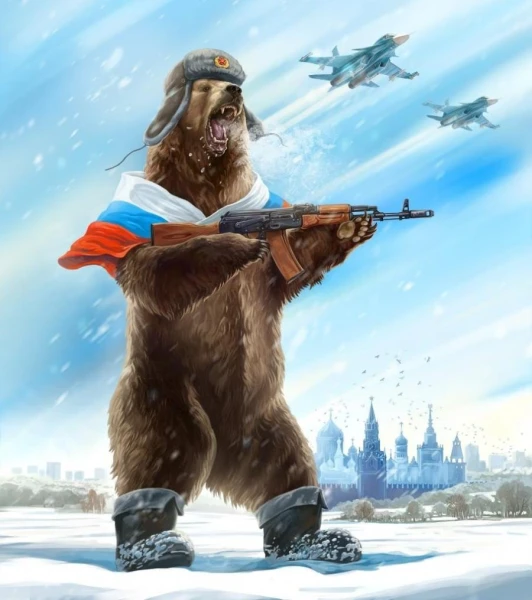
Experts attempted to model a scenario of a Russian attack on the Baltics.
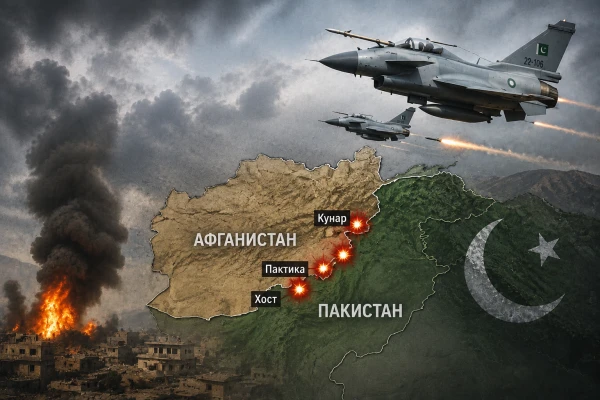
The threat of a Russian attack on NATO remains real, experts believe, who attempted to model such a scenario. They played out a scenario of an actual invasion of Lithuania by the Russian Federation, where the Bundeswehr is permanently deploying a tank brigade. The University of the Bundeswehr was a partner in the 'military game.' Alexander Gabuev, director of the Carnegie Moscow Center, participated on the 'Russian' side, playing the role of President Putin, as reported by the Russian service of Deutsche Welle.
In an interview with DW, Gabuev explained that the scenario envisions the cessation of Russia's war against Ukraine in May 2026 through a ceasefire, while in the fall, Russia conducts exercises in Belarus and leaves 15,000 troops with equipment there, simultaneously offering Germany to restore economic relations. The main events are conditionally set in October 2026, a week before the midterm elections in the United States. The goal of the 'Russian' team was to discredit NATO. The role of the Russian Minister of Defense was played by Austrian military expert Franz-Stefan Gadi, who, according to Gabuev, proposed a 12-page plan that primarily focused on drones.
According to Gabuev, this was not a military but a political scenario, aimed at modeling the reaction of the German government. The result was hesitation, which allowed the Russian side, under the pretext of a 'humanitarian crisis' in the Kaliningrad region, to capture, among other things, the Lithuanian city of Mariampol, located about 60 km from the Russian border. 'Germany was completely paralyzed,' Gabuev says. 'The brigade in Lithuania was not even given the order to drive out the Russian occupiers.' One of the reasons he cited was the lack of a clear response from Washington.
How realistic is such a scenario? 'There are two schools of thought. One says that this is nonsense and we should not sow panic, we are ready and will repel it. This is the view of the Baltic states and Northern Europe,' Gabuev says. 'There are also leaders and military personnel who say that the most dangerous moment for Europe is the end of the war in Ukraine and the moment when NATO creates all the necessary tools to deter Russia.' He named engineering barriers, mining the border with Belarus, and the Kaliningrad region as such tools.







Leave a comment