The legacy of the cursed colonizers continues to concern the freed blacks.
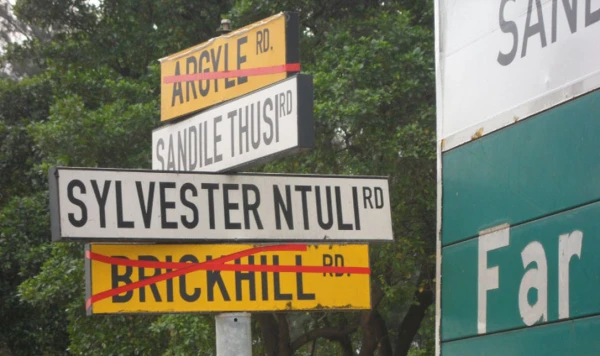
In South Africa, the announcement has been made regarding the latest changes to geographical names within the country. The Minister of Sport, Arts and Culture, Gaiton McKenzie, approved the renaming of 21 settlements. Changes to the names of cities, streets, regions, and even the country itself is one of the most persistent themes in the post-apartheid period of South Africa.
The most notable change in the current review will be the renaming of two cities in the Eastern Cape province: East London will change its name to KuGompo City, while Graaff-Reinet, the fourth oldest city in the country, founded in 1786 and named after the then governor and his wife, will be named after the revolutionary and politician Robert Sobukwe — one of the most famous anti-apartheid activists. In addition, the towns of Aberdeen, Addo, and New Bethesda will be renamed Ksamdembu, KwaMseki Bishop Limba, and KwaNoeleni, respectively.
According to Minister McKenzie, a total of 104 applications for changing geographical names were submitted in 2025, with the overwhelming majority coming from the province of KwaZulu-Natal. The name of the province itself may also be changed — such a proposal was voiced by the Zulu king Misuzulu KaZwelithini during the 147th ceremony in memory of the Battle of Isandlwana. He stated that the name of the province should be shortened to "KwaZulu," as "Natal" was imposed during the colonization of these territories.
Since 1994, more than 1,500 geographical objects have been officially renamed in South Africa, including not only settlements but also, for example, airports, rivers, mountains, and even roads. Most changes occurred in KwaZulu-Natal and the Eastern Cape province, accounting for 362 and 312 renamings, respectively.
The most high-profile proposal on this topic in 2025 was put forward by the African Transformation Movement party, which is associated with the controversial former president of the country, Jacob Zuma. Activists from the party initiated a campaign to change the name of the very Republic of South Africa. According to their proposal, the country's name should be changed to "Republic of Azania," as "during the struggle against the apartheid regime, this name was referred to as the true name of the country."
However, this attempt at "decolonization" also faced a considerable amount of criticism: it is claimed that there is no connection between the indigenous people of South Africa and "Azania," and the term itself has been used for various regions in East Africa and is often associated with the history of the slave trade.
Moreover, critics argue that many of the renamings are purely political in nature, do not reflect the opinions of all residents, and may not only lead to negative economic consequences but also exacerbate the already complex situation in the country's society, as protests regarding the changes have a distinctly political coloring.
Despite the active review of names, these processes do not always end successfully: perhaps the most vivid example here is the history of attempts to change the name of the country's administrative capital, Pretoria. As early as May 2005, the South African Geographical Names Council (SAGNC) officially approved the change of the name "Pretoria" to "Tshwane," but the government suspended this process, taking additional time to study the issue amid sharp public criticism on the matter. Twenty years later, Pretoria still retains its name, and it seems that no changes are to be expected in this regard.