The Guardians of the Islamic Revolution turned out to be poor hydro builders.
The drought in Iran in 2025 became one of the longest in the country's history: reservoirs ran dry, hydroelectric plants suspended operations, and the energy system functioned intermittently. Together with experts, we analyze why water megaprojects and the authorities' attempts to ensure food security only contributed to the crisis.
In the fall of 2025, Iran experienced the lowest amount of precipitation in the last 60 years — 15% of the usual volume. The "water year" — a term used in the country to monitor water reserves — started poorly. In November, due to moisture shortages, the government considered the possibility of evacuating several settlements, including Tehran.
At the end of December 2025, mass protests began in Iran, continuing into January 2026. Human rights activists confirmed the deaths of over 4,000 people as a result of the protests, and according to Time magazine, up to 30,000 people may have died during clashes with police. Iran specialist Nikita Smagin (recognized as a foreign agent) stated in a conversation with Forbes that the water shortage contributed to citizens' dissatisfaction with the government, serving as an additional irritant. However, there were no large-scale protests with economic and political demands regarding the water shortage.
When water stops flowing from taps while fountains gush in wealthy neighborhoods, and when farmers are cut off from water supplies while large-scale projects continue, the water shortage becomes a symbol of deep contradictions: injustice, corruption, and unfulfilled promises. "But this does not always lead to uprisings or regime changes," wrote Kaveh Madani, director of the United Nations University Institute for Water, Environment and Health, in a column for Forbes.
Iran has developed for thousands of years under conditions of moisture scarcity. Why is the country facing a 'water catastrophe' right now? On one hand, it is a consequence of climate change: the flow in Iranian rivers has decreased by 56%, and evaporation during hot periods has significantly increased. Iran now ranks second in the world for the rate of wetland drying, and only one-tenth of the water remains in the once largest lake in the Middle East, Urmia.
On the other hand, the climate crisis is just one of the reasons for the water shortage. Catastrophic consequences for the economy and population, experts interviewed argue, are more likely caused by mismanagement of water resources and agricultural policies over decades.
For most of Iran (except for coastal and mountainous areas), a dry climate is characteristic, and rivers there are seasonal and low-flow. Over 2,500 years ago, the Persians devised a water management system for this territory — the qanat. It consisted of wells and long channels branching off from them. The system was filled with water during short rainy periods, then retained moisture in underground tunnels and reservoirs. Unlike conventional reservoirs, the qanat prevents water from evaporating — all its components are underground, explained Sevolod Moreido, an associate professor at the Faculty of Geography and Geoinformation Technologies at HSE, to Forbes. Essentially, the Persians built a prototype of Frank Herbert's "Dune," where the Fremen preserved every drop of water on the desert planet and stored it underground.
By the end of the 1960s, the length of canals in Iran reached a maximum — almost 300,000 km. However, even this could not meet the demand for drinking water and provide irrigation for fields. The country's population was rapidly increasing: from 16.5 million in 1950 to 38 million in 1979. The country's economic structure needed modernization.
The last monarch of the country, Mohammad Reza Pahlavi, attempted to implement reforms, but none were particularly successful. The failure of land reforms became one of the reasons for the Islamic Revolution of 1979 and the overthrow of the monarchy. The Islamic Republic shifted priorities and redirected water management into an entirely different course.
In republican politics, the concept of "self-sufficiency" emerged, closely related to sovereignty. It is enshrined in the constitution and means independence from other countries, including in food production. During the monarchy, Iran imported large volumes of crops that required significant amounts of water, while cultivating drought-resistant plants: barley, saffron, and date palms. After the revolution, the country aimed to develop the agricultural sector to meet its food needs independently.
Following government directives, water was diverted from reservoirs for rice, wheat, and sugarcane fields. These moisture-loving crops were grown in extremely arid regions. During the existence of the Islamic Republic, the area of irrigated land in Iran increased by about one-third to 8.5 million hectares, and the water needs of farmers also increased by 30%. The country also needed electricity, and hydroelectric power plants seemed to be the simplest solution. Agriculture and energy began to compete for water.
Many experts consider this approach erroneous, but there are those who hold a different view. "In making decisions about changing water use principles, the Iranian government likely took into account numerous changes already occurring and forthcoming in the country and the world, such as population growth and the geopolitical situation," shared her opinion Ekaterina Gaidukova, head of the Department of Engineering Hydrology at the Russian State Hydrometeorological University (RSHU).
The government bet on technologies that yield quick results: pumping water from aquifers for irrigation, building dams on rivers, and creating cascades of reservoirs for hydroelectric power plants.
Some qanats were no longer used, giving preference to pumps. As a result, since 2000, the number of deep wells equipped with powerful installations has doubled, exceeding 1 million points. However, the volume of pumped water decreased by 18%: reserves in aquifers began to deplete.
There are more than 600 dams on Iran's rivers. According to Penelope Mitchell, a doctor of geographical sciences from the Global Water Security Center at the University, by the end of the 20th century, Iranians ranked among the top three dam builders in the world. Meanwhile, Alexander Koshelev, head of the laboratory of agro-technologies and agricultural systems in agroforestry landscapes at the Federal Scientific Center for Agroecology of the Russian Academy of Sciences, noted in a conversation with Forbes that dams should not be considered a bad option. They help regulate river flow, protect against floods, and allow for the construction of hydroelectric power plants. However, the expert believes that chaotic construction of structures may negatively impact water volumes, which likely happened in Iran.
Almost all water facilities in the country are built by the engineering division of the IRGC (Islamic Revolutionary Guard Corps) — the "Prophet's Seal" company, established in 1989. Its work is regulated by the constitution, which includes the concept of "construction jihad," implying the use of military technical and human resources for the economic development of the Islamic Republic. Previously, "construction jihad" referred to a movement of volunteers who helped with the harvest in 1979.
According to journalist and Middle East Institute employee Nik Kovsar, the monopoly of the "Prophet's Seal" has led to the emergence of a water mafia, prioritizing large contracts and the interests of major industrialists over those of the population and farmers. For instance, in 2021, the company built tunnels and channels to divert the Zayanderud River to Yazd province to supply water to steel and petrochemical plants. After this, arable land in Khuzestan and Isfahan provinces began to dry up. The construction of the Gotvand dam on the Karun River led to the dissolution of vast salt marshes and salinization of the water artery. Billions of dollars were again paid to the same builders for mitigating the consequences.
Iranians also lack incentives to conserve water, as the state subsidizes this service for farmers and individuals. The situation is particularly indicative in cities, where the population has grown by 30% in recent years. Tehran's urban planning project assumes that each resident will use an average of 130 liters of water per day, but 70% of urban dwellers consume 2-3 times more. The infrastructure has rapidly deteriorated due to excessive load. However, the need for repairs does not affect utility payments: in 2024, city residents paid about 52% of the actual cost of water.
As a result, the economic system in the country depletes water reserves faster than they can be replenished. Iran uses 88.5 billion cubic meters of water annually, while scientists estimate that it can only sustainably use 61.6 billion cubic meters per year. This is the volume of water that nature in the country can reproduce. The deficit is mainly covered by pumping from deep aquifers. The rate of irreversible water loss (i.e., that which will not be replenished by precipitation) reached 1.7 billion cubic meters per year — almost 2% of the existing volume of use.
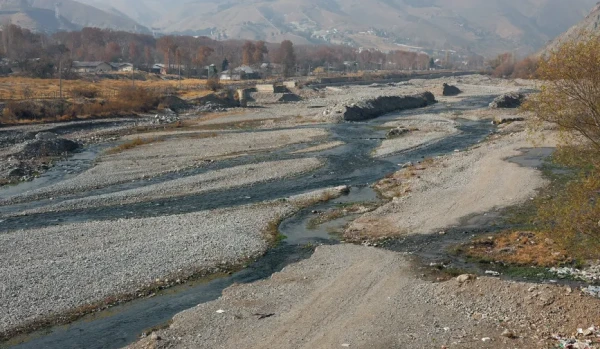
In July 2021, residents of several regions in Iran took to the streets with slogans like "I want to drink!" In Khuzestan province, demands were made to provide residents with water, while in Isfahan province, farmers set up a tent city on the dried riverbed of the Zayanderud. They believed that the river ran dry after the construction of a dam and a canal to industrial enterprises in a neighboring area of the country. The protests followed several months of drought. Provinces such as Khuzestan, Isfahan, Sistan and Baluchestan, Fars, and Tehran were particularly affected, with reservoirs emptying by more than 70%.
Authorities assured that they were distributing water fairly and cut off the internet. Mass protests that year were accompanied by clashes with police, and hundreds of Iranians were arrested. The government promised to address the issue, but most measures were temporary: distributing water and partially restoring water supply.
In 2025, water issues reached the capital, Tehran. Water began to be supplied on a schedule. There were difficulties in supplying skyscrapers. The water pressure was so low that it could not reach the upper floors. Ultimately, the situation in Tehran became critical. "If there is no rain in Tehran by December, we should limit water consumption; if there is still no rain, we must evacuate Tehran," stated the country's president, Masoud Pezeshkian, back in November. However, these words from the president created panic, and soon he proposed another solution — desalination of seawater.
One of the options being considered by Iranian authorities to address the situation is water megaprojects. One of them — the construction of an 800-kilometer pipeline — is supposed to connect the arid Isfahan with desalination plants located on the coast of the Oman Gulf. The pipeline will pass through the most drought-affected areas of Iran, where due to heat and open laying, 20–30% of the transported water may evaporate, and saline brines pose a risk of soil degradation.
Desalination itself requires 3–5 kWh of electricity for each cubic meter of water — a significant burden on the national energy system, which is already functioning intermittently, summarized for Forbes the main complaints about the project, head of the UN Land Restoration Laboratory and author of the ecological-educational Telegram channel "Ecology" Alexey Alekseenko. Moreover, adds expert Sevolod Moreido from HSE, a paradoxical situation will arise: the energy from hydroelectric power plants will be used for desalination. That is, the water issue will be addressed with water.
The first phase of the water diversion project was launched in December 2025. According to expert Alexander Koshelev, currently, 71 desalination plants are operating in Iran, employing various technologies, including membrane methods (membrane elements are supplied from Russia). However, this project does not yet solve the problem of water resource shortages in Iran. After treatment, the water goes to industrial facilities, not to fields. Additionally, desalinated water cannot be consumed immediately. It lacks the essential trace elements necessary for human absorption. Additional resources will be needed to obtain drinking water, explains Moreido.
At the same time, Iranian officials assert that converting saline water into fresh water is the only option for the country. There will not be enough rivers for all countries in the region (such as Syria and Lebanon), which also face water issues. To some extent, the situation could be improved by transitioning to modern drip irrigation systems. But so far, they cover less than a quarter of arable land in Iran, while conventional irrigation loses about 60% of water.
If systemic transformations do not occur, Iran faces a worsening situation. Scientists predict that drought periods will become longer and more severe, while rains will be less frequent but stronger and more destructive. By the mid-21st century, up to 50 million Iranians, or more than half the population, will face water shortages. This could lead to one of the largest waves of migration in the Middle East.