
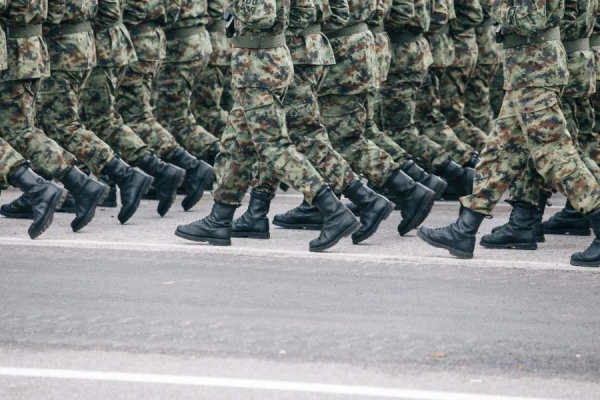
Many European leaders in security and politics believe that Russia's invasion of NATO and EU member states has become more real, writes la.lv, citing The Wall Street Journal.
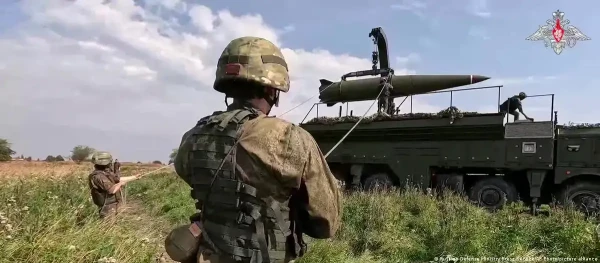
It was previously assumed that Russia would not be able to threaten NATO until 2029. Now there is a growing consensus that a crisis could occur much sooner — before Europe is ready to resist. "According to our estimates, Russia will be able to deploy significant military forces within a year," said Dutch Defense Minister Rubens Bekkenkamps in an interview. "We see that they are already forming strategic reserves and expanding their presence at NATO's borders." At the same time, the media notes that the most obvious targets for Russia are the former Soviet countries — Lithuania, Latvia, and Estonia.
In December 2023, the German newspaper "Die Welt" together with the Helmut Schmidt University Center for Military Games organized exercises simulating a Russian invasion of Lithuania. The scenario, which unfolded in October 2026, involved 16 former high-ranking officials from Germany and NATO, politicians, and security experts.
During the exercises, Russia used a humanitarian crisis in the Kaliningrad enclave to seize the strategically important city of Mariupol in Lithuania. Russia's statements about a "humanitarian mission" prevented the U.S. from invoking NATO Article 5. Germany hesitated, and Poland, although it mobilized forces, did not deploy them across the border. A brigade already stationed in Germany did not participate in the operation, as Russia used drones to mine access roads.
As a result, Russia gained control over the Baltic countries in just a few days with only 15,000 soldiers.
In real life, Lithuania and its allies would receive timely warnings from intelligence services, making such a scenario difficult to implement, emphasizes the Chief of Staff of the Lithuanian Armed Forces, Admiral Gediminas Žukas. According to him, even without the help of allies, Lithuania — with 17,000 soldiers in peacetime and 58,000 after mobilization — would be able to counter a limited threat in Mariupol.
Moreover, Russia must consider the high stakes: "If Russia starts to act, NATO must clearly state that in that case it will lose Kaliningrad."
As the media emphasizes, Russia is unlikely to attempt to start a prolonged war of annihilation against NATO, as is happening in Ukraine. "A prolonged war would be a disaster for Russia because we surpass it in production and mobilization," explains Norwegian Lieutenant Colonel Amund Osflaten. "Therefore, if they do anything, it will be at the initial stage — to occupy positions that can then be easily defended."
"The Economist" writes: if in 2027 Russia attacks any NATO country, for example, Latvia, and the United States refuses to enter the war, Europe will only be able to resist in a short-term conflict. Analysts from the "Institute for the Study of War" emphasize: although Putin promises not to attack the EU and NATO, he cannot be trusted — Russia has repeatedly demonstrated its willingness to ignore international agreements in its interests.







Leave a comment