
The crime situation is steadily worsening.
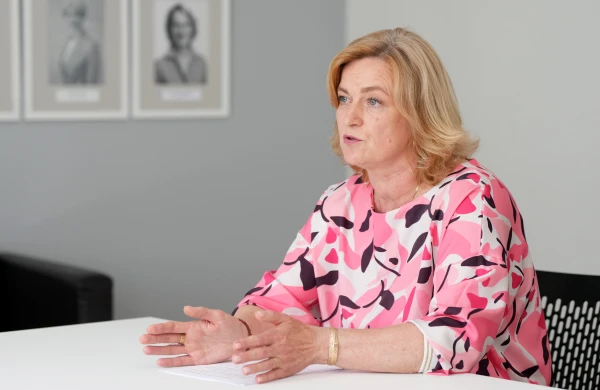
Journalists discussed the most pressing issues of French and European politics, as well as crime problems, with political analyst and international crime specialist Xavier Rofer.
– Mr. Rofer, during President Macron's rule, he has become involved in a number of conflicts with African countries that traditionally fell within the sphere of French influence. Now some states have expelled French troops from their territory. How do you explain all this?
– The key problem lies in Macron's personality, his inconsistency, arrogance, and hysteria. Even the most patient African leaders, the calmest regarding sometimes strange actions of the 'pale faces,' are extremely irritated by Macron. In my fifty years of working with Africans, I have never seen anyone provoke such a violent and unequivocally negative reaction on the African continent. French presidents from opposing ideological camps – Mitterrand, Chirac – were equally respected in Africa, and in some countries even loved. Macron, however, faces almost total, undisguised contempt.
– France under Macron gives the impression of a runaway truck, with a drunk or blind driver at the wheel.
– This feeling arises when political power is weak and in incompetent hands. The initial idea of the constitutional regime of the Fifth Republic endowed the 'autocratic' president with powers that allowed him to transcend the chaotic parliamentarism of the 1950s. The last head of state who initially followed the principles of the current Constitution was Nicolas Sarkozy, although he initiated a liberal-atlantic drift and returned France to NATO's integrated command, which completely contradicted General de Gaulle's ideas. Since then – under Hollande and Macron – the country has been spiraling down into social-political degradation. Whether this is caused by incompetence, ignorance, or a conscious desire of our leaders to act in the interests of Americans remains an open question for me.
– Unfortunately, these problems are not obvious to many. How do you assess the state of freedom of speech in French media and universities?
– Despite the variety of party labels – in London, Keir Starmer is a 'Labour' member, in Berlin, Friedrich Merz is a 'Christian Democrat,' in Paris, Emmanuel Macron is a 'progressive' – any neoliberal power has one common enemy: the patriotic, national movement. Against these forces, everything is used: provocations, bans, slander, judicial pressure, media harassment. French public television and major radio stations almost all serve Macron. Previously, the phrase was: 'I disagree with so-and-so!' Now the common assertion has become: 'It is unacceptable to think this way!' The liberal political elite's agenda is simple: to ban any thought that seems 'heretical' to them. In universities, left-radical bureaucratic groups impose exotic theories on students. One cannot envy the youth...
– I believe that these, like many other problems, are due to the corruption of the French political elite. When did this disease penetrate the top?
– At the beginning of the Fifth Republic, it lived under almost ascetic conditions during General de Gaulle's time. For example, when he invited his family for dinner at the Élysée Palace, he paid for it out of his salary. However, in recent years, a greedy pack of bureaucrats (I cannot find another definition!) has formed at the top, which one French sociologist correctly calls the 'infosphere.' It includes 'elites' who have direct power – billionaires, high-ranking officials, prominent parliamentarians, as well as those who have the means to wield the power of the media. Of the hundred largest media outlets in France, 90 percent belong to this circle. The 'infosphere' monopolizes national political discourse, distributes grants and positions. A lot of easy money circulates in this sphere. Those who go in the direction Macron wants get everything quickly and easily, while those 'going against the tide' face lawsuits, career stagnation, scandals, and poverty.
– And what about the situation at the bottom? How would you describe the functioning of the French bureaucracy in ensuring the safety of citizens? After all, life in the country is increasingly, to put it mildly, worrying.
– Oh, it is obvious that Macron perceives concern for the physical safety of citizens as a historical relic. Mentally, he lives in some semi-fantastic world of New York's Wall Street and London's City – no obstacles and no checks. Control, borders, police – all of this, in Macron's sincere opinion, belongs to some past century. As a result, in the sphere of public order, he sees the only real task as preventing a large-scale terrorist attack. And why? Because it would 'give a bad image on television.' Meanwhile, the crime situation is steadily worsening. Macron has been in the Élysée Palace for seven years. During this time, the annual number of murders has increased by 60 percent! Such a thing has not happened since the 19th century when criminal statistics began in France, not even during Hitler's time!
– To this day, the audacious theft of royal treasures from the Louvre last October is still fresh in memory. However, Macron has not punished a single high-ranking official for this. Strange.
– The Louvre is managed by his elderly friend from a wealthy aristocratic family. Like the entire bureaucratic caste, she is obsessed with PR and neglects serious protection of national treasures, to which she is essentially indifferent. She lives – like Macron – in some imaginary world where there are no Parisian homeless, drug addicts, or robbers. By the way, in the late 18th century, when peasants and workers were sinking into poverty, Queen Marie Antoinette fed lambs with breast milk from a silver bottle on her Versailles farm. This is an escape from reality. History teaches that those in power who flee from it rarely end well.
– In recent years, cocaine consumption in France has increased dramatically, with drug traffickers' incomes amounting to billions of euros per year. Can we say that France is already a drug state?
– The law of life is relentless: bandits only stop when they are thrown in jail, and for a long time. Macron and his henchmen oppose organized crime with PR, performance, and TV shows, where polished officials in expensive suits threaten criminals with a finger and urge them to mend their ways. Bandits, by definition, are realists; otherwise, you simply 'sit' or die. Watching the cheap Macron carnival in the press, they know that the situation 'on the ground' is only improving for them year after year! Therefore, under Macron, France is flooded with drugs, and criminals kill each other in the center of Paris. Their strength is the weakness of the current government leaders. If a patriotic president comes to power and declares the end of the 'party of life,' law enforcement agencies will restore order in France in six months. I know well: police and gendarmes are capable of this and are eagerly waiting for the necessary orders.
– What immediate measures could the French government take to curb crime?
– Everything genius is simple: it is enough to fully apply the existing Criminal Code as written, which the increasingly weak and corrupt judicial system under Macron consciously does not do. A specific example: drug trafficking as part of an organized group of criminals is theoretically punishable by life imprisonment and a fine of 7.5 million euros. However, if by some miracle a drug dealer is convicted under this article, on average, he is released from prison in less than... three years. After such a 'sentence,' a person continues to engage in the same activities, as a ton of cocaine, easily sold in France in just a few days, brings in 30 million euros in pure profit.
– It seems that even after a series of severe blows to her reputation, Ursula von der Leyen does not abandon her plan to turn the European Commission into an organ of military, police, and espionage control over the governments of EU countries.
– In fact, this has always been the secret dream of Brussels bureaucrats. For half a century, they have been undermining the power of the national states of the European Union, ensnaring them with thousands of ties that limit sovereignty. But – at least in France – citizens remember very well the European Commission's response to the last global crisis related to the coronavirus: chaos, paralysis, and serious suspicions (to put it mildly) of corruption at the very top. I am not at all sure that the peoples of Europe will want to 'go into battle' under a dirty and tattered banner.





Leave a comment