The war and the militarization of the economy in Russia have formed a circle of politically and economically interested parties benefiting from military actions, which will complicate the reduction of military spending and the level of militarization in the future, according to a report published on Monday for 2025 by the Bureau for the Protection of the Constitution (BZS), writes LETA.
The full-scale invasion of Ukraine has significantly contributed to the militarization of the Russian economy and its reorientation towards meeting the needs of the army. In the next three years, Moscow plans to allocate between 38% and 41% of all budget expenditures for military needs, which exceeds 6% of GDP, estimates the Bureau for the Protection of the Constitution (BZS).
The recent growth of the Russian economy has largely been driven by significant investments in the military-industrial complex. According to BZS, the militarization of the Russian economy will continue even after a possible conclusion or freezing of the war in Ukraine, which will contribute to the further development of Russia's military potential and pose a serious threat to European countries and NATO. If, in the event of the war's conclusion, Western states lift or ease sanctions against Russia, its ability to maintain a high level of militarization without the risk of economic upheaval will significantly increase, the report states.
Since the invasion of Ukraine, Russia has demonstrated a consistent ability to adapt to the imposed restrictions, notes BZS. The country continues to direct its economy towards militarization, ensuring current economic stability at the expense of long-term prosperity. This trend includes not only a large-scale redirection of resources to armament production but also efforts to develop self-sufficiency in military production, which will sustain the threat from Russia to neighboring states in the future.
Despite attempts by Russian authorities to minimize the impact of the war on the daily lives of the population, the changes that have occurred in the economy and society of Russia since the beginning of the war have been significant and palpable. Huge expenditures and an influx of resources into the military-industrial complex are currently the foundation of the Russian economy. At the same time, the civilian sector is facing a decline in activity and a lack of growth prospects due to sanctions, increased tax burdens, and limited and more expensive access to capital, concludes BZS.
The rapid redistribution of resources and uneven support for sectors of the economy by Russia creates a structural imbalance, the negative consequences of which are likely to manifest in the future. Under the current conditions, the probability of economic collapse in the short term is low; however, in the long term, the technological development and international competitiveness of the country will decline, believes BZS.
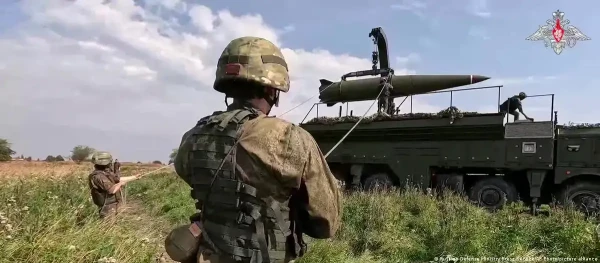
The Russian military-industrial complex is operating at full capacity, acknowledges BZS. Combined with the use of inherited Soviet infrastructure, this has allowed for an increase in armament production by 2025 based on the principle that "quantity is more important than quality."
At the same time, Russia faces specific problems in production, such as dependence on imports, a shortage of labor, and limited production capacities. Some shortages are partially compensated by funding. Budget plans for the coming years indicate an almost unchanged determination to continue armament production and expand the capabilities of the military-industrial complex.
The war and the militarization of the economy in Russia have created a circle of politically and economically interested parties benefiting from military actions, which further complicates the reduction of military spending and militarization in the future. The demand for armament production remains consistently high, and the sector, which includes more than 6,000 companies directly or indirectly involved in the process, reinforces the dependence of the Russian economy on high military expenditures, concludes BZS.
Given the need to replenish armament stocks depleted by the war, as well as the importance of military production for the national economy, the militarized structure in Russia, according to BZS, will persist even after the conclusion of the war in Ukraine.
It is highly likely that Moscow will gradually reduce military spending to mitigate the risks of economic instability while simultaneously restoring military capabilities. Although the deployed production capacities can be considered technologically simple, maintaining the militarization of the economy will continue to pose a threat even after the war ends.
BZS is one of the three state security institutions in Latvia that deals with intelligence and counterintelligence, protection of classified information, oversight of critical infrastructure in information and communication technologies, as well as facilitating and controlling the exchange of classified information with international organizations.