

The USA officially exits the Paris Climate Agreement, reports LETA citing DPA.
This is the second time that the United States has exited this agreement.
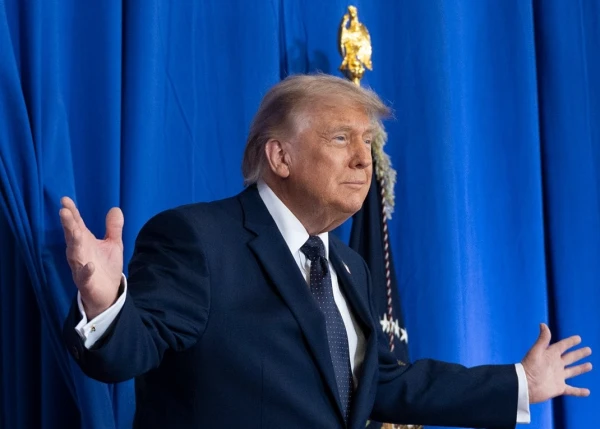
US President Donald Trump ensured the country's withdrawal from the Paris Climate Agreement during his first term, but later President Joe Biden reversed this decision. After returning to the White House, Trump signed an order on the day of his inauguration—January 20, 2025—once again to withdraw the United States from the agreement, which aims to limit global warming to less than two degrees Celsius compared to pre-industrial levels, and ideally to 1.5 degrees.
The withdrawal process took a year and was completed on Tuesday.
The US also did not participate in the UN Climate Change Conference (COP30), which took place last November in Belém, Brazil.
Exiting the Paris Agreement means that the US no longer considers its goals for limiting global warming to be mandatory. Furthermore, this move leaves a significant gap in funding, particularly in supporting efforts to mitigate the impacts of climate change and adapt, which is especially important for the poorest countries.
The US is the second-largest source of greenhouse gas emissions in the world after China, and the decision will have far-reaching consequences for the climate.
According to UN estimates, with the current global climate policy, the world's temperature is expected to rise by 2.8 degrees by the end of the century compared to pre-industrial levels.
According to UN calculations, the US withdrawal from the Paris Agreement will lead to an additional increase in global temperature of 0.1 degrees. Climate scientists argue that every increase of 0.1 degrees significantly exacerbates the impacts of climate change.
In recent weeks, the Trump administration also announced its withdrawal from the UN Framework Convention on Climate Change (UNFCCC), adopted in 1992 at the Earth Summit in Rio de Janeiro and serving as the basis for all key international climate agreements, as well as its exit from the Intergovernmental Panel on Climate Change (IPCC) and other climate-related organizations, including the International Renewable Energy Agency (IRENA), UN Oceans, and UN Water.
Trump, who supports the use of fossil fuels in his domestic policy, has openly questioned the impact of human activity on global warming and referred to climate science as a "joke" at the UN high-level summit in September.








Leave a comment