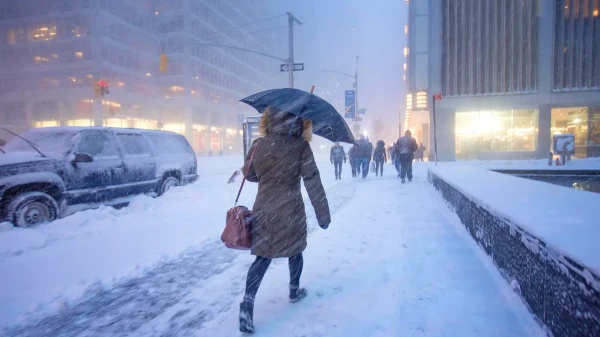
The U.S. is hit by winter storm 'Fern' - one of the most powerful in the last 100 years. Thousands of flight cancellations, blackouts in several cities, fatalities, and a state of emergency declared in many states.
Snow-covered city of Tulsa in Oklahoma on January 24, 2026Photo: Mike Simons/AP Photo/picture allianceMore than 13,000 flights have been canceled in the U.S. due to the winter storm 'Fern,' which has affected a significant part of the country. Blizzards, snow, and ice rain are expected to continue there for at least several days, reported Reuters and the Associated Press on Saturday, January 24.
By the evening of January 24, the severe weather had left more than 139,000 consumers without electricity, and that number continues to grow. Most outages are in Texas and Louisiana. In New York, the bodies of three individuals, including a 67-year-old man, a man in his 30s, and an elderly woman, were found on the streets due to the weather conditions.
Critical Conditions in Many States
U.S. President Donald Trump approved the declaration of a federal state of emergency in South Carolina, Virginia, Tennessee, Georgia, North Carolina, Maryland, Arkansas, Kentucky, Louisiana, Mississippi, Indiana, and West Virginia amid the severe weather. He urged citizens to "stay safe and warm."
According to the U.S. Department of Homeland Security, critical weather conditions have developed in at least 17 states and the District of Columbia. In 12 states, National Guard personnel have been mobilized to deal with the aftermath of the storm.
'Fern' Becomes the 'Storm of the Century' for Some U.S. Cities
The National Weather Service has described 'Fern' as an "extraordinarily large and prolonged winter storm." Meteorologists predict that it will bring widespread and severe icing to the southeastern U.S. and may cause "from extremely destructive to locally catastrophic consequences."
According to New York City Mayor Zohra Mamdani, authorities expect at least 20-23 cm of snow, as well as freezing temperatures that will last until the end of January.
The effects of the storm are expected to impact more than 220 million residents of the U.S. NBC News reports that many cities in the country have not seen this much snow in the last 100 years.