
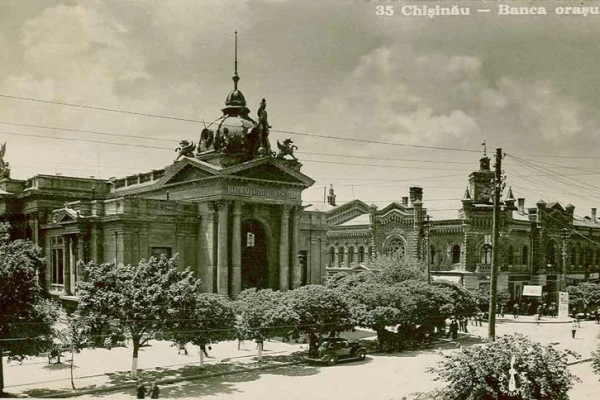
Between 1918 and 1940, the process of integration was hindered by the actions of the Romanian army.
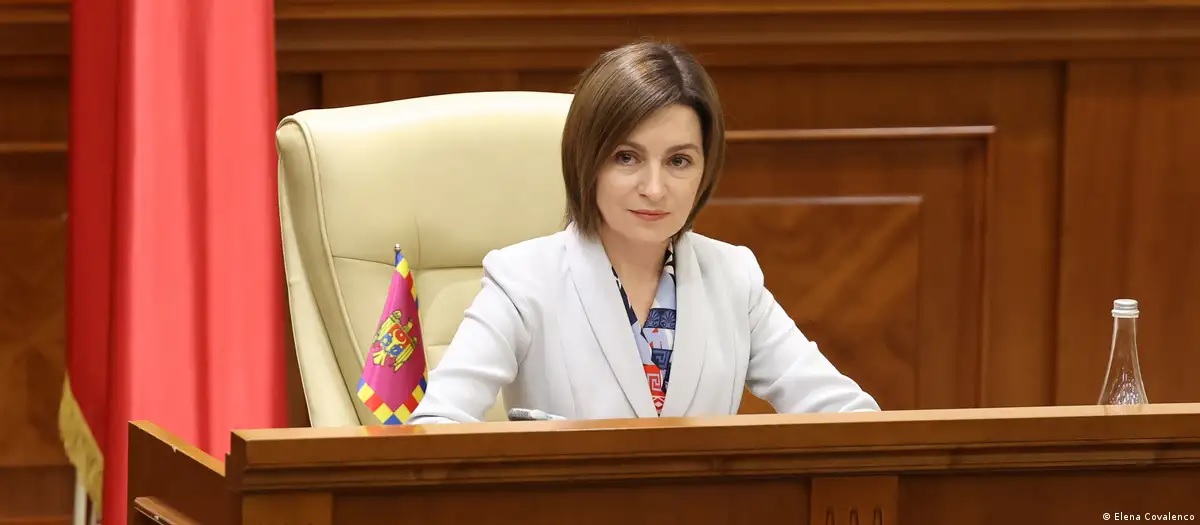
Recently, the President of Moldova, Maia Sandu, stated her readiness to vote for her country's accession to NATO and EU member Romania in the event of such a referendum. She justified her position by the desire to protect the country from pressure from Russia. She made this statement in an interview with the British podcast The Rest is Politics.
Moldova is unlikely to be accepted into the EU quickly. Meanwhile, pressure from Russia will continue to grow. Sandu's statement about joining Romania indicates that this option is considered more realistic than separate accession to the EU.
Sandu has repeatedly accused Moscow of attempting to interfere in her country's internal political affairs. "Look at what is happening in the world. A small country like Moldova is finding it increasingly difficult to survive as a democracy, as a sovereign state, and, of course, to resist Russia," she noted in the podcast.
Although according to Reuters, about 1.5 million of Moldova's 2.4 million residents hold Romanian citizenship, only about a third of the country's population supports the idea of uniting the two countries. Will Moldova manage to jump off the Russian train before the world begins to divide into imperial "spheres of influence"?
Public opinion in both Romania and Moldova has perceived the idea of unification ambiguously and has fluctuated significantly over time. In Moldova, the ideas of unionism have historically had much less support. In the Middle Ages, this was partly explained by the period of feudal fragmentation, when local Moldovan princes were unwilling to lose their independence. The Moldavian principality became a refuge for many Wallachian families who did not want to tolerate the dominance of Hungarian and German feudal lords in the principality of Transylvania, as well as Turks and Greeks in the Wallachian principality.
The accession of Transylvania, Bessarabia, Southern Dobruja, and Bukovina to Romania in 1918 gave hope for a successful "enosis" of Romanians in one state (Greater Romania). The presence of several adjacent regions within Romania in the early 20th century and the associated attempts at their Romanianization ended unsuccessfully due to the annexation of Bessarabia and Northern Bukovina by the USSR in 1940.
Between 1918 and 1940, the process of integrating Bessarabia into Romania was partly hindered by the actions of the Romanian army and regional administration, and partly by the national minorities living in the territory.
The greatest rejection of the union with Romania was demonstrated by the Gagauz, Bulgarians, and Jews. The Russian-speaking population also actively resisted it. Among ethnic Moldovans, weak support or indifference at the initial stage quickly turned into open discontent, especially among Moldovan peasants. Oligarchic-bureaucratic traditions brought from Romania made many regret the accession.
The ideologies of pan-Romanianism and unionism were held by underground anti-Soviet organizations, the most famous of which were the "Archers of Stephen" in 1946–1947.
After the Revolution in Romania
A new surge of unionist sentiments in Moldova occurred at the end of the 1980s. The movement for unification experienced significant growth in both countries after the proclamation of the policy of glasnost in the Soviet Union and after the Romanian Revolution of 1989. However, Romania was experiencing a severe political and economic crisis due to the overthrow of the Ceaușescu regime. Unionists, however, managed to achieve the transition of the Moldovan script to the Latin alphabet and the proclamation of the Moldovan (Romanian) language as the state language. The rising wave of Romanian nationalism in Moldova led to a separatist reaction in the regions predominantly inhabited by Gagauz and Russian-speaking residents of Gagauzia and Transnistria, the latter of which effectively separated as a result of the Transnistrian conflict.








Leave a comment