
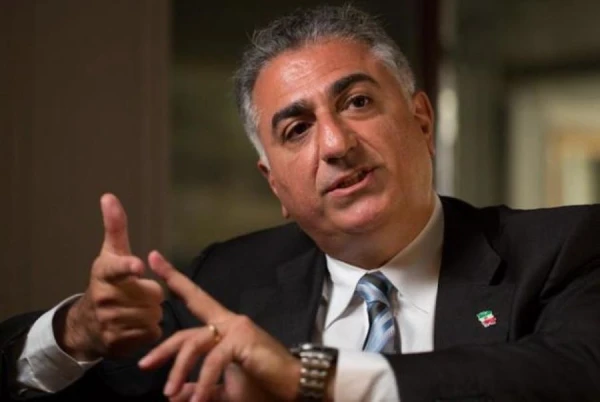
He presents himself as a mediator, as someone who could take on leadership to ensure a transition.
Against the backdrop of large-scale protests in Iran, the political activity of the son of the last Shah, Reza Pahlavi, is becoming increasingly noticeable, with his name being chanted by the uprising Iranians. The crown prince, living in the USA, calls on protesters in Iran to take to the streets. He promises to return to his homeland at the first opportunity to help the country transition from tyranny to democracy. How popular is Reza Pahlavi in Iran? What do Iranians think of the calls from the exiled son of the Shah? What are his chances of returning home and becoming a unifying figure for the political transition?
In 1979, when the Islamic Revolution occurred in Iran, the eldest son of Shah Reza Pahlavi was 19 years old. He was studying in the USA to become a military pilot. The crown prince and his relatives suddenly found themselves in exile with no hope of assistance.
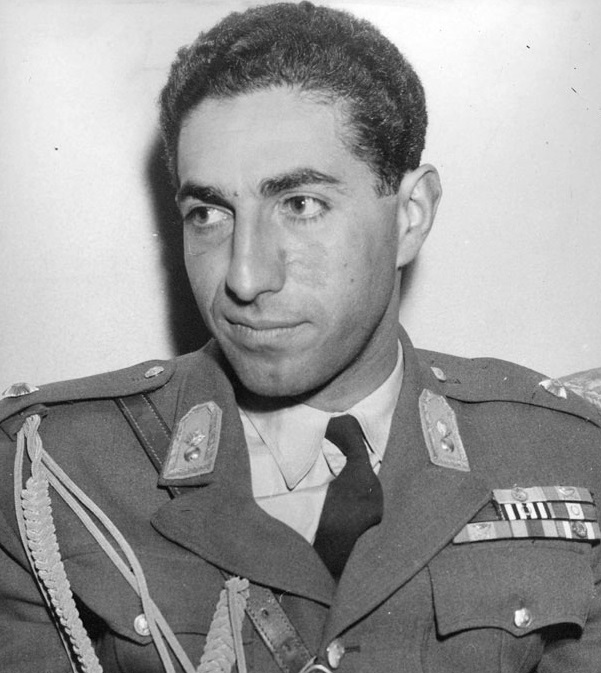
Since then, the heir of the Pahlavi dynasty has been living in the United States, where he obtained a bachelor's degree in political science. In 1980, after his father's death in Cairo, the exiled royal court crowned Reza Pahlavi. This fact is recalled by his critics, who doubt the democratic intentions of the heir to the Shah's dynasty.
In 2023, Pahlavi visited Israel, where he met with Prime Minister Benjamin Netanyahu and supported Israeli and American strikes carried out in June of the previous year against Iranian nuclear facilities. His actions and statements sparked debates among Iranians.
Now, against the backdrop of large-scale protests and after the regime of the Ayatollahs was weakened by the war with Israel, the 65-year-old prince hopes to play a role in shaping the future of his homeland.
Living in the suburbs of Washington, Pahlavi calls on demonstrators in Iran to take to the streets and seize city centers. He promises to return to Iran at the first opportunity to ensure a peaceful transition. He states that the current Iranian regime is weaker than ever.
However, as Bernard Hourcade, an Iran specialist from the French National Center for Scientific Research (CNRS), points out in an interview with RFI, such a scenario is hard to imagine:
"So far, Mr. Pahlavi has not been able to unite the opposition. Now he has 'woken up,' but it is already too late. We do not know what his program is.
He speaks of the need for a transition. But it is hard to imagine how Pahlavi would fly to Tehran and say, 'Here I am, I will find a solution.' You need to have forces on the ground. And he does not have a significant network, which Ruhollah Khomeini had at the time: Khomeini had a whole network of mosques and mullahs who were powerful then.
However, Reza Pahlavi is the only opposition figure whose name is widely known in Iran. Pahlavi is sometimes referred to: 'Why not him? Anyone but the mullahs.'"
Many in Iran do not want either the regime of the Ayatollahs or the restoration of the monarchy, which they associate not only with modernization and a pro-Western orientation but also with the repressions of the Shah's secret police, SAVAK. By the way, the infamous Evin prison for political prisoners was built during the Shah's reign.
A Unifying Figure?
Reza Pahlavi currently positions himself not as a monarch seeking to return to the throne but rather as a unifying figure for the transitional period.
He defines his mission as follows:
"My role is to unite the diverse democratic forces of Iran — monarchists and republicans, secular and religious figures, activists and professionals, civilians and military personnel, who want Iran to become a stable and sovereign country again — around common principles of territorial integrity of Iran, protection of individual freedoms and equality of all citizens, as well as the separation of church and state."
He proposes that after the 'victory of the people,' he will fill the power vacuum and organize a referendum to determine the future democratic form of governance.
Middle East expert, researcher at the French Institute for Strategic Analysis (IFAS), and editor-in-chief of the journal Orients Stratégiques, David Rigoule-Roz notes that the Iranian opposition has always been and remains very fragmented: both in the diaspora and within Iran.
Currently, in Iran, according to him, a situation has arisen where everyone has united around one demand: the departure of the mullah regime. But this does not mean that Iranians massively support the monarchy and personally Reza Pahlavi.
"There were many pro-monarchy slogans at the demonstrations, which were not present in previous protest movements. This is a fact. But it is important not to overestimate its significance.
Pro-monarchy slogans were mainly raised by young people in protest against the authorities. But this does not mean that there is mass support for the monarchical project.
Reza Pahlavi does not enjoy unanimous support from all opposition forces, although the opposition acknowledges that he offers some direction for movement. He presents himself as a mediator, as someone who could take on leadership to ensure a transition and avoid chaos. Not necessarily for the restoration of the monarchy, as his critics say. But in any case, the current situation does not allow him to return yet."
Recently, Reza Pahlavi's statements have become more resolute. He said that he has already formed a team to implement a 'smooth transition' in Iran to avoid an Iraqi or Afghan scenario. The crown prince also appealed to U.S. President Donald Trump, urging him to 'be ready to intervene to help the Iranian people.'





Leave a comment