
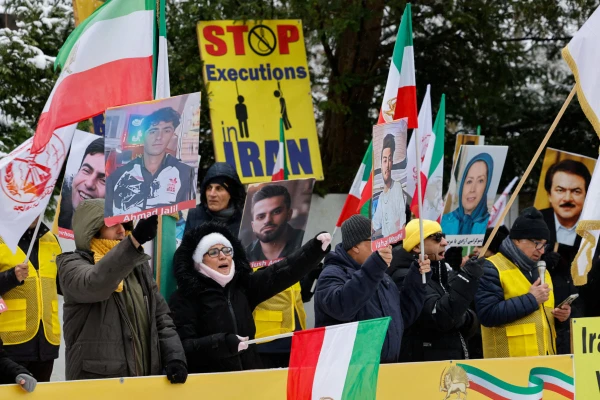
The local currency is approaching the exchange rate of one and a half million per dollar.
Iran welcomed the year 2026 with mass demonstrations. These protests are unprecedented not so much in the number of participants (although rallies are taking place in dozens of cities across the country, in 22 out of 31 Iranian provinces), but in their motives.
The economic reasons are quite serious. The Iranian rial has lost more than 50% of its value over the past six months, reaching a historic low of 1.4 million rials per dollar. Iran's pension funds are on the verge of bankruptcy. The number of people arrested for unpaid debts is hitting record highs.
Many are beginning to see the root of the problems not so much in sanctions or objective difficulties (such as the fresh water shortage that arose in the country last year), but in the Iranian authorities themselves. They are not only incapable of solving problems but also, it seems, are not particularly eager to do so, as they are generally satisfied with the status quo.
"Against the backdrop of uncontrolled price increases, the stability of prices in the 'Basij' cooperative stores is surprising. In this vast network, prices do not rise, goods are available, and even prices for gasoline and vacation packages remain stable. However, there is one peculiarity: access is granted to hundreds of thousands of 'Basij' members (the paramilitary militia), their family members, and officials with their relatives," writes the Telegram channel "Iran, but not that one."
Ayatollah Khamenei's words that "the rioters must be put in their place" are interpreted by many as a call for a harsh crackdown on the demonstrations. However, this is not entirely accurate. Khamenei essentially divided the demonstrators into "protesters" and "participants in riots."
There is an impression that the president and the government of Iran are playing their own game. On one hand, President Masoud Pezeshkian has already demanded that the cabinet "listen to the legitimate demands" of the protesters and stated that the government "has plans to reform the monetary and banking system, as well as to maintain the purchasing power of the population." On the other hand, he speaks of certain internal forces that benefit from "rent, smuggling, and bribery," and therefore, allegedly, create obstacles to any reforms.
By these very forces, he undoubtedly means the Islamic Revolutionary Guard Corps and his conservative opponents in power. They, in turn, are very hopeful that the reformist president will not be able to quell the protests and that he can be made the scapegoat, blamed for not managing the situation. He – along with the entire reformist camp that advocates for seeking compromises with the West and liberalizing not only the economic but also the political life of the country.
The problem for the country is that such contradictions within the elite during periods of internal upheaval can lead to an escalation of protests and a real revolution. If not this time, then the next – as neither the division of elites nor Iran's economic problems will go away.







Leave a comment