
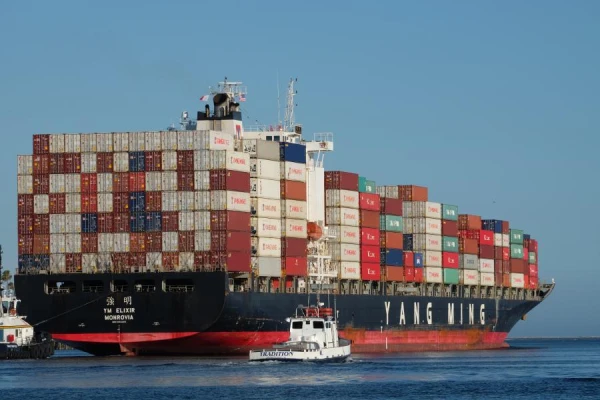
According to customs data, the surplus increased due to a rise in trade volumes in December: exports grew by 6.6% compared to the previous year, which was better than economists' estimates and higher than November's growth of 5.9% year-on-year.
China recorded the world's largest trade surplus at the end of 2025.
The positive trade balance of China rose to a record nearly $1.2 trillion, as exports to other countries offset a slowdown in shipments to the U.S. in a turbulent year for global trade.
Exports grew by 5.5% in 2025 to $3.77 trillion, while imports remained unchanged at $2.58 trillion for the year.
According to customs data, the surplus was boosted by an increase in trade volumes in December: exports rose by 6.6% compared to the previous year, which was better than economists' estimates and higher than November's growth of 5.9% year-on-year. Imports in December increased by 5.7% year-on-year compared to November's growth of 1.9%.
The surplus was driven by high-tech goods: exports of electric vehicles increased by nearly a third (27%), lithium batteries and solar panels grew by 27%, and industrial equipment and robots rose by 13%.
Economists expect that exports will continue to support China's economy this year, despite trade frictions and geopolitical tensions.
"We still expect exports to be the main driver of growth in 2026," said Jacqueline Rong, chief economist for China at BNP Paribas.
Since U.S. President Donald Trump took office and intensified the trade battle with the world's second-largest economy, China's exports to the U.S. have sharply declined; however, sales to other markets in South America, Southeast Asia, Africa, and Europe have more than compensated for this decline.
Analysts say that high global demand for computer chips and other devices, as well as materials needed for their production, were among the categories that supported the growth of Chinese exports.
Other countries are concerned that the influx of cheap imports is harming local industries.
Experts explain that the goal of Beijing's economic policy is to increase consumer and business spending. One of Beijing's main strategies is to provide subsidies that encourage people to discard old appliances and cars and replace them with new, more energy-efficient models.
According to Wang Jun, deputy minister of China's customs administration, despite last year's figures exceeding all expectations, Beijing will face "tough and complex" external trade conditions in 2026.
However, Jun remains optimistic, stating that "the fundamentals of China's foreign trade remain solid."
Recently, China and the EU reached a consensus on pricing for Chinese electric vehicles based on WTO rules. This move represents a significant de-escalation and signals a potentially new direction for trade relations between the EU and China.
Both sides have been negotiating a plan under which Chinese manufacturers commit to raising prices for their BEVs to ensure fairer competition with their European counterparts after tariffs are imposed in October 2024.
China is the EU's second-largest trading partner after the U.S.












Leave a comment