
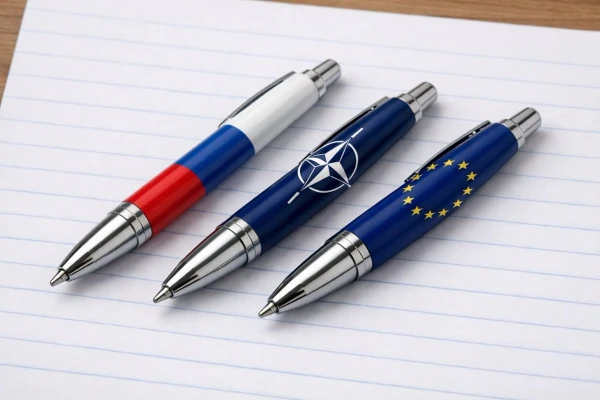
European governments fear that the U.S. may reach an agreement with Russia without considering the EU's position, Politico writes. Brussels is discussing the creation of a special representative position to participate in negotiations regarding the war in Ukraine, DW reports.
Governments of several European countries are pressuring EU institutions to appoint a negotiator who would represent the interests of the European Union in the settlement of the war in Ukraine. Europe fears that the United States may strike a deal with Russia behind the backs of European allies, Politico reported on Wednesday, January 14, citing three diplomats and officials familiar with the discussions.
According to them, supporters of this idea, including France and Italy, have already garnered support within the European Commission and from several other EU countries. They believe that Europe will be able to defend its "red lines," including the potential future membership of Ukraine in NATO, only if the European Union is directly represented at the negotiating table.
Politico notes that appointing a negotiator would be an unprecedented step and would signify a serious shift in Europe's approach to a series of bilateral contacts initiated by U.S. President Donald Trump - amid ongoing attempts to achieve a cessation of the Russian-Ukrainian war, European countries are eager to show that they are ready to play a key role in the peace process.
Initiative from Paris and Rome
French President Emmanuel Macron and Italian Prime Minister Giorgia Meloni have recently jointly advocated for opening diplomatic channels with Russian President Vladimir Putin and his entourage, despite the stalled negotiations being conducted by the White House.
As one senior French official pointed out, Macron insists that amid bilateral contacts between the U.S. and Russia, it is important for Europe to at least participate in discussions. He stated that Meloni actively supports this approach, although several capitals understand the limitations of the possible outcomes of such contacts.
At the same time, there are significant disagreements surrounding the initiative. Critics argue that appointing a negotiator with Putin could create the impression that Russia is ready for good-faith negotiations, while Moscow continues to demand that Ukraine cede territories that Russian troops have not managed to capture.
Fears of Being Left on the Sidelines
In Brussels, there is also a discussion about what contribution the EU could make to possible negotiations and how to prevent the U.S. president from sidelining European interests. According to one source, there are issues that cannot be discussed exclusively with the U.S. as they directly affect Europe's security. He emphasized that the signal is important not only for Moscow but also for Washington.
Former U.S. Special Representative for Ukraine Kurt Volker told Politico that Brussels will have to act more assertively if it wants to be involved in the process. He stated that the dialogue between the U.S. president and Putin will continue, and Europe needs to have its own communication channels, even if it is not in the same room with the Americans and Russians.
Powers of the Special Representative
The idea of appointing a special representative was first discussed at the EU summit in March of last year, confirmed a senior EU source. Despite broad support, no decision was made at that time, and the topic did not make it into the final statement.
It remains unclear whom exactly such a negotiator should represent - only the EU or a broader "coalition of the willing," including the UK and other countries. The negotiator's diplomatic status and appointment format have also not been defined.
Possible Candidates
The head of European diplomacy, Josep Borrell, has consistently indicated that he considers himself the only possible candidate to participate in negotiations regarding Ukraine's future. Meanwhile, in Rome over the weekend, there was a suggestion to consider former Italian Prime Minister Mario Draghi for this role. Some diplomats also mention Finnish President Alexander Stubb as a possible candidate, noting his contacts with Trump and experience in dealing with Russia.
At the same time, two sources in the EU emphasized that no position of special negotiator currently exists, and discussions of specific candidates are premature. However, according to one of them, such positions "do not exist until they appear."






Leave a comment