According to NATO and EU defense provisions, Europe is obliged to intervene if Greenland comes under attack. What is at stake? And how applicable are these provisions in reality?
After taking office for a second time, US President Donald Trump is once again threatening to take control of Greenland, citing security concerns and the risk posed by Russia and China's influence on the Arctic territory belonging to Denmark.
"I would love to make a deal with them, it’s easier. But either way, Greenland is going to be ours," Donald Trump told reporters on Sunday aboard Air Force One.
There is nothing new in Trump's threats — they were made during his first term as well, but they have resurfaced following the US intervention in Venezuela on January 3. The capture of Venezuelan President Nicolás Maduro during a lightning-fast nighttime operation raised concerns among European leaders about how far Washington is willing to go to seize control of Greenland.
Trump's comments have also sparked warnings in Europe that a US military intervention regarding Greenland could plunge NATO into crisis and possibly lead to the alliance's collapse.
If Greenland were to come under attack, could Europe intervene and on what basis? The Cube, the Euronews fact-checking team, examined Europe’s legal and military obligations in the event of US intervention in Greenland's affairs.
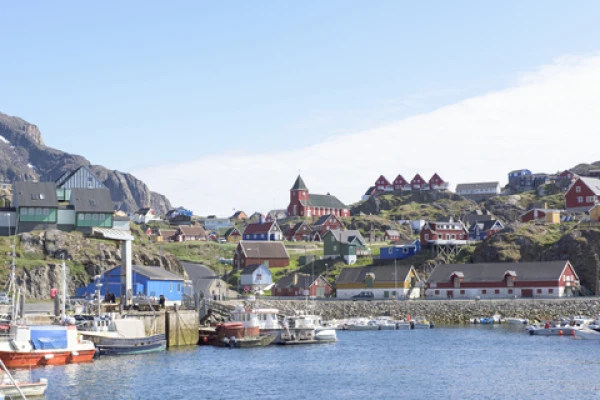
What is Greenland and why does it matter?
Greenland is a semi-autonomous territory outside the European Union but part of the Kingdom of Denmark, which itself is an EU member.
Thus, Greenland is formally supposed to enjoy protection under Article 5 of NATO if it is attacked. According to this article, an armed attack against one or more NATO members is considered an attack against all members of the alliance.
Experts believe that such a scenario could plunge NATO into crisis, given that the US is itself a NATO member, and the military alliance is designed to protect member countries from external aggressors, not from each other.
But there is a second, lesser-known treaty that could protect Greenland in the event of a US attack: Article 42.7 of the Treaty on European Union.
On Monday, European Commissioner for Defense and Space, Andrius Kubilius, told Reuters that Article 42.7 obliges member states to provide assistance and support to another member state — in this case, Denmark — in the event of armed aggression on its territory.
Article 42.7
Tim Hesebroek, a lecturer in international politics at Ghent University, told The Cube, the Euronews fact-checking team, that one of the advantages of the article is that it can be activated by one country and does not require prior consensus.
It states that EU member states "are obliged to provide assistance and support by all means available" to the country that has activated the mechanism. Assistance can be economic, political, or military.
The last and only time Article 42.7 was invoked was after the Paris attacks in 2015 when France requested help in combating the Islamic State group, which is recognized as a terrorist organization in many countries around the world.
However, Greenland's status complicates the implementation of this provision. Since the island left the European Economic Community (the precursor to the EU) in 1985 and is now classified as an overseas country and territory, most EU laws, including defense provisions, do not fully apply to it.
According to Aurelia Sari, a professor of international public law at the University of Exeter, there has yet to be an authoritative ruling on whether Article 42.7 applies to territories like Greenland.
If applicable, there is a limitation on its legal application, as defense matters do not fall under the jurisdiction of EU courts.
"In the midst of an armed conflict, if your territory is under attack by a major power, such a great power as the United States, you are unlikely to go to court to try to obtain that assistance," Sari told The Cube in an interview.
No guarantees of military defense
Even if Article 42.7 is applicable to Greenland, it does not automatically guarantee military assistance, although military support is provided for within it.
According to Hesebroek, it is unclear whether Europe has real defensive potential for military confrontation with Washington, as at every stage of escalation, the power imbalance will favor the US.
"The United States will always have escalation dominance, which effectively means that at every stage of escalation, the United States can simply move to a higher level and be confident of its victory," he said.
Legally, this point should not be understood as a promise of automatic military force application, and it is not the only type of assistance available.
"Not only military assistance is relevant and can be provided in such circumstances. It can also be political assistance and economic pressure," Hesebroek says.
This will depend on the political will of each EU member state to provide support. On Tuesday, German Foreign Minister Johann Wadephul stated that the country would like to take on a more significant role in ensuring military security in the Arctic, although he insists that NATO frameworks must be part of any solution.
"In the end, it all depends on political commitments," Sari said in an interview with The Cube.